Know these words now: la carta, menú del día, tapa, ración, primero, segundo, postre, la cuenta, vino, cerveza. The lists below translate the most common Spanish menu terms, explain how plate sizes and menu formats work, and give you exact phrases for ordering, customizing a dish, and asking about allergens.
TL;DR:
- A small bite suits sampling, a full shared plate serves two or more, and a half portion lets diners try additional dishes.
- Choose the fixed daily lunch menu for a set price and several courses, or share full plates when you want to sample different dishes.
- Ask which fish is the daily catch and how it is prepared; the menu may not name the fish, since the offering changes.
- EU restaurants must disclose 14 allergens on menus or when asked; ask about kitchen cross contact, and choose another dish if staff cannot confirm safety.
- Tell the restaurant about allergies or dietary needs when booking, especially for a tasting menu, so the kitchen can plan substitutions before service.
Table of Contents
- Understanding menu structure and plate sizes
- Essential seafood and fish terms for ordering
- Meat and poultry vocabulary plus cooking terms
- Vegetables, sides, sauces, and desserts to recognize
- Drinks and wine terms you’ll see on the list
- Reading the menu and ordering like a regular
- Allergens and dietary notes: what menus must show
- What servers at a seafood restaurant will tell you
- What travelers consistently get wrong about Spanish menus
- Taste these words in action at Els Pescadors
- FAQ
- Sources
Understanding menu structure and plate sizes
Spanish menus organize food by course and by portion size, and the words for each matter as much as the dish names themselves. A tapa is a small bite meant for sampling, usually one or two per person alongside drinks. A ración is a full-size shared plate, while a media ración splits that in half, a useful option when you want to taste more dishes without overordering. Primero and segundo mean first and second course on a multi-course menu, with postre closing things out as dessert.
The three menu formats you’ll run into are la carta, menú del día, and menú degustación. La carta is the standard, full menu where you choose individually priced dishes. Menú del día is a fixed-price, multi-course lunch menu, typically including a starter, a main, a drink, and dessert or coffee, a practical midday option common across Spain, as Wikipedia’s overview of menú del día explains. The Real Academia Española’s entry for “menú” confirms this double meaning: the word covers both a fixed-price meal and a general list of dishes, which is why “menú” and “carta” aren’t always interchangeable even though English speakers tend to use “menu” for both.
A menú degustación is a tasting menu, a chef-curated sequence of smaller courses designed to showcase a kitchen’s range in one sitting. At a seafood-focused restaurant, that often means several preparations of the day’s catch rather than one large plate, a format we explain further when comparing a la carte versus tasting menu dining.
Here’s a quick reference for the core vocabulary:
- Tapa: a small bite, usually ordered to share and pair with drinks.
- Ración: a full shared plate, standard portion for two or more.
- Media ración: a half portion, ideal for sampling several dishes.
- Primero / segundo: first course and second (main) course.
- Postre: dessert, the final course.
- Menú del día: a fixed-price, multi-course lunch menu.
- Menú degustación: a tasting menu of curated small courses.
Choosing between formats comes down to how you want to eat. If you’re short on time and want a complete meal at a set price, menú del día is the practical choice. If you want to graze and try several flavors, order a handful of raciones or tapas to share. If you want a guided, multi-course experience that lets the kitchen choose the highlights, a menú degustación delivers that without you having to decode the full carta.
Essential seafood and fish terms for ordering
Seafood vocabulary trips up more travelers than any other menu category, partly because fish names vary by region and partly because preparations change the dish entirely. Here are the terms you’ll see most often on a Spanish coastal or seafood-focused menu:
- Merluza: hake, a mild white fish often served grilled or in sauce.
- Bacalao: cod, frequently salted and rehydrated before cooking.
- Lubina: sea bass, typically baked or grilled whole.
- Dorada: gilt-head bream, another common whole-fish option.
- Calamares: squid, often fried in rings or grilled whole.
- Pulpo: octopus, usually boiled then grilled or served “a la gallega” with paprika and olive oil.
- Mejillones: mussels, commonly steamed in a tomato or wine sauce.
- Gambas: shrimp or prawns, frequently sautéed in garlic.
- Vieiras: scallops, often pan-seared or baked in their shell.
Preparation words change what arrives at your table just as much as the ingredient name does. A la plancha means grilled on a flat griddle, a simple, clean preparation that lets the fish’s flavor stand out. A la romana means battered and fried, a style you’ll see often with calamares. A la marinera refers to a sauce built on tomato, garlic, and wine, typical for mussels and other shellfish. Al horno means oven-baked, common for whole fish like lubina or dorada.
Two words are worth memorizing as signage rather than dish names: pescado del día and fresco. Pescado del día means “fish of the day,” signaling the kitchen’s daily catch rather than a frozen or standing menu item. Fresco simply means fresh, but on a seafood menu it’s often used deliberately to distinguish same-day catch from items sourced further in advance. Watching for these two words is one of the simplest ways to identify what a kitchen is proudest of that day, a point we return to when describing how daily catch gets presented at the table.
Pro Tip: When a server mentions “pescado del día” without naming the fish on the printed menu, ask what it is and how it’s prepared. That’s usually the freshest item in the kitchen.
For a broader look at how these terms show up in real dishes, our guide to traditional Spanish seafood dishes walks through authentic Catalan preparations in more detail.
Meat and poultry vocabulary plus cooking terms
Not every Spanish menu is built around seafood, and even seafood-focused restaurants typically carry a few meat options. The core terms are straightforward once you’ve seen them a few times:
- Pollo: chicken, usually grilled, roasted, or stewed.
- Ternera: beef or veal, depending on the cut and region.
- Cerdo: pork, common in both fresh cuts and cured forms.
- Cordero: lamb, often roasted or grilled.
- Solomillo: tenderloin, a premium cut typically grilled or seared.
- Chuleta: chop, as in a pork or lamb chop.
- Filete: a boneless cut, usually thin-sliced and pan-fried or grilled.
Cooking method words carry useful information about texture and flavor. Asado means roasted, generally implying a drier, caramelized exterior. A la brasa means cooked over an open flame or coals, a technique that adds smokiness. Estofado and guiso both refer to slow-cooked stews, dishes built for depth of flavor rather than a quick sear, usually richer and more tender than a grilled cut.
One thing worth knowing before you travel: regional dish names don’t always map neatly onto these base terms. A menu might list a specific, named dish, like a Catalan stew, without spelling out “guiso” or “estofado” anywhere in the title. When a dish name doesn’t match anything on your translation list, it’s worth asking the server for a one-line description rather than guessing from the name alone.
Vegetables, sides, sauces, and desserts to recognize
Rounding out a meal means knowing the words for what comes alongside the main course and what finishes it. Vegetable and side terms are generally straightforward: ensalada is salad, verduras covers vegetables broadly, patatas means potatoes, guarnición refers to a side dish in general, and arroz means rice, which in Spain often appears as its own substantial course rather than a simple side.
Sauces and condiments carry a lot of flavor identity on Spanish menus. Alioli is a garlic and olive oil emulsion, similar to aioli but traditionally made without egg. Sofrito is a slow-cooked base of tomato, onion, and garlic that underlies many stews and rice dishes. Salsa simply means sauce, and menus will often specify the type, such as salsa verde or salsa de tomate.
Desserts follow their own short list of recurring names:
- Flan: a caramel custard, one of the most common Spanish desserts.
- Crema catalana: a Catalan custard similar to crème brûlée, with a caramelized sugar top.
- Tarta: cake or tart, often listed with a flavor, like tarta de queso (cheesecake).
- Helado: ice cream, sometimes offered with a choice of flavors.
These dessert names repeat across most Spanish menus, so learning this short list covers the large majority of what you’ll see on a postre section, whether you’re at a casual bar or a sit-down restaurant.
Drinks and wine terms you’ll see on the list
Beverage menus have their own shorthand, and a few words unlock most of it. Vino means wine, broken into tinto (red), blanco (white), and rosado (rosé). Vino de la casa means house wine, typically the restaurant’s standard by-the-glass or by-the-bottle pour and usually a reliable, affordable choice. Wine lists commonly separate offerings by copa (glass) and botella (bottle), so check which column a price sits under before ordering.
Beer terms follow a similar logic: cerveza is beer in general, a caña is a small draft beer, and a jarra is a larger draft, closer to a pint. Water is listed as agua con gas (sparkling) or agua sin gas (still).
Coffee has its own small vocabulary worth memorizing:
- Café solo: a straight espresso, no milk.
- Cortado: espresso with a small amount of milk.
- Café con leche: espresso with a larger proportion of steamed milk.
Knowing these three coffee terms alone saves considerable confusion at the end of a meal, since “coffee” on its own covers several very different drinks in Spain.
Reading the menu and ordering like a regular
Reading a Spanish menu in order makes it easier to plan a balanced meal. Start with entrantes or entradas (starters), move to primeros (first courses), then segundos (mains), and finish with postres (desserts). This order matches how the kitchen expects courses to be ordered and paced, which is especially useful when you’re building a shared meal around several raciones, a workflow we outline in more detail in our guide to ordering authentic Catalan dishes.
A short set of phrases covers most ordering situations:
- “¿Nos recomienda algo?” asks the server for a recommendation, a useful opener when a menu feels unfamiliar.
- “¿Qué lleva este plato?” asks what’s in a specific dish before you commit to it.
- “Sin cebolla, por favor” or “Con salsa aparte” lets you request a dish without an ingredient or with a sauce on the side.
- “La cuenta, por favor” is how you ask for the bill when you’re ready to pay.
Pro Tip: When sharing raciones among a group, ask the server “¿Para compartir?” to confirm the dish is sized for the table rather than a single diner.
Tipping in Spain is minimal and never expected the way it is in some other countries. Rounding up or leaving small change is common, but it’s a gesture rather than an obligation.
Allergens and dietary notes: what menus must show
Food establishments across the EU are legally required to inform consumers about the presence of a specific set of allergens in the dishes they serve, and that information has to be available either directly on the menu or on request, according to the European Commission’s guidance on food allergies. The allergens include gluten-containing cereals, crustaceans, eggs, fish, peanuts, soy, milk, nuts, celery, mustard, sesame seeds, sulphur dioxide and sulphites, lupin, and mollusks.

The law requires restaurants to disclose all 14 EU allergens on request, even when the menu doesn’t list them explicitly, a point reinforced by consumer guidance for travelers with food allergies, which stresses that restaurants are expected to keep ingredient records and train staff to answer these questions accurately.
Two phrases cover most situations where you need to flag a dietary restriction:
- “Soy alérgico/a a…” states that you’re allergic to something, followed by the allergen name.
- “¿Este plato contiene…?” asks whether a specific dish contains a given ingredient.
- “¿Hay riesgo de contaminación cruzada?” asks about cross-contact risk in the kitchen.
- “¿Puede prepararlo sin…?” asks whether a dish can be prepared without a specific ingredient.
If a server can’t confirm a dish is free of your allergen or can’t describe how it’s prepared, it’s safer to choose a different item. For a practical look at how one kitchen handles shellfish allergy requests specifically, see our restaurant scripts for shellfish allergies.
What servers at a seafood restaurant will tell you
A seafood-focused carta usually separates daily specials from the standing menu, and that distinction matters more than it might seem. At our restaurant, a Menú de Temporada shifts with what’s seasonally available, while a Menú Degustación is built around whichever preparations best showcase that day’s catch, so the printed description is a starting point rather than the final word. Servers typically walk through what’s fresh that day before you order, especially when a dish depends on what arrived at the market that morning.
Guests with dietary restrictions get the clearest results when they mention them at the time of booking rather than at the table, since kitchens can plan substitutions in advance for a tasting menu format.
We also take care to keep vegetarian dishes genuinely free of hidden fish stocks or shellfish-based sauces, a detail that matters in a kitchen built primarily around seafood. If you’re booking ahead, noting an allergy or dietary preference in your reservation message gives the kitchen time to prepare rather than improvise.
— YellowRock
What travelers consistently get wrong about Spanish menus
Most travelers over-prepare for vocabulary and under-prepare for format. Memorizing fifty dish names matters less than understanding that a ración is meant for sharing, that a menú del día is a different animal than la carta, and that “pescado del día” is a signal worth following rather than a fixed menu item. The conventional advice, long glossary lists with no context, tends to leave readers able to translate a word but still unsure how to use it at the table.
The better approach is to prioritize the handful of structural words, carta, menú, ración, primero, segundo, cuenta, before memorizing dish-specific vocabulary. Once you understand the shape of a Spanish meal, individual words become easy to look up or ask about in the moment. Allergen phrases deserve the same priority: knowing how to ask a direct question matters more than recognizing every ingredient name on sight.
Taste these words in action at Els Pescadors
The fastest way to put this vocabulary to use is at a table where the menu reflects everything above. Our Menú de Temporada changes with the season and highlights fresh, locally sourced catch, while our Menú Degustación walks you through a curated, multi-course sequence built around the day’s best seafood.
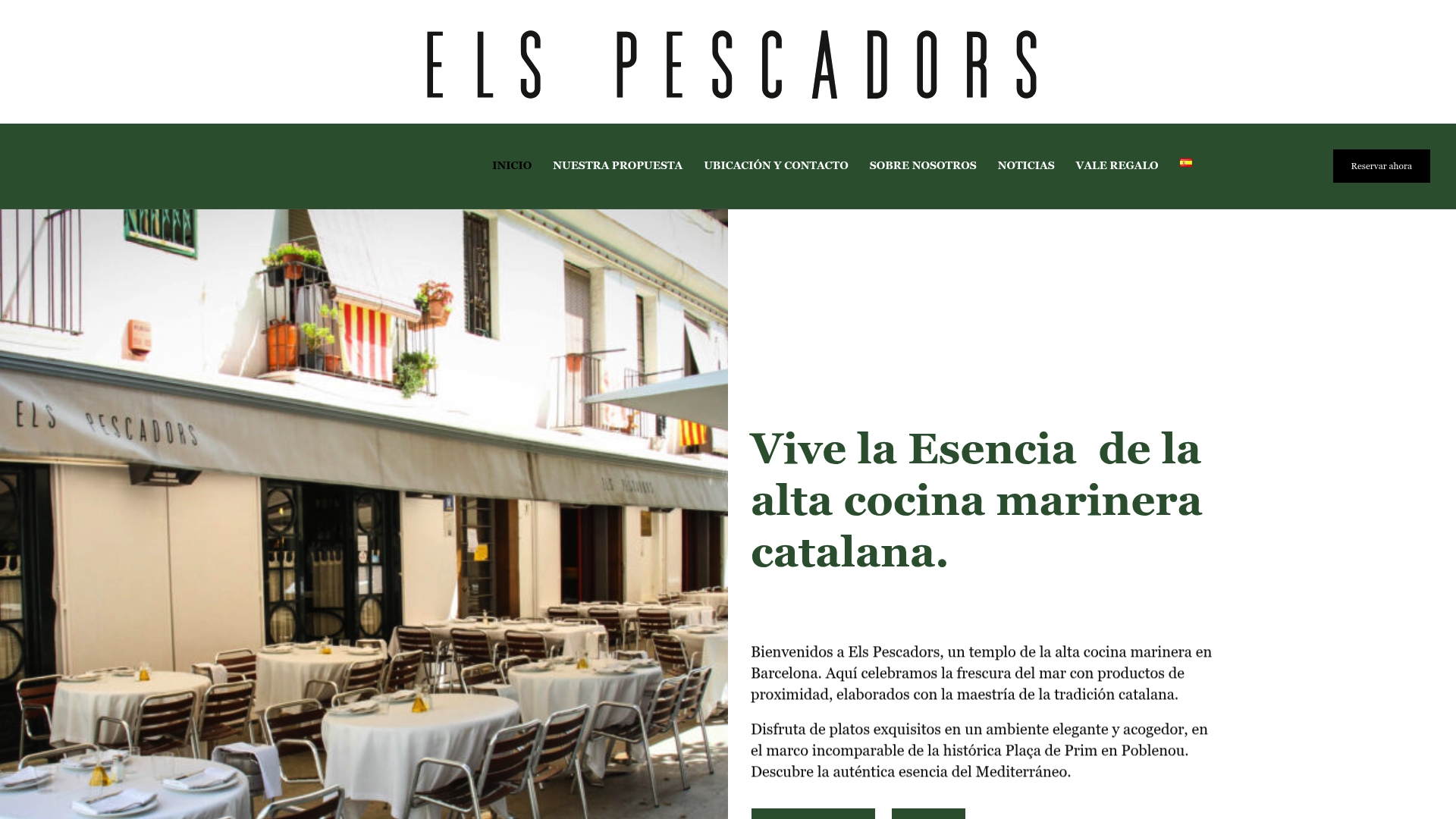
If you’re planning a larger gathering, our Menú para Grupos is designed for group and event dining in a historic Barcelona setting. Whichever format you choose, mention any allergies or dietary needs when you book so staff can plan preparation details in advance. Restaurant staff can walk you through the carta, explain a preparation, or suggest a dish once you’re at the table: reserve your visit and put these words to work over a real meal.
FAQ
What are some common Spanish restaurant terms?
The most useful terms to know are la carta (the menu), menú del día (fixed-price daily menu), tapa (small bite), ración (full shared plate), and la cuenta (the bill). These five cover most of what you’ll need to navigate a typical Spanish restaurant visit.
What are some common Spanish food words?
Core food vocabulary includes pescado (fish), marisco (shellfish), carne (meat), verduras (vegetables), and postre (dessert). Specific items like merluza (hake), pollo (chicken), and ensalada (salad) build on these broader category words.
What are some words for “dinner” in Spain?
Cena is the standard word for dinner or the evening meal. Comida typically refers to the midday meal, which in Spain is often the larger meal of the day, while cena tends to be lighter and served later in the evening.
How do they say menu in Spain?
Both menú and carta are used, but they mean slightly different things. La carta refers to the full menu of individually priced dishes, while menú often refers to a fixed-price set meal, such as a menú del día, a distinction confirmed by the Real Academia Española’s definition of “menú”.
Do Spanish menus have to list allergens?
Yes, restaurants across the EU are required to inform diners about 14 specific allergens, either directly on the menu or when asked, under EU food information rules. If a menu doesn’t list allergens explicitly, you can ask your server directly using a phrase like “¿Este plato contiene…?”
Sources
- European Commission — Allergies
- Consumer — What travelers with food allergies should know
- Real Academia Española — menú definition