Catalan seafood is not Spanish seafood with a local accent. It is a cuisine built on fishermen’s stews, rice cooked in seafood stock, a few precise sauces and the habit of mixing sea and land in one pot. The best way to taste it in Barcelona is at a table that cooks from the day’s catch and the season. That is how we work at Els Pescadors, on Plaça de Prim in the historic Poblenou district.
This guide explains what defines the cuisine, which dishes to look for, the menu words that signal the real thing, and how to pick a format for your visit, whether you are a couple, a food enthusiast or a group organizer.
TL;DR
- Catalan seafood rests on slow stewing, a sofregit base, a picada finish and rice cooked in fish stock, not on heavy seasoning.
- Look for suquet, arròs negre, fideuà, arròs caldós, esqueixada and bacallà a la llauna, and for mar i muntanya combinations.
- The catch and the season decide what is good on a given day, so a menu that changes beats a fixed one.
- At Els Pescadors you can choose La Carta, the Carta del Día, the Menú de Temporada at 39 € per person, a tasting menu, or a group menu.
Table of Contents
- What makes Catalan seafood different
- Where the cooking comes from
- Dishes to look for on the menu
- How to spot the real thing
- Why the season and the day matter
- How to choose your format
- A sample order for a first visit
- Book a table at Els Pescadors
- Our perspective
- FAQ
- Sources
What makes Catalan seafood different
Start with the pace. According to a BBC Travel guide to Catalan food in Barcelona, Catalan cooking prizes slow stewing, the “xup-xup” of a pot barely bubbling. The same piece notes that Barcelona’s harbors brought outside influences to the city, and that seafood has long been considered nobler than meat.
Then the building blocks. A Vice article on how Catalan cuisine differs from Spanish food points to a few signatures:
- Mar i muntanya (sea and mountain): meat and seafood cooked in one recipe.
- Alioli and romesco: garlic-forward sauces that appear across the menu.
- Escalivada: vegetables charred until the skins burn, for a smoky flavor.
- Picada: a mix of almonds, parsley and garlic added at the end of cooking, used instead of flour to thicken fish and meat stews.
Eater’s guide to essential Catalan dishes adds the base layer: sofregit, onions and tomatoes cooked down slowly in olive oil, and the picada pounded in a mortar with garlic, parsley and almonds or hazelnuts, sometimes with saffron. If a menu uses these words, a kitchen that knows the tradition is probably behind it.
Geography matters too. Spain’s official tourism site describes Catalonia as having sea cuisine on the Costa Brava, sea-and-mountain cuisine in the Empordà (Ampurdán) and mountain cuisine in the Pyrenees. Its list of ingredients includes tomatoes, garlic, fresh herbs, Arbequina olive oil and cod, with suquets and fideuà among the seafood dishes. In practice that means olive oil, tomato, garlic and the fish itself carry the flavor. Spices are not the point.
Where the cooking comes from
The sea-and-mountain pairing has a practical origin. The Catalan tourism board explains that the dishes began when coastal fishermen traded fish with inland farmers for poultry, meat and vegetables. The classics it lists show how far the idea goes: chicken with lobster, meatballs with cuttlefish, pig’s trotters with prawns, rabbit with crawfish, and crab with snails.
The stews follow the same logic of making the most of what the boat brings in. The Vilanova i la Geltrú town page on fishermen’s recipes groups the port’s maritime cooking into suquets, soups, gibrellades, ranxos and seafood rices. Among them are arròs negre, octopus with potatoes and allioli, toasted noodles with oily fish, and the fisherman’s gibrellada. These are recipes of a working coast, not of a banquet hall.
Barcelona has its own version of that story. If you want the neighborhood angle, our piece on the fishing tradition of the Barceloneta covers how a fishermen’s quarter shaped what the city eats. For a look at why the morning catch dictates the plate, see how the morning catch shapes the menu.
Dishes to look for on the menu
Here are the dishes that tell you you are eating Catalan maritime food, with what each one is made of.
Suquet de peix
A fishermen’s stew. Eater describes the Costa Brava version, suquet de pescadors, as monkfish and potatoes in a rich broth. A 1992 text from the LA84 digital archive says the name comes from the verb suquejar, to release a juice. It was first made with inexpensive fish and is now often made with monkfish.
Arròs negre and arròs caldós
Arròs negre is moist rice colored with cuttlefish ink and served with allioli. Arròs caldós is the soupy version, and Eater’s example uses lobster, seafood stock, sofregit and picada. Both are cooked in stock, which is why rice is central to Catalan maritime cooking and not a side dish. Expect a rice dish to be made for the table, not rushed.
Fideuà
The noodle cousin of paella: vermicelli cooked in seafood broth. Spain’s tourism site lists fideuà among Catalonia’s seafood dishes. When a menu offers both rice and noodles, trying one of each is a good way to taste the stock.
Rossejat
Fideus rossejats are toasted noodles, and the rice version is similar. The Smithsonian Folklife Festival describes cuttlefish rossejat from the Ebro Delta. Cooks gather crab, rockfish, conger eel and mantis shrimp only to make the stock, then fry cuttlefish with olive oil, garlic, tomatoes, paprika and saffron in a paella pan. It shows the Catalan method well: a lot of work goes into the base so the final dish can taste simple.
Esqueixada and bacallà a la llauna
Salt cod is a cornerstone. Esqueixada is a salad of shredded salt cod with tomatoes, black olives and olive oil. Bacallà a la llauna is cod baked in a rectangular tin with olive oil, paprika and sliced garlic, which Eater describes as a Barcelona restaurant dish dating from the 18th century.
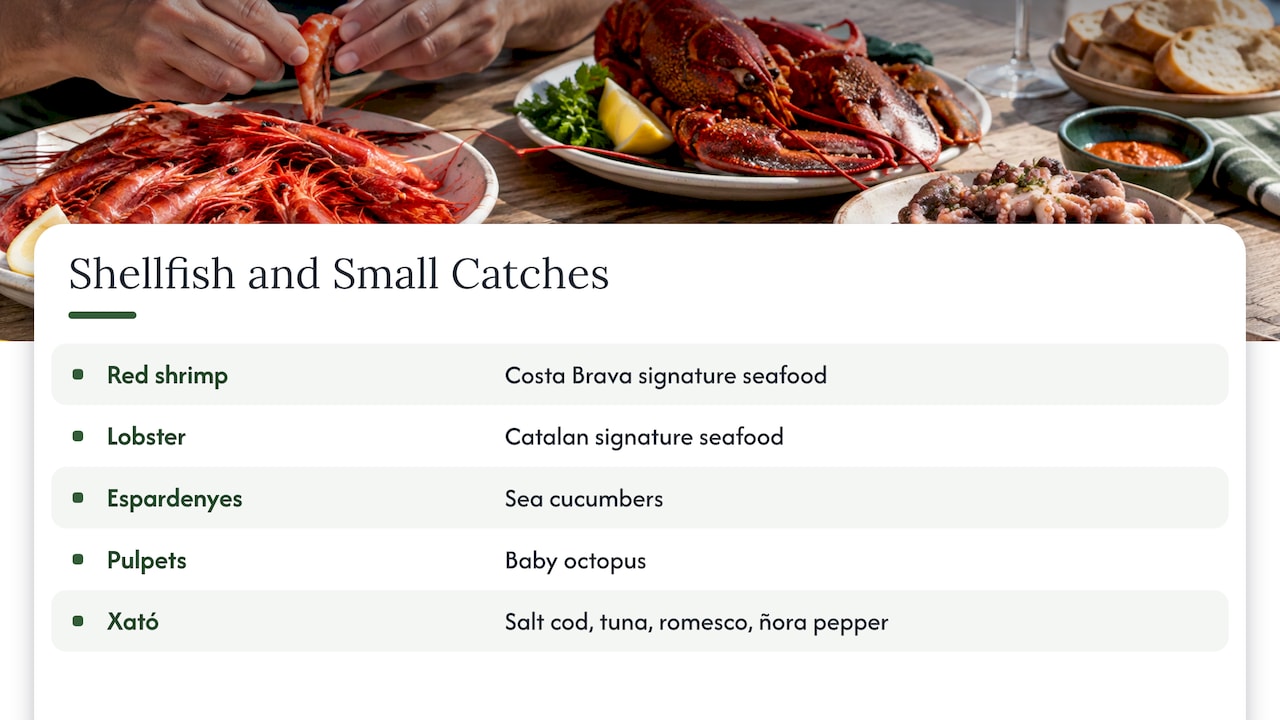
Shellfish and small catches
The LA84 text names Costa Brava red shrimp and lobsters, espardenyes (sea cucumbers) and pulpets (baby octopus) among Catalonia’s signature seafood. It also mentions xató, a salad of salt cod and tinned tuna with romesco and ñora pepper. If any of these appear on a daily list, they are worth a question to your server.
For a longer rundown of what is on offer, see our guide to the essential types of seafood in Catalan gastronomy and our look at unique fish preparations worth seeking out in Barcelona.
How to spot the real thing
A few signals help you read a menu quickly.
- Specific dish names in Catalan. Suquet, arròs negre, fideuà, esqueixada, llauna. Generic “seafood paella” with no detail says little.
- A short, changing list. Fresh catch moves daily, so a menu that changes mirrors the market.
- Stock before spice. The fish should taste of itself, with olive oil, tomato and garlic in support.
- Mar i muntanya on the page. Pairings such as chicken with lobster or meatballs with cuttlefish point to a kitchen that knows the tradition.
- Rice made to order. Good rice needs time, so a restaurant that tells you it takes a while is usually telling you something good.
One warning from the other direction: many places by the waterfront serve rice dishes for tourists that have little to do with the Catalan coast. A menu that names its stews, sauces and fish is the safer sign.
Why the season and the day matter
Catalan seafood is a cuisine of timing. Some products have a clear window. The Smithsonian Magazine’s report on the Anchovy Coast says the anchovy season runs from May to October, and that the fish are salted in barrels and ripened for three months or more before being hand-filleted and packed in sunflower oil.
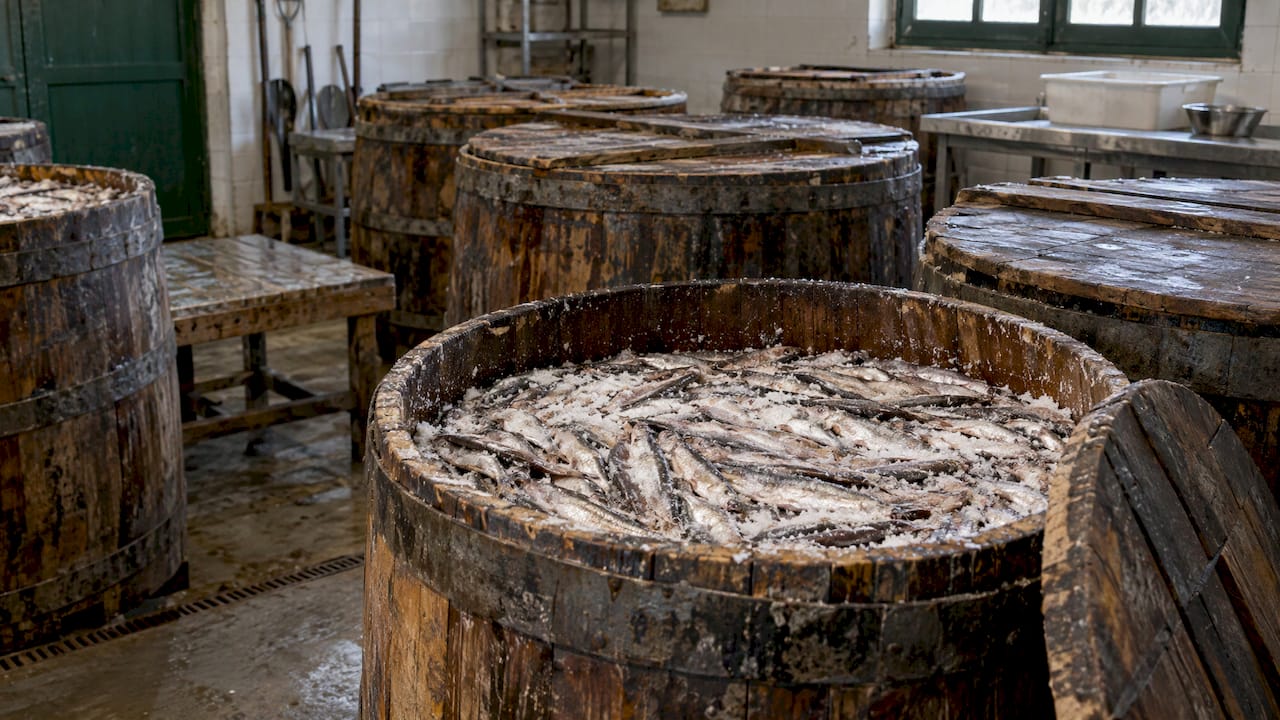
That is one product. The same rhythm applies to the fish on the day’s list, to the vegetables in the stew and to the rice. A good kitchen builds around that rhythm instead of fighting it. Our articles on the importance of seasonal fishing in Catalan cuisine and how seasonal seafood transforms Barcelona’s top restaurants go deeper. If you want to know why fresh catch is worth ordering, read why try fresh catch in Barcelona.
How to choose your format
The same cuisine can be enjoyed in several ways. Pick by how much you want to decide.
| Format | Best for | What it gives you |
|---|---|---|
| La Carta | Food enthusiasts who want to choose each dish | Full choice across fish, seafood and rice |
| Carta del Día | Diners who want the day’s catch | A selection built on what arrived that day |
| Menú de Temporada | First-time visitors, lunch or dinner with a clear budget | A seasonal menu at 39 € per person |
| Menú Degustación | Couples and connoisseurs | A guided sequence of seafood dishes |
| Menú para Grupos | Corporate and private events | A set group menu for shared dining |
If you are torn between choosing and being guided, our comparison of a la carte versus a tasting menu lays out the trade-offs. If you plan to go for a tasting menu, what to tell the restaurant to secure a 2 to 3 hour tasting menu reservation is a short, practical read.
For couples, the tasting format works well because the pacing is set for you and the evening stays unhurried. For organizers, a group menu removes the problem of 12 people ordering from a long list; see these group dining menu examples for upscale Barcelona events.
A sample order for a first visit
If you come once and want the whole picture, build the meal in this order:
- Start cold and simple. A salt cod salad such as esqueixada, or a plate of anchovies, shows the olive oil and the quality of the product.
- Move to a stew or a small shellfish plate. A suquet or a dish of the day’s shellfish shows how the stock and picada work.
- Share a rice. Arròs negre or a soupy lobster rice is the center of the table. Order it for everyone, not one portion per person.
- Finish with the fish of the day. Ask what came in that morning.
That sequence follows the logic of the cuisine, from raw freshness to slow cooking, and it works whether you choose from the carta or let a seasonal menu guide you.
Book a table at Els Pescadors
If you want to taste this cuisine in Poblenou, we cook fresh fish, seafood and traditional rice dishes from seasonal, locally sourced ingredients, in a historic setting on Plaça de Prim. The Menú de Temporada is 39 € per person, and the Carta del Día follows the daily catch. For a longer evening, the tasting menu is designed as a seafood journey.
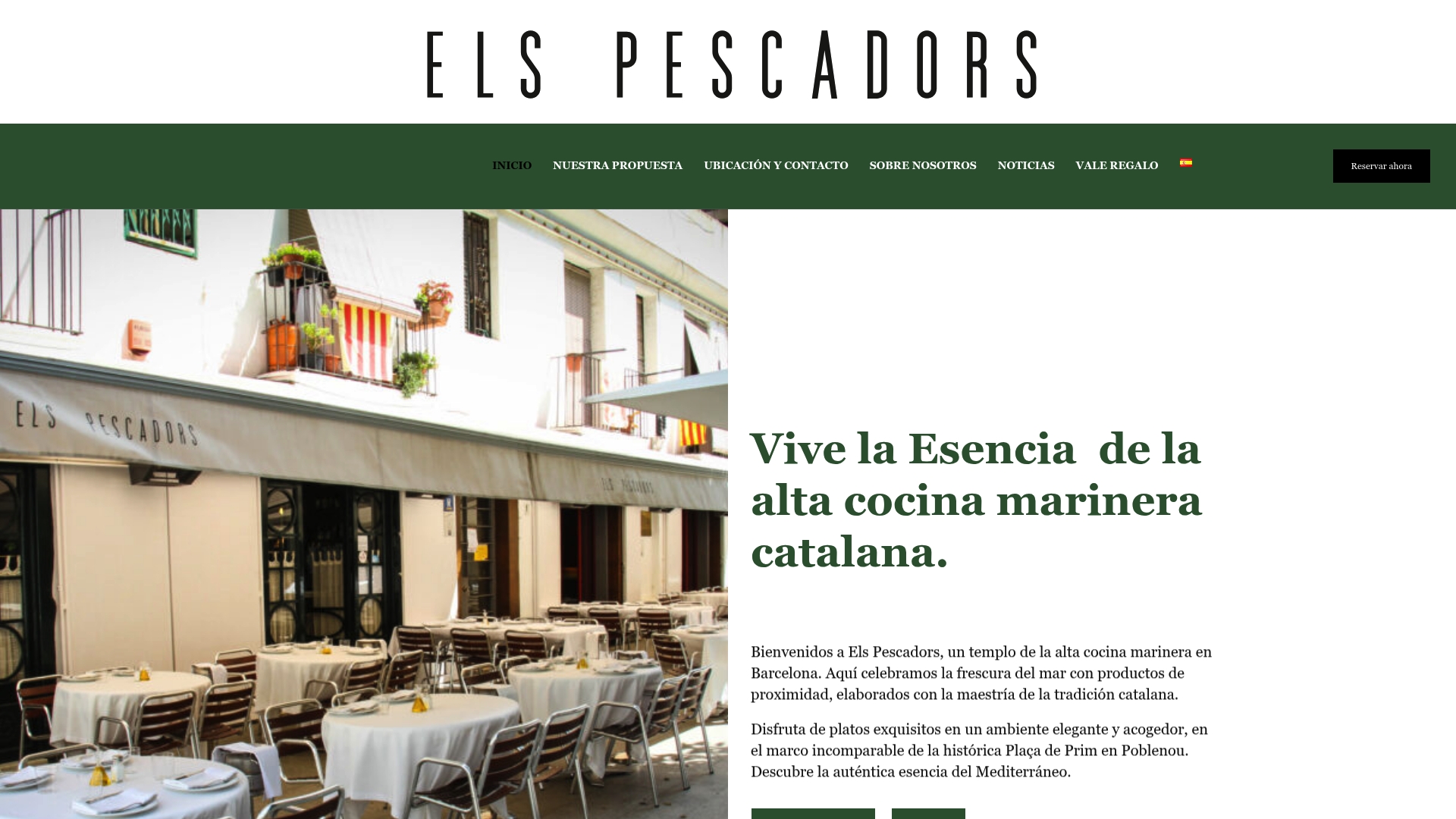
Groups and events can see the group menu and choose a format for a celebration or a corporate dinner. To reserve a table, start from elspescadors.com.
Our perspective
Catalan seafood is a cuisine of restraint. The fish has done the hard part by being fresh, and the cook’s job is to avoid getting in its way: a good sofregit, a careful stock, a picada at the end.
That is why we build our offer around the daily catch and the season. A dish of rice or a piece of fish tastes different in different months, and we think the menu should say so. Our carta, our daily proposal and our seasonal menu are three ways of showing the same idea at different paces.
We also think the setting matters. Plaça de Prim in Poblenou is a place for a long lunch or a slow dinner, and our tasting menus and group menus are shaped for that kind of table, whether it is two people or a company celebration.
YellowRock
FAQ
What is the most typical Catalan seafood dish?
There is no single one, but suquet de peix, the fishermen’s stew, and arròs negre, rice with cuttlefish ink and allioli, are two of the most representative. Both come from the maritime tradition of using the catch in a pot with a sofregit base.
Is Catalan seafood the same as Spanish seafood?
No. Catalan cooking has its own techniques, such as the picada, the sofregit and the sea-and-mountain pairings, which are described by sources such as Vice’s comparison of Catalan and Spanish food. Dishes such as suquet and arròs negre are Catalan, while a bright yellow paella is more typical of Valencia.
What should I order on a first visit?
Choose a format that matches your appetite for decisions. The seasonal menu is the simplest start. On the carta, build a meal of a cold salt cod or anchovy starter, a stew or shellfish, a shared rice and the fish of the day.
Can I book a group or corporate dinner?
Yes. We offer a group menu for private and corporate events. You can also read our guide on how to choose the right venue for a group menu in Barcelona.
Sources
- The five best places to eat Catalan food in Barcelona, BBC Travel
- Catalan Cuisine Is Not the Same as Spanish Food, Vice
- 16 Essential Catalan Dishes to Try, Eater
- The cuisine of Catalonia, Spain.info
- Sea and mountain Catalan cuisine, Turisme de Catalunya
- Receptes de Pescadors, Vilanova i la Geltrú
- Rediscovering the Mediterranean, LA84 digital archive
- Catalan Recipe: Cuttlefish Rossejat, Smithsonian Folklife Festival
- Homage to the Anchovy Coast, Smithsonian Magazine