The best Sunday seafood lunch in Barcelona is a long, late, shared meal: a table booked for around 2 pm, a fish or shellfish starter, a rice or noodle dish cooked for the whole table, and an afternoon that ends when you decide it does. At Els Pescadors, a seafood restaurant on Plaça de Prim in the historic Poblenou district, we cook authentic Catalan maritime cuisine built on the daily catch, seasonal ingredients and traditional rice dishes. This guide explains how to plan that kind of lunch, what to order and what to ask.
TL;DR
- Lunch is the main meal in Barcelona: plan to sit down between 2 pm and 3 pm, and book ahead, especially at weekends.
- Order to share: a seafood starter, then a rice dish or fideuà, which are made for the whole table rather than for one person.
- Ask what came in from the sea that day, and choose by season rather than by one fixed signature plate.
- Do not rush: the sobremesa, the time spent talking at the table after eating, is part of the meal.
- Our Menú de Temporada costs 39 € per person, and La Carta, the Carta del Día and the tasting menu are available too.
Table of Contents
- Why Sunday is the day for seafood and rice
- What to order: the dishes of a Catalan seafood lunch
- Choosing by season and by catch
- A worked example: a Sunday for four
- Pace, bill and the sobremesa
- Booking: what to check before Sunday
- Eating in groups and for celebrations
- Why Poblenou for a seafood lunch
- Our options for a Sunday table
- FAQ
- Sources
Why Sunday is the day for seafood and rice
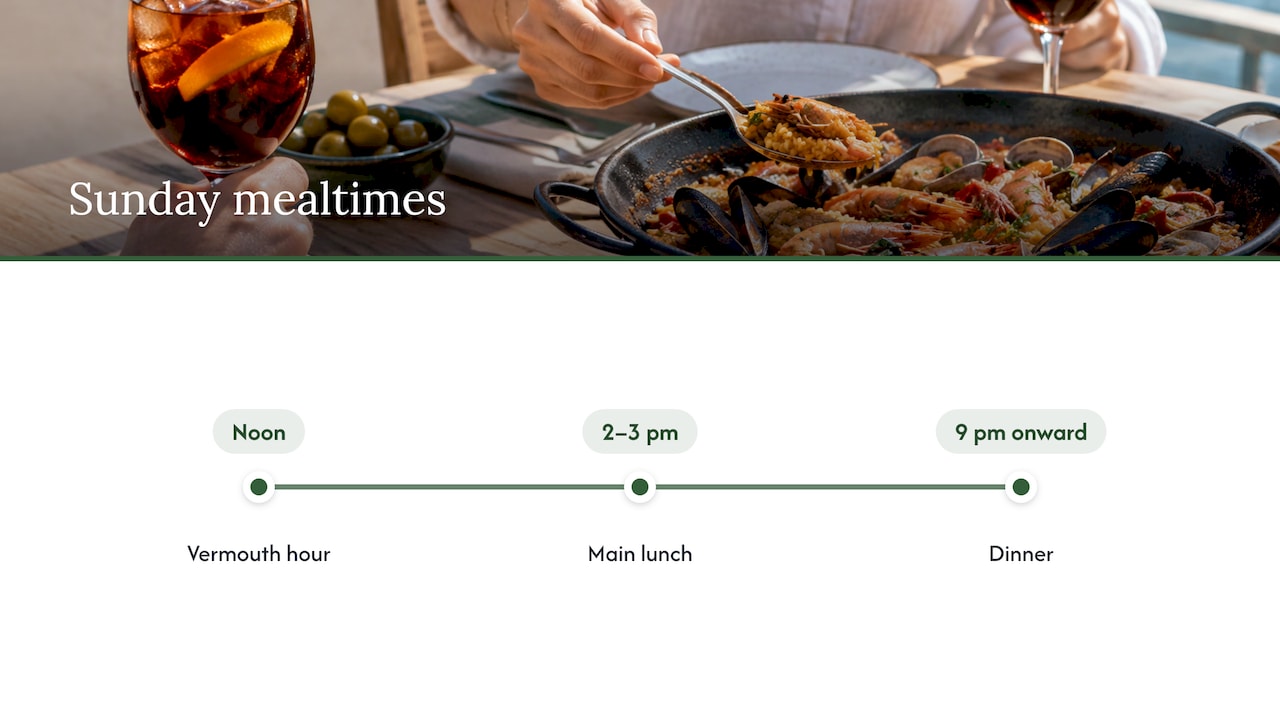
In Barcelona, lunch is the heavy, social meal of the day. The city council’s welcome guide for newcomers puts lunch between 2 pm and 3 pm and dinner from 9 pm onward, and says that staying at the table after the meal is part of local custom. Eater’s guide to local mealtimes calls lunch the main event of the day, usually three courses, and notes that the fixed-price menú del día is a weekday offer. On Sunday the weekday lunch special gives way to something slower and more generous.
That is why the dishes that suit Sunday are the ones that need company and time. A rice dish cooked in a wide pan, a casserole of fish and potatoes, a plate of noodles finished with garlic mayonnaise: none of them is made for a single diner, and none is quick.
The same Eater guide describes the weekend vermouth hour at noon, when bars fill with friends and families over small bites such as canned cockles and Russian salad. It is a good way to ease into the day, but it is a prelude. Eat your real meal at 2 pm, not at noon, where, as the guide points out, you may find little more than a sandwich.
What to order: the dishes of a Catalan seafood lunch
Catalonia’s coast has its own repertoire, and it is not the same as Valencia’s. The Spanish tourist board describes Catalan cuisine by zone, with sea cuisine along the Costa Brava, and lists suquets, the seafood casseroles, and fideuà, the noodle dish, among its seafood specialties. Here is how those dishes read on a Sunday table.
Fideuà
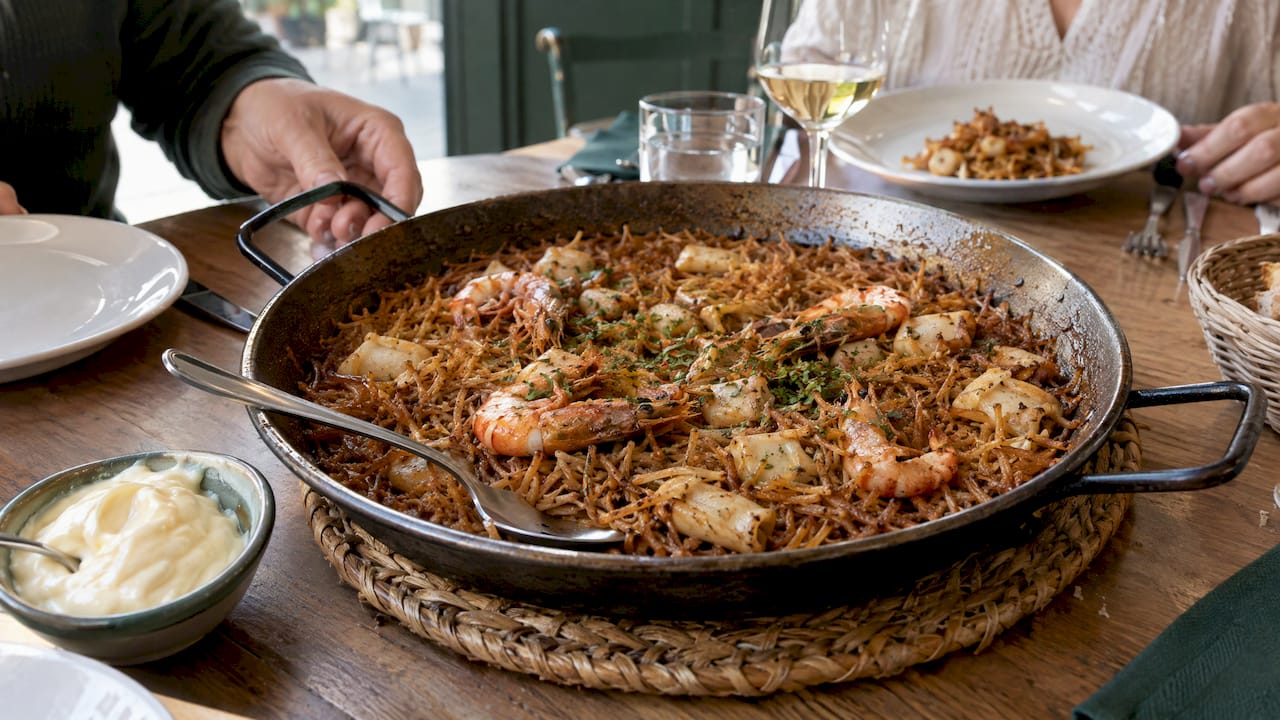
Fideuà is cooked like a paella, but with short, thin noodles instead of rice. Writer Jeff Koehler, who has lived in Barcelona since 1996, explains in Eater that it is made with seafood, typically cuttlefish and shrimp, depends on a good fish stock, and is often finished with allioli. He also calls it festive, and says that, like paella, it is never prepared for one person. He orders it for lazy family lunches, which is exactly the occasion we are talking about.
Arròs: the seafood rice
BBC Travel’s guide to Catalan cuisine describes several rice styles: arròs a la cassola, cooked in an earthenware pot, and arròs negre, rice cooked in cuttlefish ink. The Barcelona-coast version rests on a fish fumet, the stock made from fish, and a rice cooked in it until it has absorbed everything. Paella itself, as Barcelona’s tourism guides point out, is more typical of Valencia. On the Catalan coast the point of a rice dish is the depth of the stock and the quality of the seafood in it.
If rice is what you came for, our guide to three signs of an authentic Catalan seafood rice explains what to look for in the pan, and how to enjoy Mediterranean rice dishes in Barcelona covers the ordering and the pace.
Suquet and the fisherman’s pot
Suquet de peix is a fish stew with potatoes and vegetables in a rich stock. It comes from the cooking done aboard fishing boats. Barcelona’s seafront neighborhood grew out of the same habit: a local heritage page on Barceloneta traces its cooking to fishermen’s shipboard meals of tomato, onion, potatoes, noodles or rice, garlic, oil and fresh fish. Those humble ingredients are still the base of the coastal table.
Surf and turf, the Catalan way
BBC Travel quotes a Barcelona restaurateur explaining that, historically, seafood was considered nobler than meat, and that Catalan cooks combined the two in slow-simmered mar i muntanya dishes. If someone at your table does not eat shellfish, ask about these combinations rather than assuming the menu has nothing for them.
For more on regional preparations, see our pieces on unique fish preparations in Barcelona and traditional Spanish seafood dishes.
Choosing by season and by catch
A good seafood lunch is not built around one plate. It is built around what the sea gave that week. Barcelona’s municipal markets service lists the fish at their best, among them beach hake, Tarragona tuna and cuttlefish, with anchovy, tuna and bonito as the seasonal blue fish. Blue fish are the oily, darker-fleshed fish; white fish are leaner and milder. The balance shifts through the year, which is why a menu that never changes should make you curious.
Three questions help at any table:
- What came in today? Ask for the market fish or the day’s special rather than defaulting to the same dish every time.
- How is it priced? Some fish and shellfish are sold by weight, so confirm the price per kilo or per portion before you order.
- Is the rice for two or more? Rice and fideuà are cooked to order and are usually priced per person, often with a minimum of two, as one Barcelona food-tour guide notes in its list of local dishes to try.
At Els Pescadors the menu follows the daily fresh catch and seasonal, locally sourced ingredients. The Carta del Día reflects that day’s proposal, while the seasonal menu changes with the calendar. Our article on why the morning catch shapes the menu explains how this works in a Catalan maritime kitchen.
A worked example: a Sunday for four
Here is how a table of four might structure a long Sunday lunch. The order is a suggestion, not a script.
| Time | What happens |
|---|---|
| 12:30 pm | Walk through Poblenou, perhaps a vermouth and a small bite |
| 2:00 pm | Seated: bread, a seafood starter to share, a glass of white |
| 2:30 pm | A rice dish or fideuà for the table, ordered for all four |
| 3:30 pm | Fish of the day or a second shared plate, if appetites allow |
| 4:15 pm | Dessert and coffee, then the sobremesa |
| 5:00 pm or later | Ask for the bill when you are ready |
The point of the plan is that the rice dish arrives when the table is settled and talking, not rushed. If you are a couple, the same logic applies at half scale: one shared starter, one rice dish for two, and a dessert.
Pace, bill and the sobremesa
Sunday lunch in Barcelona is not a sprint. One local guide to Spanish eating habits says weekend traditional meals last 1.5 to 2 hours, with no menú del día, and that restaurants will not bring the bill unasked while you linger over dessert and coffee. That is not slow service. It is politeness: you are not being hurried out.
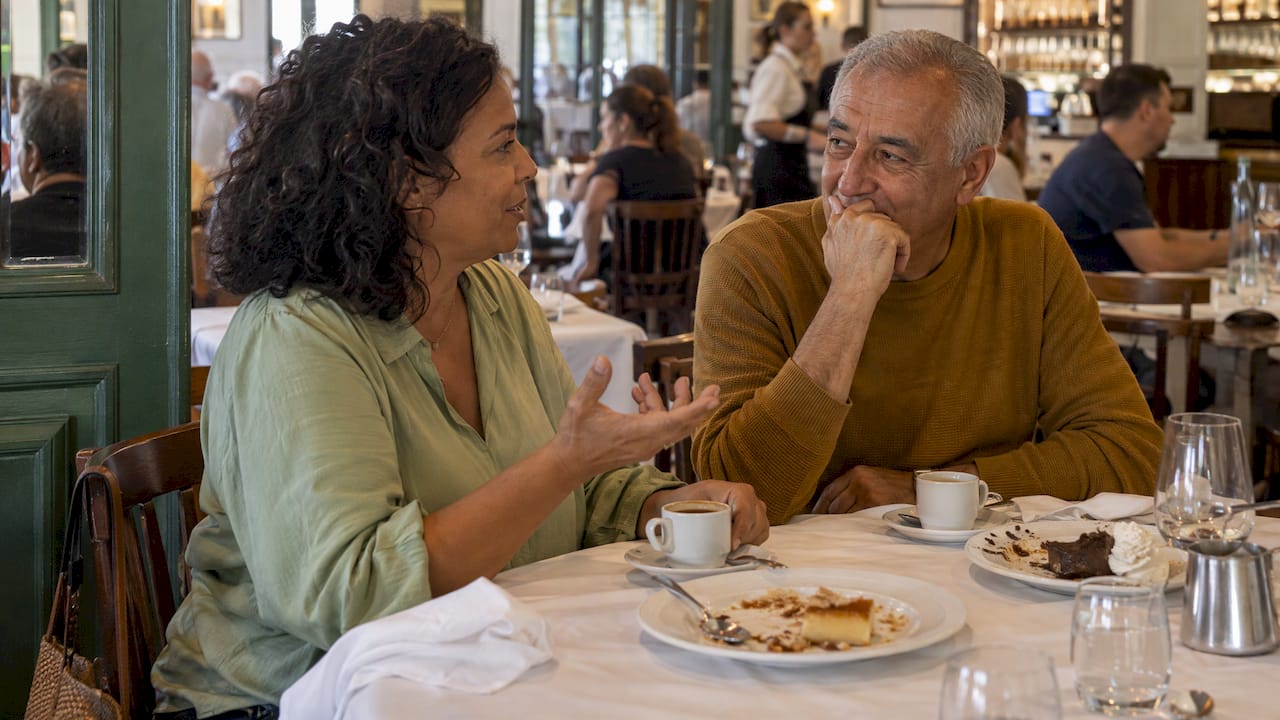
For visitors from countries where the bill arrives with the dessert plates, this takes a moment to get used to. Simply ask when you are ready: “Nos trae la cuenta, por favor” works in any dining room.
If you want an experience with a set rhythm and no decisions to make, a tasting menu is the natural format. Our guide to what to tell the restaurant to secure a 2 to 3 hour tasting menu reservation walks through how that time is planned, and carta versus tasting menu helps you decide between the two.
Booking: what to check before Sunday
Sunday service differs from restaurant to restaurant. A well-known US travel guide notes that many Barcelona restaurants close on Sunday and Monday, that lunch runs roughly from 1:30 to 4 pm with a rush at 2 pm, and that booking ahead pays, especially at weekends. The city’s own guide adds that restaurants may close for all or part of August for staff holidays.
So the checklist is short:
- Reserve for 2 pm. That is the busiest moment, and the one you want.
- Say how many are coming, including children, so the right table and the right rice quantity are ready.
- Mention allergies and preferences when you book, not at the table.
- Confirm the day and the season. Opening days and summer closures change, so check the reservation page for the current schedule before you plan around it.
If you will be arriving after a late flight or want to stay for an evening meal instead, our guide to Barcelona dinner times after 21:00 covers the later end of the day.
Eating in groups and for celebrations
Sunday is also the day families gather and companies hold small celebrations. Seafood and rice suit large tables because the dishes are made to share. We offer a Menú para Grupos for private and group dining, and our article on group dining menu examples for upscale Barcelona events shows how such a meal is typically put together. If you are organizing, choosing the perfect venue for a group celebration lists the questions to settle first: number of guests, dietary needs, the length of the meal and the format.
Why Poblenou for a seafood lunch
Poblenou is a neighborhood with a maritime past and a calmer rhythm than the center. Plaça de Prim, where we are, is a historic square, and the setting suits a lunch that is meant to last. You can walk to the seafront afterward, which is a fitting way to spend the hours after a rice dish. Poblenou is also where this slow, family-style lunch fits most naturally: no cruise-ship crowds, no rush to turn the table.
What we think a Sunday seafood lunch should be
We cook Catalan maritime cuisine, and our view is simple: the table should be built around the catch of the day and the season, and the meal should be given the time it needs. A good rice dish is not a dish you hurry, and a good fish does not need much more than care and the right moment.
That is why we offer different ways to sit down. The Menú de Temporada follows the season. The Carta del Día reflects the day’s proposal. La Carta gives full freedom to choose, and the Menú Degustación is for those who prefer to hand over the pacing and enjoy a seasonal tasting experience. Each format shares the same principles: quality, sustainability and respect for culinary tradition.
For a Sunday, we would say: come hungry, come with company, and plan to stay.
YellowRock
Our options for a Sunday table
If you want to sit down to a seafood lunch in Poblenou, these are the formats we offer:
- Menú de Temporada: 39 € per person, built on the season.
- Carta del Día: the day’s proposal, reflecting the daily fresh catch.
- La Carta: the full à la carte selection of fish, seafood and rice dishes.
- Menú Degustación: a seasonal tasting menu for a longer, guided meal.
- Menú para Grupos: group and private dining.
To choose between them, start with the time you have and the company you bring. For a leisurely couple’s lunch, the tasting menu or a shared rice dish from the carta suits well. For a family or office table, the group menu keeps the meal simple to organize. Book through our site and tell us your group size and any dietary needs.
FAQ
What time is Sunday lunch in Barcelona?
Plan to sit down around 2 pm. The city council places lunch between 2 pm and 3 pm, and the main rush at restaurants falls around 2 pm. Arriving at noon usually means finding little more than snacks, so it is best to adapt to the local schedule.
Do I need to reserve a Sunday seafood lunch?
Yes, it is wise. Weekend lunch is the busiest service, and rice and fideuà dishes are cooked to order. Book ahead, state your group size and mention any allergies, and check the reservation page for the current Sunday hours.
Is fideuà the same as paella?
No. Fideuà uses short thin noodles instead of rice and is made with seafood, usually cuttlefish and shrimp, in a fish stock. Paella is more typical of Valencia, while on the Catalan coast you will find arròs dishes cooked in fish fumet and in earthenware pots.
How long does a Sunday lunch last?
About 1.5 to 2 hours for a traditional weekend meal, and longer if you stay for the sobremesa. The restaurant will not bring the bill until you ask, so there is no pressure to leave. A tasting menu can run two to three hours.
Sources
- Hours and customs, Barcelona International Welcome
- Mealtimes in Barcelona, Eater
- The cuisine of Catalonia, Spain.info
- Fideuà Is Barcelona’s Best Seafood Dish, Eater
- Catalan cuisine, BBC Travel
- Fisherman’s neighborhood seafood cuisine, Essencia Barceloneta
- The five best places to eat Catalan food in Barcelona, BBC Travel
- Del mar, a los mercados y a la mesa, Ajuntament de Barcelona
- What to Eat in Barcelona: 12 Local Foods to Try
- Food and eating habits in Spain, ForeverBarcelona
- What to Eat and Drink in Barcelona, Frommer’s