MSC and ASC are both independent sustainability labels for seafood, and the difference comes down to how the fish was produced. The blue MSC label is for wild-caught fish. The green ASC label is for farmed fish and shellfish. Both work through third-party audits and a traceable chain of custody, and neither one is a promise of zero impact. Below you will find what each label checks, how to read them on a menu or a shop shelf in Spain, and where they fall short.
TL;DR
- MSC (Marine Stewardship Council) certifies wild-capture fisheries. ASC (Aquaculture Stewardship Council) certifies farmed seafood.
- Both rely on independent auditors, and both extend along the supply chain through chain of custody certification, so a labeled product can be traced back to a certified source.
- Neither label means “no impact”. Each tells you a fishery or farm met a defined standard, and the standards differ because wild and farmed production raise different problems.
- On a Barcelona menu, a label is one useful signal. Seasonality, local landing and a kitchen that can tell you where the fish came from matter just as much.
Table of Contents
- MSC vs ASC at a glance
- What the MSC blue label means
- What the ASC green label means
- The real difference: wild vs farmed
- How both labels stay traceable: chain of custody
- Who does the auditing, and is it credible?
- Using MSC and ASC labels in Spain
- Labels versus other ways to judge seafood
- A quick decision guide
- Our perspective at Els Pescadors
- Taste a seasonal menu in Poblenou
- Questions people ask about MSC and ASC
- Sources
MSC vs ASC at a glance
The quickest way to see the split is side by side.
| MSC | ASC | |
|---|---|---|
| Full name | Marine Stewardship Council | Aquaculture Stewardship Council |
| Label color | Blue fish label | Green label |
| Covers | Wild-caught seafood | Farmed seafood |
| What is assessed | Fish stocks, environmental impact, fishery management | Farm management, environment, animal welfare, workers and communities |
| Who audits | Independent accredited bodies | Independent accredited bodies |
| Traceability | MSC Chain of Custody Standard | MSC Chain of Custody Standard plus the ASC CoC Module |
The split between wild and farmed is confirmed by the MSC’s own guide to sustainable seafood, which states that MSC covers wild-caught seafood and ASC covers farmed seafood. A Spanish-language explainer from BBVA says the same thing in plain terms: the blue label identifies certified wild catch, the ASC label certified aquaculture.
What the MSC blue label means
The blue fish label tells you the product is wild-caught from a fishery that was independently assessed against the MSC Fisheries Standard. According to the MSC’s own description of its blue fish label, the current standard is version 3.1, published in 2024.
The assessment is not a simple pass or fail on one question. Certified fisheries are scored against more than 25 performance indicators. To be certified and stay certified, a fishery needs at least 60 on every indicator and an average of at least 80 across all of them, as the same MSC page explains.

The three questions behind the score
The MSC defines sustainable fishing as leaving enough fish in the ocean, minimizing impacts on habitats and ecosystems, and managing fisheries effectively. That translates into three practical questions:
- Are the fish stocks healthy? Can the population keep reproducing at the current level of catch?
- What does the fishing do to the ecosystem? This covers habitats, bycatch and other species in the same waters.
- Is the fishery well managed? Are there rules, monitoring and the ability to adjust when conditions change?
If you want a restaurant-side view of how these criteria connect to day-to-day buying, this operator guide on sustainability in food services walks through how fishing practices, stocks, marine habitats and fishery management shape purchasing decisions.
One point is easy to miss. The MSC says its certifications are specific to individual fisheries assessed by independent experts, which is different from a general recommendation list that rates species in the abstract. The MSC comparison page in Spanish makes that distinction. So the blue label attaches to a specific fishery’s catch, not to “hake” or “prawns” as a whole.
What the ASC green label means
The ASC label means the seafood comes from a farm that was independently assessed against environmental and social standards. According to ASC International, the aim is that the farm manages its impact on the environment, its workers and local communities.
On the environmental side, the ASC standards require certified farms to manage water quality, wildlife biodiversity and fish health, according to the same page. The social side covers workers and neighbors of the farm. The Spanish source from BBVA adds animal welfare to what ASC evaluates, alongside farm management.
Farmed seafood is a broad category. It includes sea bream and sea bass raised in Mediterranean pens, mussels hung on ropes, and salmon, among others. Because each system affects its surroundings differently, the ASC works with species-specific requirements rather than one generic checklist. The practical point for you as a diner: a green label tells you the farm was held to a standard, which is more than a plain “farmed” description gives you.

Unannounced audits
ASC says certified farms undergo unannounced audits, a detail worth knowing because it separates a real inspection from a scheduled one. The same ASC page describes how origin is verified through the MSC Chain of Custody Standard plus the ASC’s own module.
The real difference: wild vs farmed
It helps to think of MSC and ASC as answers to two different problems.
With wild fish, the central risk is taking too much from the sea or damaging the habitat while doing it. So the MSC looks at stock health, the effect of fishing gear and how the fishery is run.
With farmed fish, the central risks are on the farm and around it: water quality, escapes, disease, feed, working conditions. So the ASC looks at how the farm is run day to day.
That is why you cannot swap one label for the other. A farmed sea bream will never carry the blue MSC label, and a line-caught wild fish will never carry the green ASC one. If you see both on a supermarket shelf, they belong to different products. This also means you should not compare an MSC score with an ASC result as if they measured the same thing. Both aim at responsible production, but they measure different systems.
How both labels stay traceable: chain of custody
A label on the farm or the boat means nothing if certified and uncertified fish get mixed further down the line. That is the job of chain of custody certification.
ASC says its chain of custody continues along the supply chain, using the MSC Chain of Custody Standard plus the ASC CoC Module to support traceability and segregation of certified seafood. A Spanish certification body’s description puts the principle simply: products from MSC or ASC certified sources have to be kept separate from uncertified ones and be traceable to a verified source.
In practice, this means a processor, wholesaler or restaurant that wants to use the label has to be audited too. When a business displays the logo, it should be able to show that its supply chain was checked, not only the original boat or farm.
Who does the auditing, and is it credible?
Neither the MSC nor the ASC audits producers themselves in the day-to-day sense. The BBVA explainer notes that the audits for both programs are carried out by independent accredited bodies, and that the ASC does not directly audit the farms. The Spanish Observatory of Aquaculture also treats independent third-party certification as the cornerstone of both systems, to guarantee impartiality and prevent conflicts of interest between the standard setter and the producers, as set out in its 2017 report on certifications.
What a label does not promise
A fair reading of either label includes its limits. The same BBVA source states that certification does not mean an activity has zero environmental or social impact. It means the activity meets a defined standard.
There is also public scrutiny of the ASC. A 2018 technical review by the conservation program SeaChoice, on the ASC salmon standard, suggested that although the ASC is seen as a leading standard, its real effectiveness can be affected when auditors let farms certify despite minor non-compliances or when standards are interpreted flexibly. You can read the review document directly. The takeaway is not to dismiss the label. It is a reason to treat a label as one signal, and to prefer sellers who can explain their sourcing.
Using MSC and ASC labels in Spain
The Spanish Observatory of Aquaculture notes that diners can look for the blue MSC label on wild-caught fish and the green ASC label on farmed products, in shops and on menus, as a simple way to check the seafood was harvested or raised responsibly. The MSC lists on its Spanish site where to buy certified sustainable fish in the country, including supermarkets and restaurants.
A few habits make the labels more useful.
- Check the species and the production method first. Wild or farmed decides which label you should expect.
- Look for the logo on the product or menu, not just a claim. A general phrase like “sustainably sourced” is not the same as a certified label.
- Ask where the fish came from. A good kitchen can name the port, the market or the supplier.
- Remember what has no label. Much of the fish landed by small boats along the Catalan coast is never certified, because certification costs time and money and many small operations are not part of a program. No label does not mean a bad choice.
Spain’s market also uses other quality marks. The Observatory’s report points out that regulation and consumer awareness around aquaculture often refer to protected designations of origin (DOP) and protected geographical indications (IGP) next to environmental certifications such as ASC. Those protect origin and typical production methods, not environmental performance, so they answer a different question from MSC and ASC. On the farmed side, the report also noted that as of 2013, around 11% of Spanish aquaculture companies held some kind of certification, so the picture was patchy.
Labels versus other ways to judge seafood
Certification is not the only tool. Many diners also use species ratings and seasonal calendars. The practical difference is this: a certification covers a specific fishery or farm, while a rating guide gives a general recommendation about a species or region. They answer different questions and can be used together.
Season adds a layer that no label shows. Fish caught in their natural season tend to be abundant locally, taste better and travel less. We cover this in more detail in our piece on the importance of seasonal fishing in Catalan cuisine and in our guide to what seasonal seafood is and why to choose it. If you want the broader picture of why this matters at the table, see how sustainable fish shapes your dining experience.
A quick decision guide
| If you are choosing… | Look for | Then ask |
|---|---|---|
| Wild hake, tuna, prawns, sole | Blue MSC label | Which fishery or port did it come from? |
| Farmed sea bream, sea bass, salmon, mussels | Green ASC label | Which farm or supplier raised it? |
| Fish caught by a small local boat | Often no label | Where was it landed, and when? |
| A dish labeled “sustainable” without a logo | Nothing verifiable yet | What is the claim based on? |
Our perspective at Els Pescadors
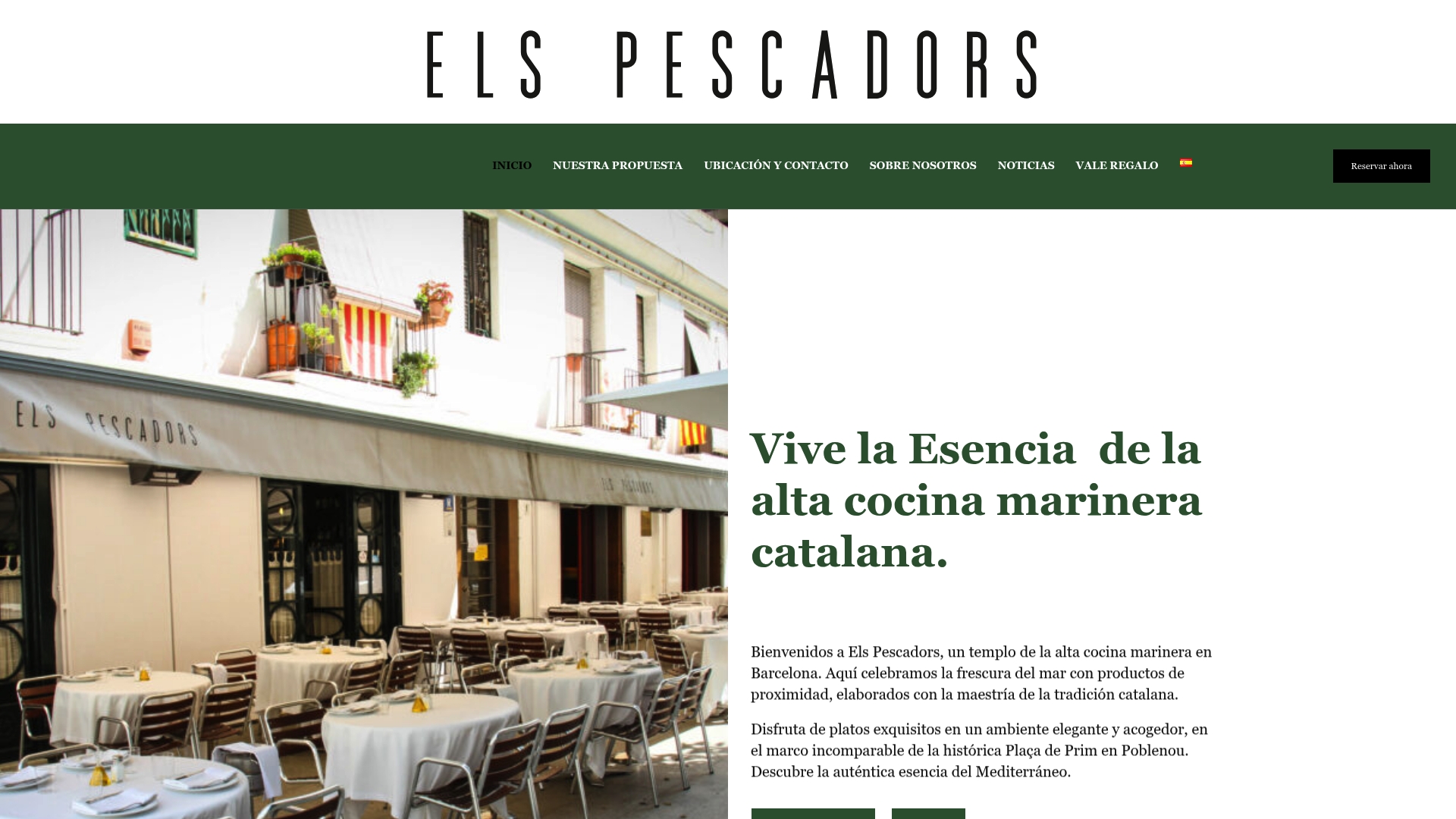
We cook maritime Catalan food in Plaça de Prim, in Poblenou, and the question behind MSC and ASC is one we hear at the table: how do you know the fish on your plate was a good choice?
Our answer begins with how we work rather than with a logo. Our kitchen is built around the daily catch, seasonal products and locally sourced ingredients. We design the menu around what is good that day, and we would rather tell you why a fish is on the menu now than hand you a symbol. Sustainability, quality and culinary tradition are the core of what we do, and they show in how a rice dish or a plate of fish is prepared.
That said, we see the value of independent labels. They give every diner, in any restaurant or shop, a shared language. The blue and green logos help you spot a verified source when you cannot ask a chef. We welcome that, and we encourage you to use them anywhere you buy seafood.
Our advice, then, is to combine the tools. Use the labels when they exist. Ask your server where the fish was landed. Choose what is in season. And favor kitchens that build the menu around the day’s catch, because that is where freshness and responsibility tend to meet. If this approach interests you, read why supporting local fishermen in Barcelona matters and how local suppliers shape seafood restaurants.
— YellowRock
Taste a seasonal menu in Poblenou
If you would like to see how a daily-catch kitchen works in practice, our Menú de Temporada is the simplest way in, at €39 per person. It follows what the sea and the market offer in the current season.
If you prefer a longer meal, we also serve a tasting menu, and groups can book through our group menu page. For the full range of dishes, see La Carta.
Questions people ask about MSC and ASC
What does MSC-certified fish mean?
It means the fish is wild-caught from a fishery that was independently assessed against the MSC Fisheries Standard. The fishery is scored on stock health, environmental impact and management, and must keep meeting the minimum scores to stay certified.
What does it mean to be ASC certified?
It means the seafood comes from a farm that was independently assessed against ASC environmental and social requirements. These cover water quality, biodiversity, fish health, workers and local communities, and the farm can be audited without notice.
Can a product carry both labels?
Not as a single fish, since a product is either wild-caught or farmed. A shop or a meal can include both kinds of products, each with its own label. The MSC Chain of Custody Standard is shared by both programs for traceability, but the production standards are separate.
Is ASC certification legit?
It is a real third-party program with independent audits, and it is widely regarded as a leading standard for farmed seafood. Like any certification, it does not guarantee zero impact, and reviewers such as SeaChoice have raised questions about how consistently some standards are applied. Use it as one signal among several.
Does a restaurant without a label serve unsustainable fish?
No, not necessarily. Many small-scale fisheries and local suppliers are not certified. Ask where the fish was landed, whether it is in season and how the kitchen sources it.
Sources
- The MSC blue fish label: what it means for you
- What is sustainable fishing, Marine Stewardship Council
- Cómo se compara el sello azul de MSC con otros
- About the ASC Sustainability Label, ASC International
- CoC Module, ASC International
- Guide to Sustainable Seafood, MSC
- Sellos de pesca sostenible: qué son y cómo identificarlos, BBVA
- Certificación de la Cadena de Custodia MSC y ASC, Intertek
- Certificaciones, estándares y marcas de interés para el sector acuícola, Observatorio Español de Acuicultura
- SeaChoice review of the ASC Salmon Standard
- Dónde comprar pescado sostenible, MSC España