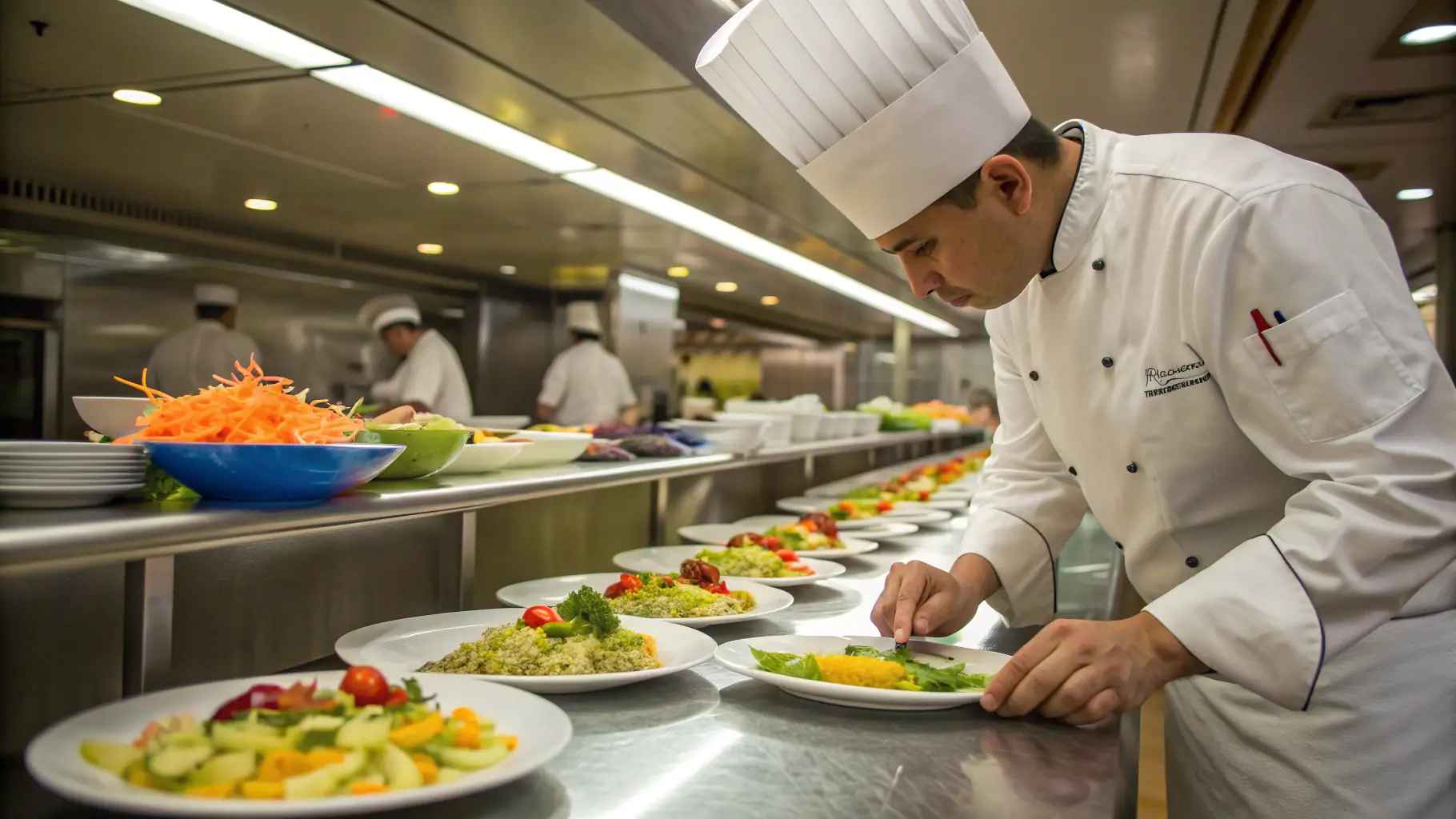
Marisquerías typically offer vegetable starters and salads, vegetable paella or rice dishes, croquettes, and egg- or dairy-based plates like tortilla de patatas. The caveat: many of these dishes hide fish stock, anchovy, or bonito flakes, and fryers or prep surfaces are often shared with seafood, so what looks vegetarian needs a quick check with staff before it lands on your plate.
TL;DR:
- Most vegetarian dishes in marisquerías are built on vegetable bases but often use fish stock, anchovy, or bonito flakes in broths and sauces.
- Request vegetable stock for rice dishes and sauces, and confirm that fryers or grills are not shared with seafood to avoid cross-contamination.
- Seasonal menus make it easier to find vegetarian options because kitchens source fresh produce that can be adapted into plant-based dishes.
- Nutrients like iodine and omega-3 fatty acids are typically lacking without fish, so vegetarians should supplement with seaweed, walnuts, or flaxseed.
- Clear, specific questions about ingredients and preparation methods improve the chances of getting a genuine vegetarian meal in a seafood restaurant.
Table of Contents
- Vegetarian Dishes You Can Expect on a Marisquería Menu
- How Chefs Adapt Seafood Menus for Vegetarian Diners
- Nutrition Considerations When Eating Vegetarian at a Seafood Restaurant
- Sample Vegetarian Plates and How a Seasonal Menu Makes Them Possible
- How to Order a Vegetarian Meal Without the Guesswork
- My Take on Eating Vegetarian in a Seafood-First Kitchen
- A Seasonal Seafood Menu That Welcomes Vegetarian Requests
- FAQ
- Sources
Vegetarian Dishes You Can Expect on a Marisquería Menu
Seafood restaurants build their vegetable-forward offerings around what already accompanies the fish, which means the vegetarian menu is usually more generous than it first appears. Starters are the safest territory: mixed salads, pan con tomate, grilled seasonal vegetables, and escalivada (roasted eggplant, pepper, and onion) rarely touch seafood unless anchovy is folded into a dressing.

Small plates widen the options further. Croquetas de verduras, pimientos del padrón, and garbanzos estofados with vegetables show up on many menus, often labeled clearly because kitchens know they attract vegetarian diners. Rice dishes deserve attention too: a vegetable paella or arroz de verduras made with the same sofrito base as a seafood paella, just without the shellfish, is common when a kitchen is willing to swap the stock.

Egg and dairy mains round things out. Tortilla de patatas, huevos con patatas and seasonal vegetables, or a cheese-topped vegetable bake give you something substantial rather than a side dish pretending to be dinner.
A few traps are worth flagging before you order:
- Broths and sauces: many “vegetable” soups and sauces are built on fumet (fish stock) as their flavor base.
- Dressings: anchovy or bonito flakes often season salads and vegetable dishes without appearing in the name.
- Shared equipment: fryers and grills used for seafood can leave residue on a supposedly vegetarian dish.
How Chefs Adapt Seafood Menus for Vegetarian Diners
Kitchens built around fish and shellfish still have tools to deliver real flavor without them. Umami does not require seafood: mushroom reductions, roasted tomato concentrates, caramelized onions, and a splash of miso or soy can replicate the depth that a fumet usually provides.
The most common substitutions are practical rather than exotic:
- Vegetable stock replaces fish stock in rice dishes and soups when requested ahead of time.
- Mushrooms or extra legumes stand in for shellfish in a paella or fideuà, keeping the texture varied.
- Roasted or confit vegetables fill the role shellfish plays as a textural contrast in a rice dish.
There are real limits. A dish structurally built on a shellfish broth, like a classic arroz caldoso, cannot become vegetarian without becoming a different dish entirely. An off-menu version works when the kitchen can swap a component without rebuilding the whole plate, which is why calling ahead or asking early in the meal matters more than hoping the waiter improvises under pressure.
Pro Tip: Ask whether the kitchen can prepare a vegetable version of a rice dish using the same sofrito, just with vegetable stock instead of fumet; most kitchens that make their own stocks can do this with notice.
Seasonal sourcing also shapes what is available, as seen in seasonal vegan menu ideas that highlight how produce-driven dishes evolve through the year. A restaurant that rotates its produce with the seasons will have a different vegetarian lineup in winter than in August, which is one reason some marisquerías keep their vegetarian offerings flexible rather than fixed.
Nutrition Considerations When Eating Vegetarian at a Seafood Restaurant
A vegetarian plate at a marisquería can be nutritionally solid if you build it the way national nutrition guidance for vegetarian menu lines suggests: pairing legumes with grains, and leaning on eggs or dairy, rather than expecting a meat substitute to appear on a seafood menu. Garbanzos with rice, a lentil-based side, or a cheese-topped vegetable bake each cover protein without needing anything manufactured.

Two nutrients deserve more thought. Iodine and omega-3 fatty acids are typically supplied by fish, and dietary guidance on fish, meat, and eggs notes that plant foods form the base of a healthy diet while fish covers those two nutrients when eaten regularly. Vegetarians can offset the gap with iodized salt, seaweed in moderation, walnuts, and flaxseed, none of which a seafood restaurant is likely to serve by default, so treat a marisquería meal as one part of a broader weekly diet rather than a complete nutritional solution on its own.
Sample Vegetarian Plates and How a Seasonal Menu Makes Them Possible
A marisquería with a seasonal menu structure has an easier time offering real vegetarian variety, because the kitchen is already sourcing fresh produce to plate alongside the fish. A handful of composed plates illustrate what that looks like in practice:
- Vegetable paella with white beans and roasted red pepper, built on the same sofrito as the seafood version.
- Grilled seasonal vegetables with romesco sauce, a Catalan staple that needs no adaptation.
- A chickpea and wild mushroom bowl styled after fideuà, swapping noodles or rice for the usual shellfish garnish.
- Potato and egg mains, such as tortilla de patatas with a side of seasonal greens.
- A warm grain bowl with roasted vegetables and a local cheese for added protein and calcium.
Dishes like these rotate naturally when a restaurant runs a seasonal menu format, since the kitchen is already adjusting what goes on the plate week to week. At Els Pescadors, a Catalan maritime restaurant in Barcelona’s Poblenou district, the Menú de Temporada reflects that same seasonal logic, built around fresh, locally sourced ingredients that happen to lend themselves to vegetable-forward substitutions when a guest asks in advance.
How to Order a Vegetarian Meal Without the Guesswork
A short, specific question gets better results than a general statement about being vegetarian. Try: “Is this made with fish stock?” or “Can you prepare this without any fish or seafood?” If a sauce is the concern, “Could you serve that on the side?” lets you taste and decide rather than sending a whole plate back.
Watch for a few warning signs:
- Vague menu descriptions that do not list every component of a sauce or broth.
- A kitchen that fries everything, vegetarian or not, in the same oil as its seafood.
- House-made sauces with no stated ingredients, which often hide anchovy or fumet.
Most kitchens can make small accommodations without much disruption: swapping stock, leaving cured fish out of a dressing, or confirming that a shared fryer is not the only frying option available. Asking early in the meal, rather than after a dish arrives, gives the kitchen room to actually deliver.
My Take on Eating Vegetarian in a Seafood-First Kitchen
Dining vegetarian at a marisquería rewards curiosity more than caution. The best plates are usually the ones built around what is fresh that week, not a workaround bolted onto a fish-centric menu. A short, direct conversation with the server before ordering solves more problems than scanning the menu twice ever will.
— YellowRock
A Seasonal Seafood Menu That Welcomes Vegetarian Requests
Some restaurants build seasonal menus around what is fresh and local each season, which means vegetable-forward substitutions fit naturally into menus that rotate with the harvest. When given advance notice, kitchens can adapt rice dishes, starters, and seasonal plates to leave out fish and shellfish while keeping similar culinary techniques.
| What you can request | How we handle it |
|---|---|
| Vegetable version of a rice dish | Prepared with vegetable stock instead of fumet |
| Seasonal vegetable starters | Drawn from the same produce sourcing as our Menú de Temporada |
| Group or private dining with vegetarian guests | Adjusted through our Menú para Grupos |
Reserve a table and mention your preference when booking, and explore our current Menú de Temporada to see what is in season now.
FAQ
¿Puede un vegetariano comer mariscos?
No. A vegetarian diet excludes fish and seafood by definition, according to public health guidance on vegetarian eating. Someone who eats fish but not other meat follows a pescatarian diet, which is a separate category.
¿Qué puede comer un vegetariano en un restaurante de mariscos?
Vegetarian diners can typically order vegetable starters, salads, croquettes, vegetable paella or rice dishes, and egg or dairy mains like tortilla de patatas. The safest approach is asking whether stocks, sauces, or fryers are shared with seafood preparations before ordering.
¿Qué puede comer un vegetariano en un restaurante en general?
Most restaurants offer salads, vegetable sides, pasta, legume-based dishes, and egg or dairy mains that can be adapted for vegetarian diners. Checking for hidden animal-based ingredients in sauces and stocks, as outlined in guidance on balanced vegetarian meal planning, helps avoid surprises in any kitchen, not just seafood-focused ones.
¿Cómo evitan los veganos los ingredientes de pescado ocultos?
Vegans and vegetarians alike should ask directly about fish stock, anchovy, and bonito flakes, since these commonly appear in sauces and dressings without being named on the menu. Requesting sauces on the side and confirming shared frying oil or prep surfaces reduces the risk of cross-contact, as outlined in general guidance on ovo-lacto vegetarian menu planning.
¿Dónde encuentro más ideas de menús vegetarianos de temporada?
Seasonal vegetable-forward menu ideas, including bowls and plant-based specialties, can offer inspiration for what a seafood restaurant might adapt into a vegetarian plate. Seasonal vegan menu ideas from outside the seafood category show how produce-driven menus shift through the year.
Sources
- Kriterien für eine ovo-lacto-vegetarische Menülinie in der Gemeinschaftsverpflegung
- Vegetarische Ernährung | Bundeszentrum für Ernährung (BZfE)