The fastest reliable process for booking group meals is this: call the restaurant, give them a date range, estimated headcount, occasion, and rough budget in that first conversation, then lock a provisional reservation with a written follow-up email the same day. Industry guidance puts deposits at 25–50% of the estimated total upon agreement, and kitchens need your final headcount 48–72 hours before the event to source fresh ingredients. Elspescadors, for example, handles group seafood menus and private dining in Barcelona with exactly this workflow.
Your next 24–72 hours:
- Call your shortlisted restaurant today; don’t rely on an online form for parties above 8–10 covers
- Confirm the deposit amount and payment schedule in writing before you commit
- Give a provisional headcount range (e.g., 18–22 guests) and lock the final number 48–72 hours out
Pro Tip: Book the venue before you finalize the guest list. Experienced planners secure a range (say, 18–22 guests), then firm up the exact number closer to the date.
Table of Contents
- What does the full group meal reservation process look like?
- How do deposits, payment schedules, and cancellation policies work?
- How do you manage the group menu and confirm final headcount?
- What operational details should you share with the restaurant early?
- Day-of checklist to keep the event running smoothly
- Ready-to-use templates for your group booking
- Elspescadors makes group seafood dining in Barcelona straightforward
- Key Takeaways
- The part most planners get wrong
- FAQ
What does the full group meal reservation process look like?
The process runs in five sequential stages, each with a clear deadline.
Stage 1: First contact (as early as possible)
Call directly for any party above the restaurant’s online booking limit, which is usually a small number of guests. Have these details ready before you dial:
- Preferred date and a backup date
- Estimated headcount as a range
- Occasion type (birthday, corporate dinner, farewell)
- Rough per-person budget including drinks and service
- Any AV needs, dietary restrictions, or accessibility requirements
Follow up with a short email the same day to create a paper trail.
Stage 2: Menu and minimum spend discussion
Ask about preset group menus, minimum spend thresholds, and whether a private room carries a room fee. Get this in writing before you pay anything.
Stage 3: Deposit and written confirmation
Pay the agreed deposit (25–50%) and receive a written confirmation covering headcount, menu, timing, and cancellation terms.
Stage 4: Headcount freeze
Send your final confirmed headcount 48–72 hours before the event.
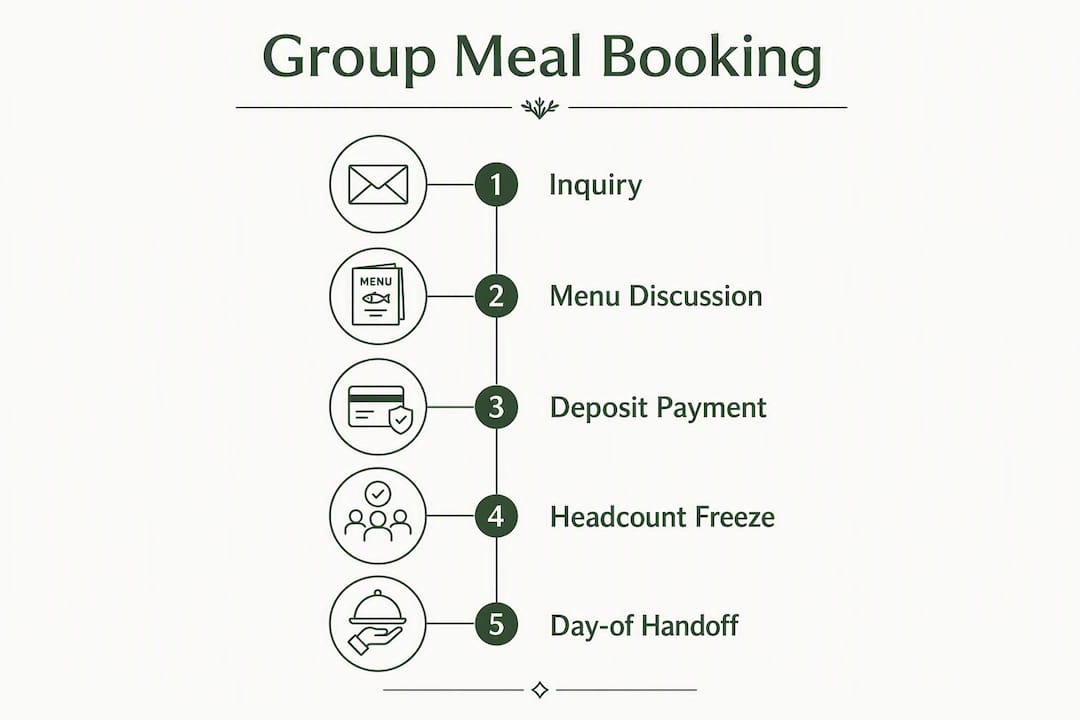
Stage 5: Day-of handoff
Arrive 15 minutes early, meet the events contact, and confirm the billing plan before service starts.
| Group type | Recommended lead time |
|---|---|
| Small group | A few weeks |
| Large group | Several weeks |
| Private room / semi-exclusive | About a month or more |
| Full buyout / exclusive venue | Multiple weeks to months |
Popular or exclusive venues often need even more notice than these windows suggest, especially during peak seasons.
Pro Tip: When you call, mention the occasion type and the energy you want, not just the headcount. A speech-heavy awards dinner needs different staffing and layout than a casual reunion, and the events team can only tailor the setup if they know which one you’re planning.
How do deposits, payment schedules, and cancellation policies work?
Deposits for group bookings serve two purposes: they secure the reservation and reduce no-show risk for the restaurant. The current industry norm sits at 25–50% of the estimated total, paid when you confirm the booking.
What you should always get in writing: the deposit amount, the deadline for the balance, the cancellation window (and whether any portion is refundable), and the no-show policy for guests who don’t appear on the day.
Common payment structures you’ll encounter:
- Per-person preset menu: fixed price per head, easiest to budget
- Minimum spend: the group must hit a total spend threshold; anything short may trigger a room fee
- Room hire fee plus consumption: a flat room charge on top of food and drink spend
- Staged payments: a deposit now, a second installment 2 weeks out, balance on the night
To limit your liability, ask for a sliding deposit tied to headcount bands. If your confirmed number drops from 25 to 20, you shouldn’t be paying a deposit calculated on 25 covers. Also request a refundable window of at least 7–14 days from booking so you have an exit if plans change early.
For private rooms and buyouts, fixed pricing and earlier booking windows are standard. Budget for tax, service charge, and any corkage or AV fees on top of the quoted per-person rate.
How do you manage the group menu and confirm final headcount?
For groups above 12, a preset or limited-choice menu is almost always the right call. Restaurants prefer it because it cuts kitchen complexity; you benefit because costs are predictable and service is faster. Preset menus reduce kitchen complexity and make per-head costs transparent for both sides.
Family-style sharing works well for casual celebrations where variety matters more than pace. Plated individual menus suit formal dinners where timing and presentation are priorities. À la carte for large groups tends to create service bottlenecks and unpredictable bills.
The 48–72 hour rule: kitchens buy perishable ingredients based on confirmed covers. Give your final headcount inside that window and you protect both the quality of the food and the accuracy of your bill.
Restaurants can’t reliably seat extra guests at the door without disrupting service for everyone already seated. “Maybe” is not a headcount.
Dietary and allergy checklist to send the restaurant:
- Total number of vegetarians, vegans, and pescatarians
- Any severe allergies (nuts, shellfish, gluten, dairy) with guest names attached
- Religious dietary requirements (halal, kosher, no pork)
- Preferences vs. medical requirements (flag which is which)
Pro Tip: Collect dietary information via a single shared form or group message with a hard RSVP deadline. Chasing individuals the day before creates errors. Send the consolidated list to the restaurant at least 72 hours out, not as a last-minute addition.
What operational details should you share with the restaurant early?
The events team can only set up the room correctly if you tell them what’s actually happening in it. Give the venue clear context beyond guest count: the type of event, the energy, the schedule, and any technical needs.
Ask the events contact directly: “What’s the room capacity for a plated dinner versus a standing cocktail format?” The answer changes your headcount ceiling, your staffing, and your per-person cost.
Details to communicate before the day:
- Arrival window (staggered or all at once)
- Seating arrangement (round tables, long table, cabaret style)
- Speech or toast timing and whether you need a microphone
- AV requirements: screen, projector, background music, or DJ
- Gift table, cake, or floral delivery logistics
- Accessibility needs (step-free access, hearing loops, wheelchair space)
- Whether you need earlier room access for setup
For large groups, pre-service briefings and staffing assignments are what separate a smooth event from a chaotic one. Ask whether the venue assigns a dedicated events server or shares staff across the floor.
Pro Tip: If you’re planning activities or group entertainment alongside the meal, share that schedule with the events contact so they can pace courses around it.
Day-of checklist to keep the event running smoothly
- Arrive 15 minutes before guests; meet the events contact and walk the room
- Confirm the final headcount and flag any last-minute dietary changes
- Agree on the billing plan (single hosted bill, individual split, or tickets) before service starts
- Identify a single point-person from your group who the floor staff can approach for decisions
- Confirm the first course timing so the kitchen knows when to fire
- Pace drink orders; a large group ordering simultaneously creates a bar bottleneck
- Agree on a signal for clearing courses (a nod to the lead server works)
- Collect the final bill privately before announcing it to the group
Pro Tip: Appoint your point-person before the event, not on the day. The restaurant needs one decision-maker, not a committee. Tell the events contact their name when you send the final headcount.
Ready-to-use templates for your group booking
Initial inquiry email
Subject: Group Dining Inquiry — [Date] — [Approx. Guest Count]
Hi [Restaurant Name] Events Team,
I’m planning a [occasion type] for approximately [X–Y guests] on [preferred date], with [backup date] as an alternative. Our rough budget is [€X per person] including drinks and service.
We’ll need: [preset menu / private room / AV / accessibility requirements].
Could you confirm availability, your group menu options, minimum spend, deposit terms, and cancellation policy?
Best,
[Your name and contact number]
48–72 hour confirmation checklist
Send this to the restaurant 48–72 hours before the event:
- Final confirmed headcount: [X guests]
- Dietary requirements: [consolidated list with guest names]
- Arrival time: [time]
- Billing plan: [single bill / split / hosted bar]
- Point-person on the day: [name and mobile number]
- Any last-minute changes to AV or room setup
Keep a single shared document (a Google Sheet or shared note) with all of the above plus payment terms and the events contact’s direct number. One document, one source of truth, no group chat confusion.
Elspescadors makes group seafood dining in Barcelona straightforward
Planning a group meal at a restaurant that genuinely knows how to run events cuts your day-of risk significantly. Elspescadors, in Barcelona’s Poblenou district, specializes in exactly this: group seafood menus built around daily fresh catch and Catalan maritime tradition, with private and semi-private dining options designed for events from corporate dinners to celebrations.
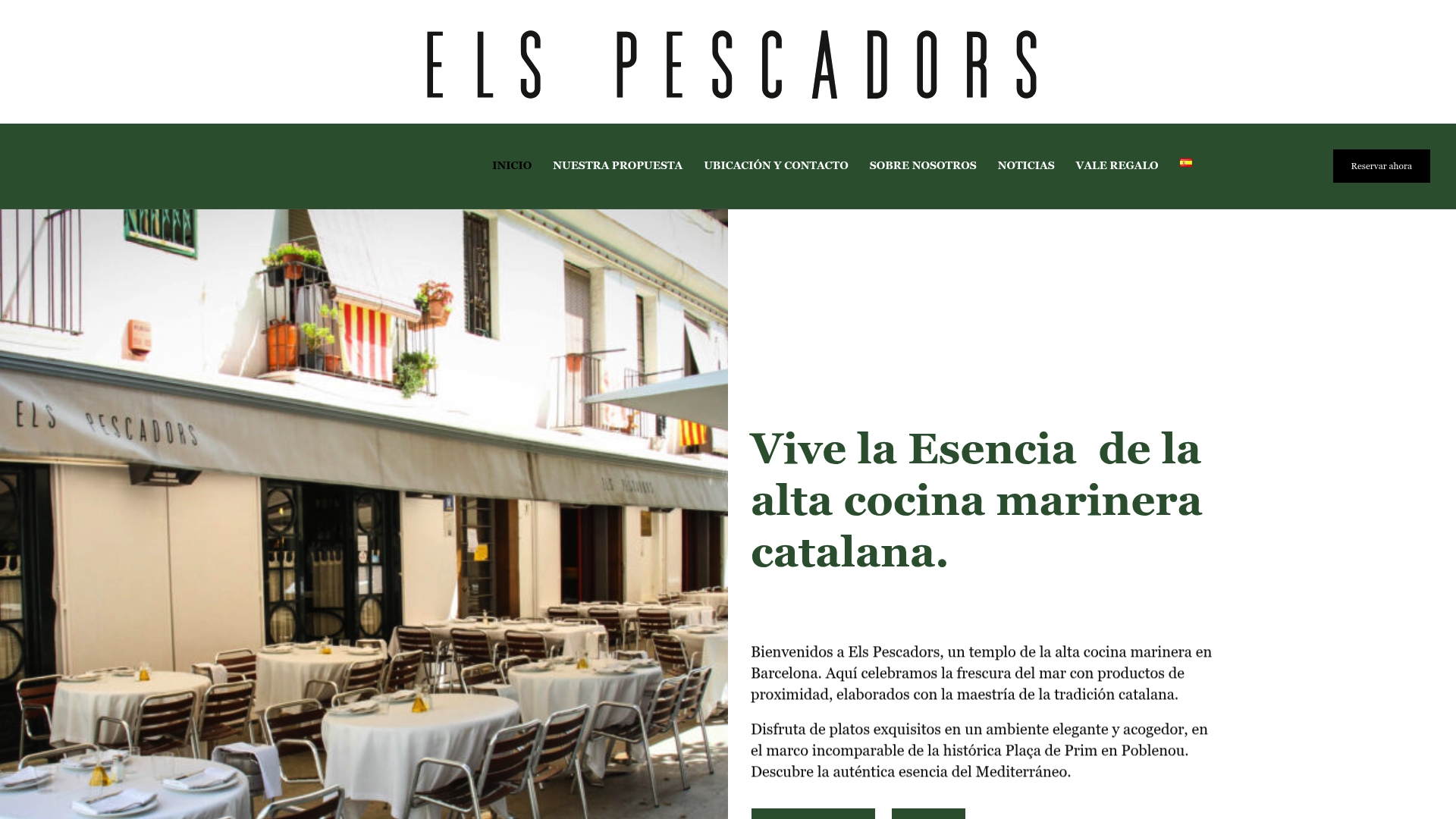
The kitchen works with seasonal, locally sourced ingredients, so the preset group menus reflect what’s genuinely good that day rather than a static banquet list. The events workflow covers deposit terms, headcount confirmation, dietary coordination, and day-of service, so you’re not managing logistics across multiple contacts.
Ready to lock in your group booking? Submit a proposal request directly to the Elspescadors events team and get a tailored group menu and availability confirmation.
Key Takeaways
Booking a group meal reliably requires a confirmed deposit, a preset menu, and a final headcount delivered 48–72 hours before the event.
| Point | Details |
|---|---|
| Book early | Small groups need 1–2 weeks; private rooms and buyouts need 4–12 weeks. |
| Expect a 25–50% deposit; industry standard upon agreement; get payment and cancellation terms in writing. | |
| Confirm headcount a few days before; kitchens need this window to source perishables and adjust service staffing. | |
| Use a preset menu for large groups | Predictable cost, faster service, and lower kitchen complexity for parties above 12. |
| Elspescadors for Barcelona groups | Fresh-catch group menus and a dedicated event workflow for seafood-focused private dining. |
The part most planners get wrong
Most group booking friction doesn’t come from the restaurant. It comes from the organizer side: a headcount that keeps shifting, dietary information collected too late, and no single decision-maker on the day.
Restaurants are set up to handle complexity, but only when they have the information early enough to act on it. A kitchen that receives 30 dietary notes the morning of the event can’t do much with them. The same notes sent 72 hours out? Handled without a second thought.
The other thing planners consistently underestimate is how much the occasion type shapes the setup. Telling a venue “20 people for dinner” gives them almost nothing to work with. Telling them “20 people for a retirement dinner with two speeches, a cake, and a vegetarian-heavy guest list” lets them assign the right server, set the right table configuration, and time the courses around the program. That context costs you nothing to provide and changes the entire experience.
One more thing: keep the billing simple. A single hosted bill settled before guests leave is faster, cleaner, and avoids the awkward math at the end of the night. If the group is splitting costs, agree on the method before the event and tell the restaurant in advance.
FAQ
How far in advance should you book a group meal?
Small groups of 6–12 need 1–2 weeks; larger parties and private rooms typically require 3–6 weeks, and exclusive venue buyouts can need 6–12 weeks, especially at popular restaurants.
What deposit is standard for a group restaurant booking?
A deposit of 25–50% of the estimated total is the current industry norm, paid when you confirm the reservation, with the balance due per the restaurant’s policy.
When should you send the final headcount to the restaurant?
Send your confirmed headcount 48–72 hours before the event so the kitchen can source fresh ingredients and adjust staffing accordingly.
Should large groups order à la carte or use a preset menu?
A preset or limited-choice menu is strongly recommended for larger groups: it keeps costs predictable, speeds service, and reduces kitchen complexity compared to full à la carte ordering.
What details should you include in your initial group booking inquiry?
Include your preferred date and a backup, estimated headcount as a range, occasion type, per-person budget, dietary restrictions, and any AV or accessibility requirements.