You can pronounce most Catalan dishes by learning about ten sounds and one habit. The sounds are x as “sh”, tx as “ch”, ll as a soft “y”, ç as “s”, and a few more. The habit is that unstressed vowels get lazy, so a becomes “uh” and o becomes “oo”. Below you will find respellings for the dishes you are most likely to see on a Barcelona menu, including fideuà, the one readers ask about most.
TL;DR
- Catalan is not Spanish with different spelling. Many menu words, such as fideuà, esqueixada and calçots, sound different from what an English or Spanish reader expects.
- Learn the key sounds: x = “sh”, tx = “ch”, ll = like the “lli” in “million”, ç = “s”, ny = like the “ni” in “onion”.
- Stress the syllable with the accent mark (fideuà = fee-theh-WAH), and let unstressed a/e fade to “uh”.
- Staff in Barcelona expect visitors to approximate. A confident try, plus a point at the menu, always works.
Table of Contents
- Why Catalan dish names trip up English speakers
- The sounds that matter most
- How to pronounce fideuà
- Starters and everyday classics
- Seafood and rice words you will meet at a fish restaurant
- Catalan or Spanish: which do you say?
- A step-by-step way to practice before dinner
- Our perspective
- Put it into practice at Els Pescadors
- FAQ
- Sources
Why Catalan dish names trip up English speakers
Two things cause most mistakes. The first is spelling: Catalan uses letters in ways English does not, and in ways that differ from Spanish. The second is vowel reduction. In Central Catalan, the variety spoken in Barcelona, unstressed a and e are pronounced as a schwa and unstressed o as “oo”. That is why escalivada does not sound like “es-ka-li-VA-da” when a local says it.
Central Catalan is also the usual reference point for learners. An academic description of the language treats educated Central Catalan as a standard variety. It notes that Eastern Catalan reduces unstressed vowels, while Western Catalan generally keeps more vowel distinctions. So if you hear a Valencian or Lleida speaker say a dish differently, that is regional variation, not a mistake.
The respellings in this guide are English approximations, not phonetic transcriptions. Capital letters mark the stressed syllable.

The sounds that matter most
You do not need the whole system. These are the letters that appear again and again in food names.
| Spelling | Sounds like | Menu example |
|---|---|---|
| x | “sh” in “shoe” | esqueixada (es-kuh-SHAH-duh) |
| tx | “ch” in “church” | botifarra amb mongetes uses plain b, but xatonada and tximbo words use tx |
| ll | like “lli” in “million” | escudella (es-koo-DEH-yuh) |
| ny | like “ni” in “onion” | canya, senyor, puny |
| ç | plain “s” | calçots (kal-SOTS) |
| j, and g before e/i | like the “s” in “measure” | gelat, julivert |
| qu, gu before e/i | k, g (the u is silent) | esqueixada, guisat |
| r at the start of a word or rr | rolled r | romesco, butifarra |
The mappings of ll, ny, x, j/g and tx to their sounds are set out in Verbadium’s Catalan course, and a pronunciation tool with audio and IPA illustrates x as “sh”, tx as “ch”, ll as a palatal sound and ç as a plain s. If you want to hear a dish before you say it, that tool lets you type a name and play it back.
A note on the diaeresis. You will see it on words like llengües or ruïna. The Institut d’Estudis Catalans explains that a diaeresis can show that the u is pronounced after g or q, or that two vowels do not merge into one. On menus it matters less than the sounds above, but it explains odd-looking spellings.
Stress: follow the accent mark
When a word has an accent mark, stress that syllable. Fideuà, tomàquet and bacallà all carry one. When there is no mark, Catalan words usually stress the second-to-last syllable if they end in a vowel, and the last syllable if they end in a consonant. So escalivada stresses “VA”, while calçots is one syllable of stress at the end. The IPA stress mark, for reference, indicates that the following syllable is stressed.

How to pronounce fideuà
Fideuà is the question behind most of the searches for this topic. It is a seafood noodle dish cooked like a paella, and Wikipedia describes it as a dish from the Valencian coast made with noodles, fish and shellfish. You will find it on many Barcelona seafood menus.
In Central Catalan the Wiktionary entry gives the IPA as fi.ðəˈwa, and in Valencian and Northwestern speech as fi.ðeˈwa. In plain English:
- Central (Barcelona): fee-thuh-WAH, with the middle “d” softened toward the “th” in “this”.
- Valencian: fee-theh-WAH, with a clear “eh”.
- Safe version for English speakers: fee-deh-WAH. Everyone understands it.
The stress is on the last syllable, which is why the accent is written there. Do not say “fee-DEW-ah”, the most common slip. The eu is not an English “yoo”. It glides: the “e” and “u” run together into “eh-w”.
In Spanish the same dish is written fideuá, and Wiktionary gives that Spanish form as /fideˈwa/. If you say it the Spanish way in Barcelona, nobody will blink.
Starters and everyday classics
These are the names that show up in the first lines of a menu. The list of dishes visitors meet most often draws on Spain’s official tourism site and Eater’s guide to essential Catalan dishes.
| Dish | Respelling | What it is |
|---|---|---|
| Pa amb tomàquet | pa(m) too-MAH-kuht | Toasted bread rubbed with tomato, olive oil and salt |
| Escalivada | es-kuh-lee-VAH-thuh | Roasted aubergine, peppers and onion |
| Esqueixada | es-kuh-SHAH-thuh | Shredded salt cod salad |
| Calçots | kal-SOTS | Charred spring onions, eaten with romesco |
| Romesco | roo-MES-koo | Nut and pepper sauce |
| Allioli | ah-lyee-OH-lee | Garlic and oil emulsion |
| Escudella | es-koo-DEH-yuh | Winter meat-and-vegetable soup |
| Canelons | kuh-nuh-LONS | Catalan cannelloni |
| Butifarra | boo-tee-FAH-rruh | Catalan sausage |
| Crema catalana | KREH-muh kuh-tuh-LAH-nuh | Custard dessert with a burnt-sugar top |
Pa amb tomàquet
The first word is the trap. Pa is said with a short “a”, and the amb that follows is pronounced almost like “m”, so the two blend into “pam”. One well-known food site renders it roughly as “pam two-mah-cat”, a fair English approximation. The IPA given on Wikipedia is [ˈpa m tuˈmakət], and it shows the unstressed o of tomàquet turning into “oo”, exactly the rule described above. Spanish speakers sometimes say pan con tomate or pan tumaca, and that second form reflects the Catalan name.
Calçots, xuixo and other x and ç words
The cedilla in calçots just means “s”. Say “kal-SOTS”. For xuixo, a fried pastry from Girona, a Costa Brava guide offers “shoo-shoo”. The same guide lists suquet de peix, escalivada, butifarra and crema catalana among the dishes visitors commonly meet. Suquet de peix, a fisherman’s fish stew, is soo-KET duh PAYSH, with the ix as “sh”.
Seafood and rice words you will meet at a fish restaurant
If you are eating at a seafood restaurant, you will see a different vocabulary: the fish, the shellfish and the rice. Here are the ones worth practicing. All respellings are my approximations of Central Catalan.
- Arròs negre (ah-RROHS NEH-gruh): rice cooked in squid ink. The double r at the start of the second word, and the accent on ò, mean you roll the r and stress that syllable.
- Arròs caldós (ah-RROHS kal-DOHS): soupy rice.
- Suquet (soo-KET): fish stew.
- Fideuà (fee-thuh-WAH): the noodle dish above.
- Gambes (GAM-buhs): prawns.
- Llagostins (lyuh-goo-STEENS): langoustines. The ll is the soft palatal sound.
- Bacallà (buh-kuh-LYAH): salt cod.
- Calamar (kuh-luh-MAH): squid.
- Escamarlans (es-kuh-mur-LANS): Norway lobster.
We have written separate guides for this part of the menu. Eight Catalan fish names and how each is cooked pairs names with preparations, and Spanish restaurant menu words for travelers covers seafood and allergen terms you may want to know before ordering.
Catalan or Spanish: which do you say?
In Barcelona, both languages are in daily use, and menus are often in Catalan, Spanish and English. Nobody expects a visitor to speak Catalan. But trying the Catalan name is appreciated, and it is also more accurate. A few quick comparisons:
| Catalan | Spanish | Difference |
|---|---|---|
| Pa amb tomàquet | Pan con tomate | Different words, same dish |
| Fideuà | Fideuá | Same sound, different accent mark |
| Calçots | Calçots (usually kept) | Spanish speakers often say “kal-SOTS” too |
| Allioli | Alioli | Catalan has the soft ll sound |
| Canelons | Canelones | Catalan drops the final vowel |
The main trap for Spanish speakers is that Spanish ll is usually “y” or “j” like, while the Catalan one is the palatal sound, close to the “lli” in “million”. For English speakers, the trap is reading every vowel at full strength.
A step-by-step way to practice before dinner
- Learn the eight sounds in the table above. They cover the large majority of food words.
- Pick five dishes you actually want to eat. You will remember them better than a random list.
- Listen once. Use an audio tool or a native speaker, and repeat aloud twice.
- Mark the stress on your notes. Underline the accented syllable.
- Say it, then point. At the table, say the name and point to it on the menu. That removes any risk of a mix-up.
For the full ordering process, from asking about the daily catch to choosing the rice, see our workflow for ordering authentic Catalan dishes.
Our perspective
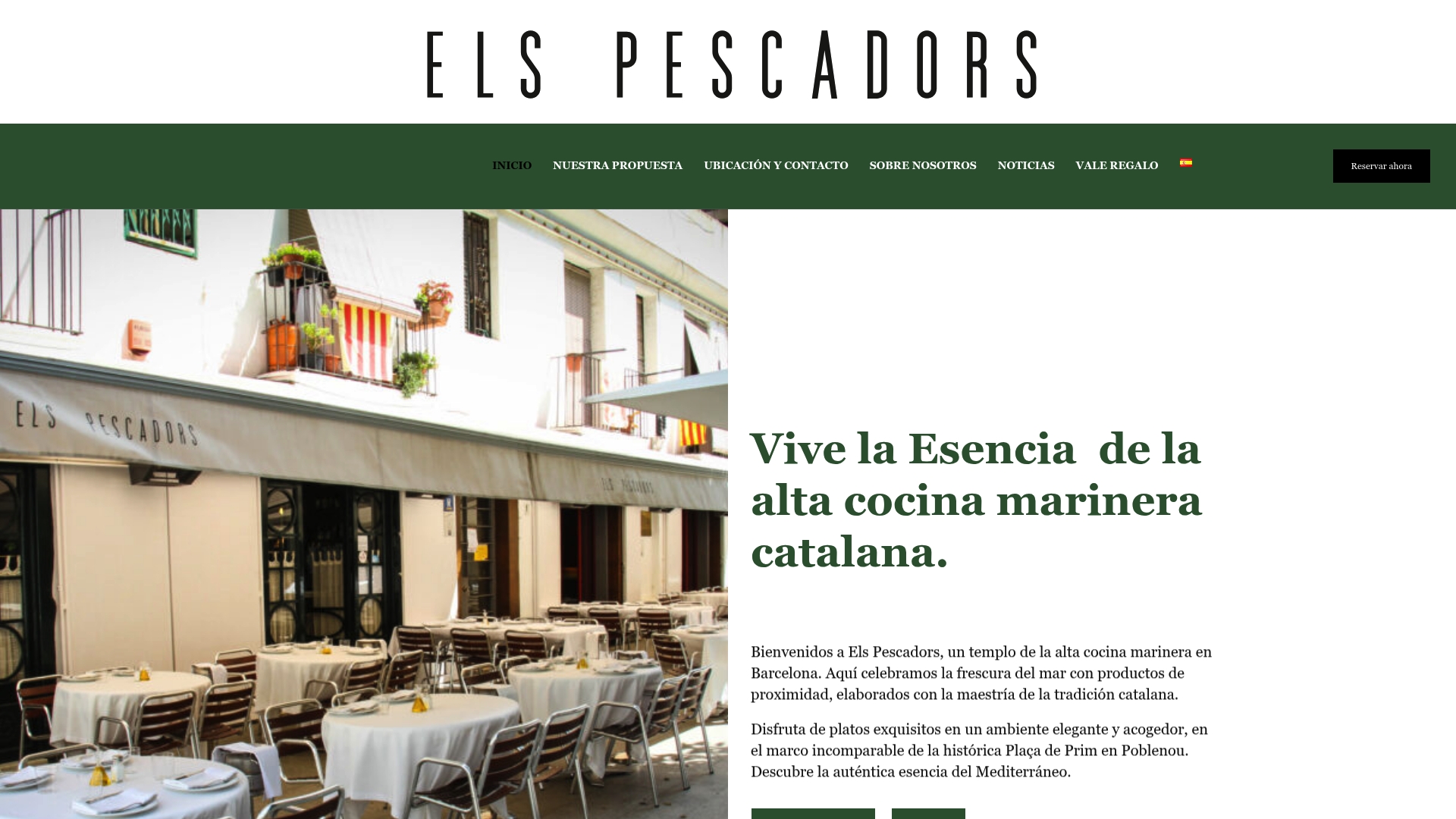
We cook Catalan maritime cuisine in Plaça de Prim, in Poblenou, and we watch guests meet these names every day. Our view is simple: the pronunciation matters less than the curiosity. A dish name is a small piece of local history. Suquet, arròs, fideuà all come from kitchens near the sea, where the day’s catch decided what was cooked.
We would rather you say fideuà the English way and ask what is in it than skip it because the word felt intimidating. Ask us what came in that morning, and ask us how a dish is said. Our team is used to the question, and it is a good way into the menu. If you want to understand why the menu changes with the catch, we explain how the morning catch shapes the menu.
— YellowRock
Put it into practice at Els Pescadors
The easiest place to try these names is a table where the menu is built around them. Our Menú de Temporada is 39 € per person and follows the season, so it is a good way to taste Catalan seafood and ask about each name as it arrives. If you prefer to choose dish by dish, La Carta is the a la carte option, and the Menú Degustación is there when you want a longer sequence.
Going with a group? Our group menus work well for visitors who want a shared table. For more dishes to look out for, see our guide to signature dishes in Barcelona.
FAQ
How do you pronounce fideuà?
Say fee-thuh-WAH in Barcelona, with the stress on the last syllable. Valencian speakers say fee-theh-WAH, with a clearer “eh”. If you say fee-deh-WAH, you will be understood everywhere.
Is Catalan pronounced like Spanish?
Partly. Both are Romance languages with similar vowels in stressed syllables. But Catalan reduces unstressed a, e and o in Central varieties, and it has sounds Spanish lacks, such as the palatal ll and the “sh” of x. That is why a written dish name can sound unfamiliar even to Spanish speakers.
What does the x sound like in Catalan food words?
At the start of a word or inside it, x is usually “sh”, as in xuixo (“shoo-shoo”) and esqueixada. After a vowel in some words it can be “ks”, but on menus the “sh” sound is the one you will meet most.
Do I need to speak Catalan to order in Barcelona?
No. Restaurant staff in Barcelona are used to visitors and many menus are multilingual. Trying a few Catalan names is a courtesy, and pointing to the dish is always enough.
Sources
- Verbadium: Catalan A1, Food and Shopping
- Speecher: Catalan pronunciation and IPA
- Institut d’Estudis Catalans: Ortografia catalana
- Carbonell and Llisterri (1999), Catalan
- Wiktionary: fideuà
- Wiktionary: fideuá
- Wikipedia: Fideuà
- Wikipedia: Pa amb tomàquet
- Epicurious: How to make pan con tomate
- Roses Rentals: What to eat on the Costa Brava
- Spain.info: The cuisine of Catalonia
- Eater: 16 essential Catalan dishes
- El Nacional: The top six Catalan dishes