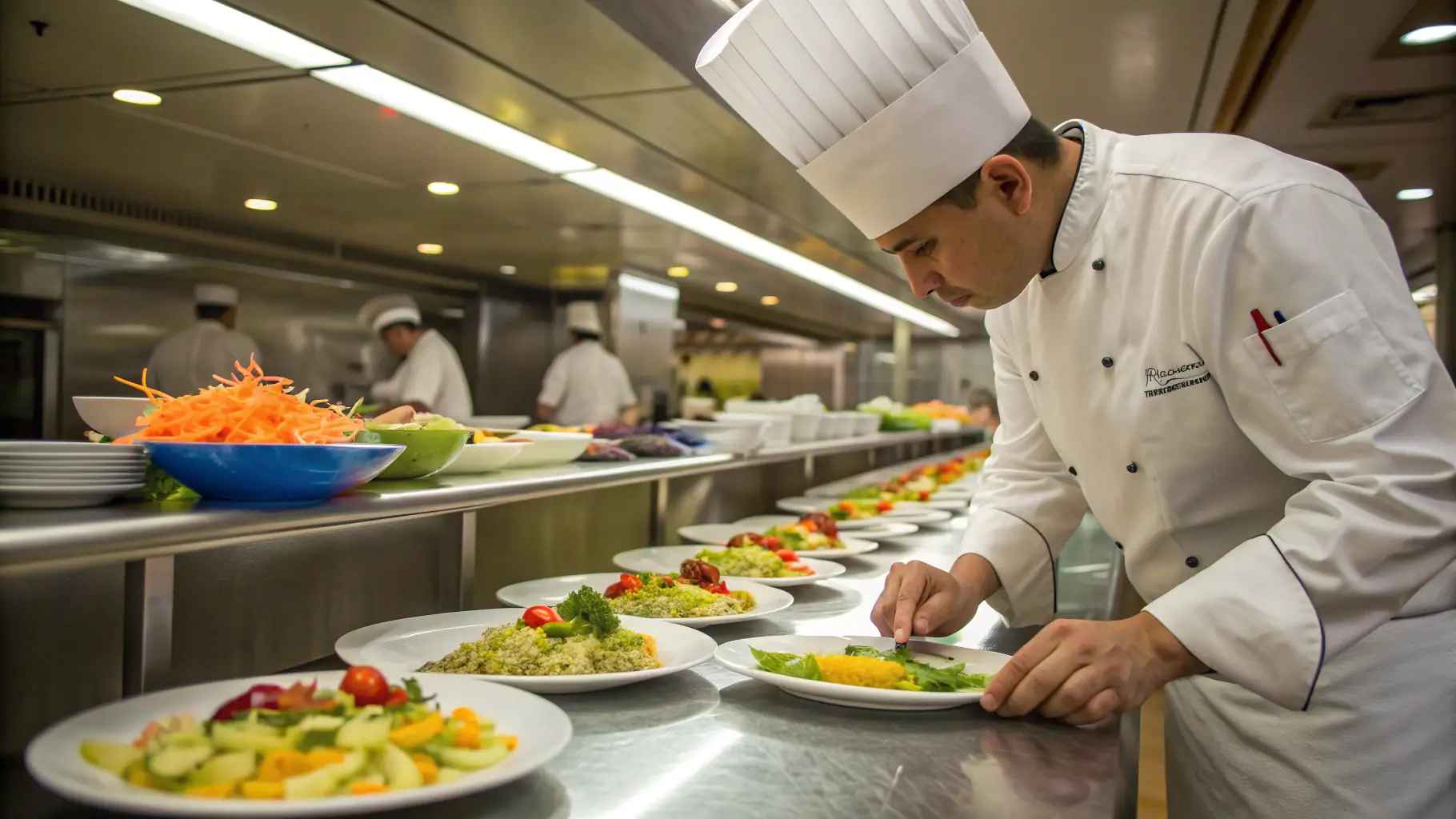
Barcelona still hosts many centuries-old restaurants and taverns that have served meals continuously since the 1700s and 1800s, from Gothic Quarter fondas to Barceloneta seafood houses. This guide walks through what “historic” actually means here, which neighborhoods hold the deepest concentration of heritage dining, how to visit these places without stepping on local custom, and where a newer but tradition-minded seafood restaurant like Elspescadors fits into that same story of Catalan culinary continuity.
TL;DR:
- Most historic restaurants in Barcelona have operated continuously in the same building or neighborhood for over two centuries, maintaining original recipes and family ownership.
- The oldest city restaurant, Can Culleretes, was founded in 1786 and exemplifies the long-standing tradition of fondas serving affordable, laborer-focused meals since the 19th century.
- Neighborhood clusters such as the Gothic Quarter and Barceloneta preserve distinct architectural styles and menu focuses, like medieval structures or seafood specialties, reflecting different periods of city history.
- Reservations should be made two to three days in advance, especially for dinner or tasting menus, due to limited space in buildings that predate modern restaurant standards.
- Modern heritage restaurants adapt to today’s expectations by sourcing sustainably and updating service styles without losing their historical identity or culinary techniques.
Table of Contents
- What Makes a Restaurant “Historic” in Barcelona
- Where to Find Barcelona’s Oldest Restaurants by Neighborhood
- How to Visit Historic Restaurants in Barcelona Without Feeling Like a Tourist
- Family Ownership and the Fight to Keep Recipes Alive
- The Restaurants That Built Barcelona’s Reputation
- Why These Restaurants Matter Beyond the Menu
- The Architecture Behind Barcelona’s Oldest Dining Rooms
- How Historical Events Shaped These Restaurants
- Old Recipes, New Expectations: Adapting Without Losing the Thread
- A Heritage Dining Day, Mapped Out
- Book a Seat at Elspescadors for a Modern Take on Maritime Tradition
- Sources
- FAQ
What Makes a Restaurant “Historic” in Barcelona
The label gets thrown around loosely, but in Barcelona it usually points to a specific lineage: the fonda. A fonda was originally a combined inn, tavern, and basic eatery, the kind of place a traveling merchant or laborer could get a bed and a hot plate of food under one roof. Many of today’s oldest restaurants trace back to this model, and some began even more modestly, as fondas de sisos, working-class dining halls in 19th-century Barcelona that served fixed-price meals to laborers and factory workers. The word “sisos” referred to the affordable set menu, and research into this history shows these houses functioned almost like public cafeterias before the concept existed elsewhere in Europe.
Fonda Can Culleretes, founded in 1786 in the Barri Gòtic, is generally recognized as the oldest restaurant in the city and one of the oldest in Spain still serving meals in its original building. That’s not an isolated case. A chronology of Catalan industrialization shows many of these early establishments started as mixed-purpose businesses, part grocery, part lodging house, part kitchen, before specializing into the restaurants we recognize today as urban life modernized through the 19th and 20th centuries.
A few threads run through nearly every genuinely historic Barcelona restaurant:
- Continuous operation in the same building, or at least the same neighborhood, for a very long time
- Family ownership passed down through two, three, or more generations
- Recipes and techniques kept close to their original form rather than reinvented for trend cycles
- Early influence from Italian and French kitchens, which shaped the fonda-to-restaurant format as Barcelona’s dining scene professionalized in the late 1800s
That last point surprises people. Barcelona’s restaurant culture didn’t develop in isolation. As the city industrialized and its middle class grew, French and Italian culinary practices filtered in through hotel kitchens and imported chefs, nudging local fondas toward more structured menus and service styles even as the food stayed distinctly Catalan.
Where to Find Barcelona’s Oldest Restaurants by Neighborhood
Heritage dining in Barcelona isn’t scattered randomly. It clusters, and each cluster has its own personality.
- Barri Gòtic (Gothic Quarter). This is ground zero for the oldest dining rooms in the city, narrow medieval streets hiding restaurants that have barely changed their tile floors or wood paneling in a hundred years. Expect low ceilings, stone archways, and menus built around Catalan classics like escudella and slow-braised meats. If a Gothic Quarter restaurant feels like a movie set, that’s usually because it predates the movie industry.
- Barceloneta. Once a fishing neighborhood, still built around the sea. This is where you find the deepest concentration of seafood and rice specialists, places serving arròs negre, fideuà, and caracoles (snails, often cooked in a spicy sofrito, a dish that shows up across the city’s oldest menus). Freshness here isn’t marketing language. Ask what came in that morning, and a good kitchen will tell you exactly which boat it came from.
- Eixample. The grid-planned district built during Barcelona’s 19th-century expansion, home to grander, more formal dining rooms with modernist architectural details, think stained glass, carved wood, and high ceilings that echo the Art Nouveau boom happening across the city at the same time.
- Historic bars and cocktail houses. Scattered mostly through the old city, these preserve marble counters and zinc bars from the 1800s and early 1900s, along with drink traditions like vermut hour and, in a handful of surviving spots, absinthe service dating back to when the drink was fashionable across southern Europe.
- Granjas and confiterías. Century-old cafés and sweet shops, many still turning out the same hot chocolate and pastry recipes their founders used, tucked into quiet corners of Gràcia and the old city.
Time Out’s list of the city’s oldest bars and restaurants documents founding years and signature dishes across many of these clusters, and it’s a useful cross-check if you’re building an itinerary.
Pro Tip: Don’t try to hit all five categories in one day. Pick two neighborhoods and one theme, a Gothic Quarter lunch and a Barceloneta dinner, say, and you’ll actually absorb the history instead of rushing past it.
How to Visit Historic Restaurants in Barcelona Without Feeling Like a Tourist
Reservations matter more than you’d expect for places this old. Many historic dining rooms are small, physically limited by buildings that predate modern kitchen and seating standards, so booking two or three days ahead for dinner is a reasonable habit, and a week ahead for weekend nights or tasting menus.
Price ranges vary widely by category. A casual fonda-style lunch with a fixed menu can run affordably, while a full historic dinner with wine climbs higher, and a multi-course tasting menu at a heritage-minded restaurant sits at the top end of that scale.
A few etiquette notes worth knowing before you sit down:
- Ask before photographing interiors extensively. These are working dining rooms, not museums, even when they feel like one.
- Keep noise moderate. Many of these spaces have hard surfaces, tile and stone, that carry sound further than a modern restaurant would.
- Tipping in Spain is not obligatory the way it is in the United States. Rounding up or leaving a small amount for excellent service is standard; a large percentage tip is not expected.
- Older buildings sometimes lack elevator access or step-free entry. Call or email ahead if mobility is a concern, and check official city listings, which often note accessibility details that a restaurant’s own website skips.
Family Ownership and the Fight to Keep Recipes Alive
Ask anyone who has run a heritage restaurant in Barcelona for decades what keeps a place alive past its hundredth birthday, and the answer rarely involves marketing. It’s generational transfer. Ownership passes from parent to child, recipes get taught by hand rather than written down, and the tourism authority’s own profile of Can Culleretes points to exactly this kind of continuity, along with a consistent hospitality style, as the decisive factor separating restaurants that survive from ones that quietly close.
Los Caracoles offers a parallel case. The restaurant marked 190 years in business in late 2025, and press coverage around that milestone credits family ownership and a willingness to adapt service without abandoning the core menu.
Preservation isn’t passive. Set Portes has actively worked to protect its culinary history by publishing a collection of historic recipes adapted for modern Catalan kitchens, treating old dishes as something to document and teach, not just serve.
That same instinct, protecting technique and sourcing rather than freezing a menu in amber, shapes how newer restaurants built on Catalan tradition operate today, including the maritime kitchen at Elspescadors, which leans on seasonal, locally sourced seafood in a way that echoes the fishing-village roots of Barceloneta’s oldest kitchens even though the restaurant itself is a more recent addition to the city’s dining scene.
The Restaurants That Built Barcelona’s Reputation
A handful of names carry outsized weight in this history. Los Caracoles, opened in the 1830s, built its reputation on rotisserie chicken turning in the window and a guest list that reportedly includes many notable visitors, a detail that shows up repeatedly in local press coverage of the restaurant.
Set Portes, overlooking the old port, represents a slightly different story: a grand, formal dining room that grew alongside Barcelona’s 19th-century port expansion, later becoming known for both its rice dishes and its active recipe-preservation work. Each of these places earned its reputation the same way, decades of consistent food, a specific dish or ritual that became inseparable from its identity, and a physical space that never got gutted for a modern renovation.
What ties them together isn’t age alone. It’s that each one became a fixture in the daily life of a specific neighborhood before it became a destination for outsiders, and that order matters. A restaurant that started as a tourist attraction rarely develops the same texture of history as one that started by feeding the people who lived and worked next door.
Why These Restaurants Matter Beyond the Menu
Historic restaurants in Barcelona function as informal archives of the city’s social history. Fondas de sisos fed the industrial workforce that built modern Barcelona, and eating in a surviving version of one of these rooms puts you in direct contact with that labor history in a way a plaque or museum display can’t quite replicate.
These restaurants also mark shifts in the city’s social class structure. What started as no-frills worker dining in the 19th century sometimes evolved into destination restaurants for the middle and upper classes by the 20th, a transition that mirrors Barcelona’s own economic transformation. Meanwhile, other spots stayed rooted in their original neighborhoods and price points, still serving the same kind of clientele they always did.
Bars and cafés from this era carried a parallel function as social gathering points, spaces where political conversation, literary circles, and neighborhood gossip all happened over the same marble counter. Several of the city’s oldest bars trace their identity to exactly this role, more community living room than restaurant. That’s part of why Barcelona treats these spaces with a level of civic pride you don’t always see elsewhere: they’re not just old, they’re woven into how the city understands its own working-class and bohemian history side by side.
— YellowRock
The Architecture Behind Barcelona’s Oldest Dining Rooms
Walk into a genuinely old Barcelona restaurant and the building tells you almost as much as the menu. Gothic Quarter spots often sit inside structures with medieval stone arches and exposed wood beams, architecture that predates the restaurant itself by centuries in some cases. Low ceilings and narrow rooms aren’t a design choice. They’re a byproduct of buildings constructed for a completely different purpose long before anyone served food in them.
Eixample’s historic dining rooms tell a different architectural story. Built during the Art Nouveau boom that reshaped the district in the late 1800s, these restaurants often feature stained glass panels, ornate tilework, and carved wood detailing that mirrors the modernist buildings surrounding them, a style closely tied to the broader Catalan modernisme movement associated with figures like Antoni Gaudí, even when the restaurant itself has no direct connection to famous architects.
Historic bars carry their own signature look: marble counters, zinc bar tops, and glass display cases built to hold bottles and jars that have barely changed position in decades. Barceloneta’s older seafood restaurants tend to lean plainer and more functional, a nod to their fishing-village origins, tile floors built for easy cleaning after a long service rather than ornamental flourish.
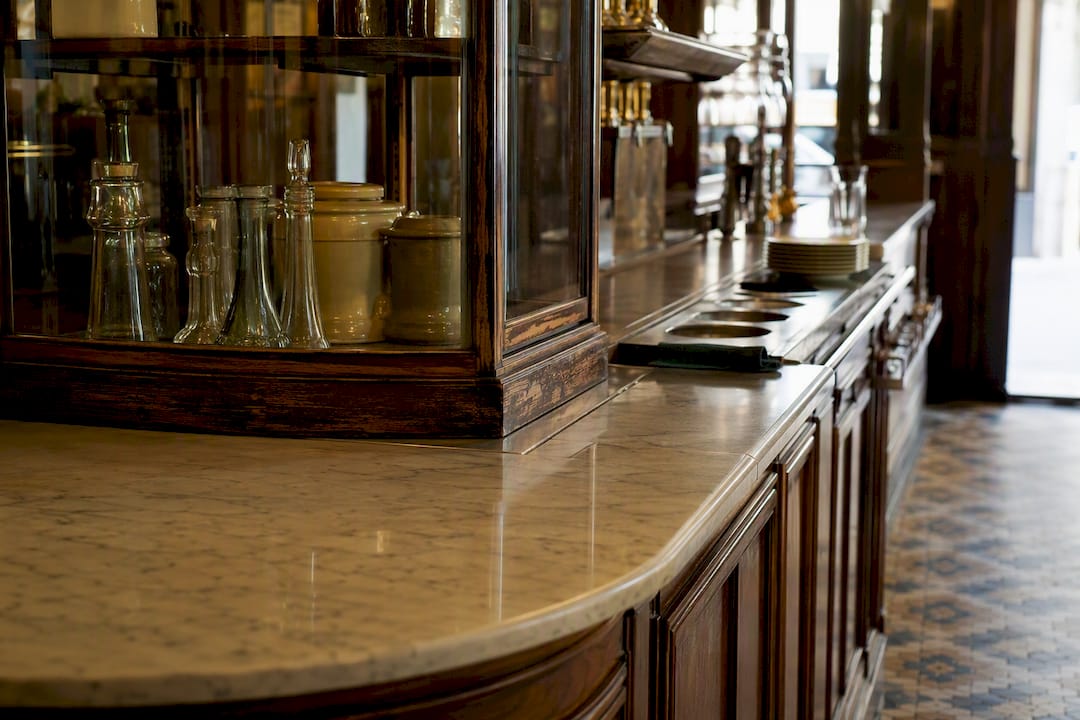
None of this is accidental preservation for its own sake. Owners who inherit these spaces generally understand that the room is part of the product. Strip out the tile floor or the zinc bar for a modern renovation, and you lose something a new coat of paint can’t replace.
How Historical Events Shaped These Restaurants
Barcelona’s oldest restaurants didn’t survive two or three centuries without absorbing real disruption. The Spanish Civil War in the 1930s forced closures and ownership changes across the city, and several restaurants that trace their roots to the 1800s had to rebuild their businesses, and in some cases their physical spaces, in the postwar decades that followed.
Industrialization itself reshaped the restaurant landscape earlier, in the 19th century. As Barcelona’s population and factory workforce expanded rapidly, fondas de sisos multiplied to feed workers who needed cheap, filling meals close to their jobs, a direct response to the economic pressures of that industrial boom. That demand shaped menus around hearty, affordable dishes that still show up on heritage menus today.
Barcelona’s 1888 and 1929 International Expositions brought waves of visitors and international attention. They pushed some restaurants toward more formal service and expanded menus to match a wealthier, more cosmopolitan clientele passing through the city. Tourism’s later boom, particularly after the 1992 Olympics reshaped Barceloneta and the waterfront, changed the customer base again, pulling some historic restaurants toward a more international crowd while others deliberately stayed rooted in local, neighborhood-first service.
Each disruption left a mark, whether in ownership records, renovated dining rooms, or menus that quietly absorbed new influences without abandoning their core identity.
Old Recipes, New Expectations: Adapting Without Losing the Thread
Modern diners expect things a 19th-century fonda never had to think about: dietary accommodations, online reservations, air conditioning, wine lists that go beyond the house carafe. The restaurants that have lasted didn’t ignore these expectations. They folded them in carefully.
Menu adaptation tends to happen at the edges rather than the center. A historic restaurant might add a vegetarian option or lighten a heavy sauce for modern palates while keeping its signature dish, the rice, the caracoles, the slow-braised stew, exactly as it always was. Service has modernized too. Where a fonda once ran on cash and a handwritten ledger, most historic restaurants now take reservations online and accept cards, even while the dining room itself stays frozen in an earlier century.
The seafood-focused side of this tradition follows the same logic. Kitchens built around Catalan maritime cooking still prioritize what came off the boat that morning, but sourcing practices have tightened around sustainability in ways a 19th-century fishing tavern never had to consider. That balance, honoring a dish’s origin while sourcing and preparing it to a modern standard for freshness, is really the throughline connecting Barcelona’s oldest dining rooms to newer restaurants working in the same maritime tradition. Broader gastronomy trend coverage points to sustainability and provenance as the two forces reshaping kitchens across the industry right now, and Barcelona’s heritage restaurants are navigating that shift the same way everyone else is, carefully, and usually one ingredient at a time.
A Heritage Dining Day, Mapped Out
If we were planning this ourselves, we’d start in Gràcia, coffee and something sweet at a century-old granja, then walk down toward the Boqueria or Barceloneta market to see what’s fresh that day. Lunch would land in the Gothic Quarter, something slow and traditional, paired with a glass of local wine rather than anything imported. Late afternoon calls for vermut hour at an old-city bar with a marble counter and no rush to leave.
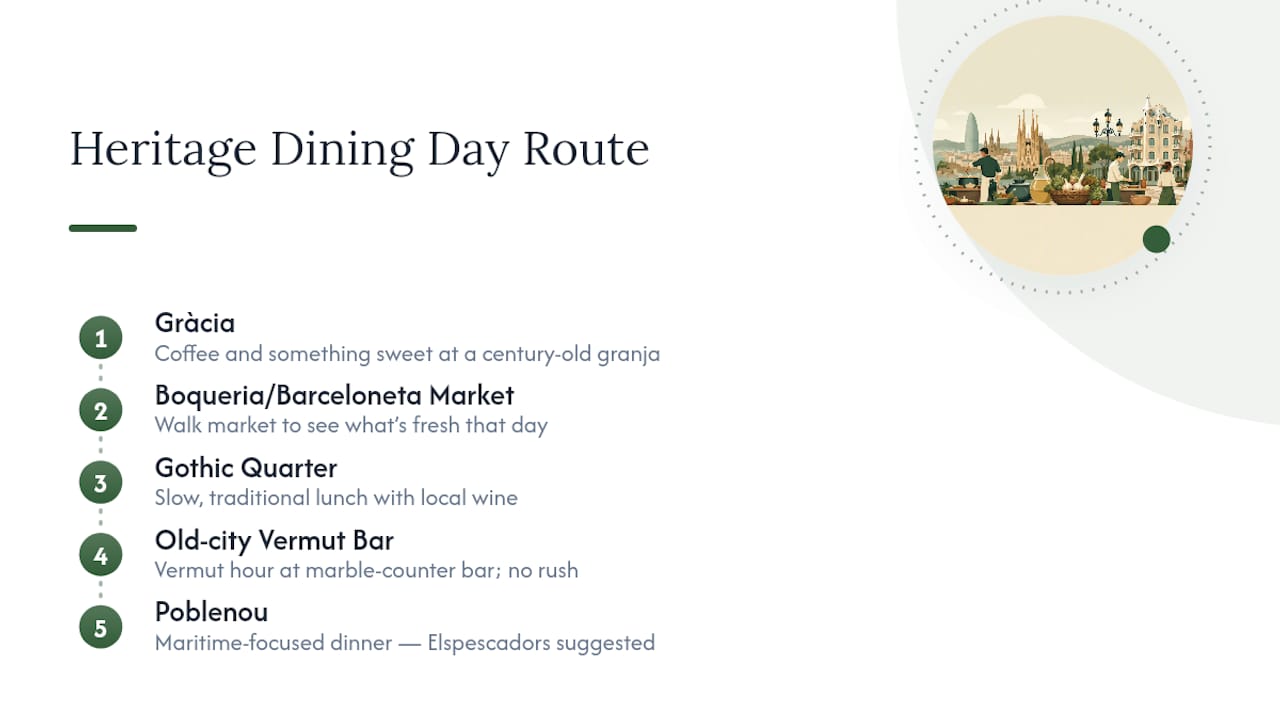
For dinner, we’d head toward Poblenou for a maritime-focused meal built around whatever the boats brought in, and honestly, Elspescadors fits that slot well if you want Catalan seafood tradition without needing the building itself to be two hundred years old.
Book a Seat at Elspescadors for a Modern Take on Maritime Tradition
This restaurant gives you the Catalan maritime cooking behind Barcelona’s oldest seafood restaurants, without needing a reservation calendar built around a two-hundred-year-old dining room’s limited seating. Located in the historic Poblenou district, it builds its menu around fresh fish, seafood, and traditional rice dishes, sourced seasonally and locally the same way Barceloneta’s old fishing taverns once ran their kitchens, with sustainability standards and refined technique diners expect today.
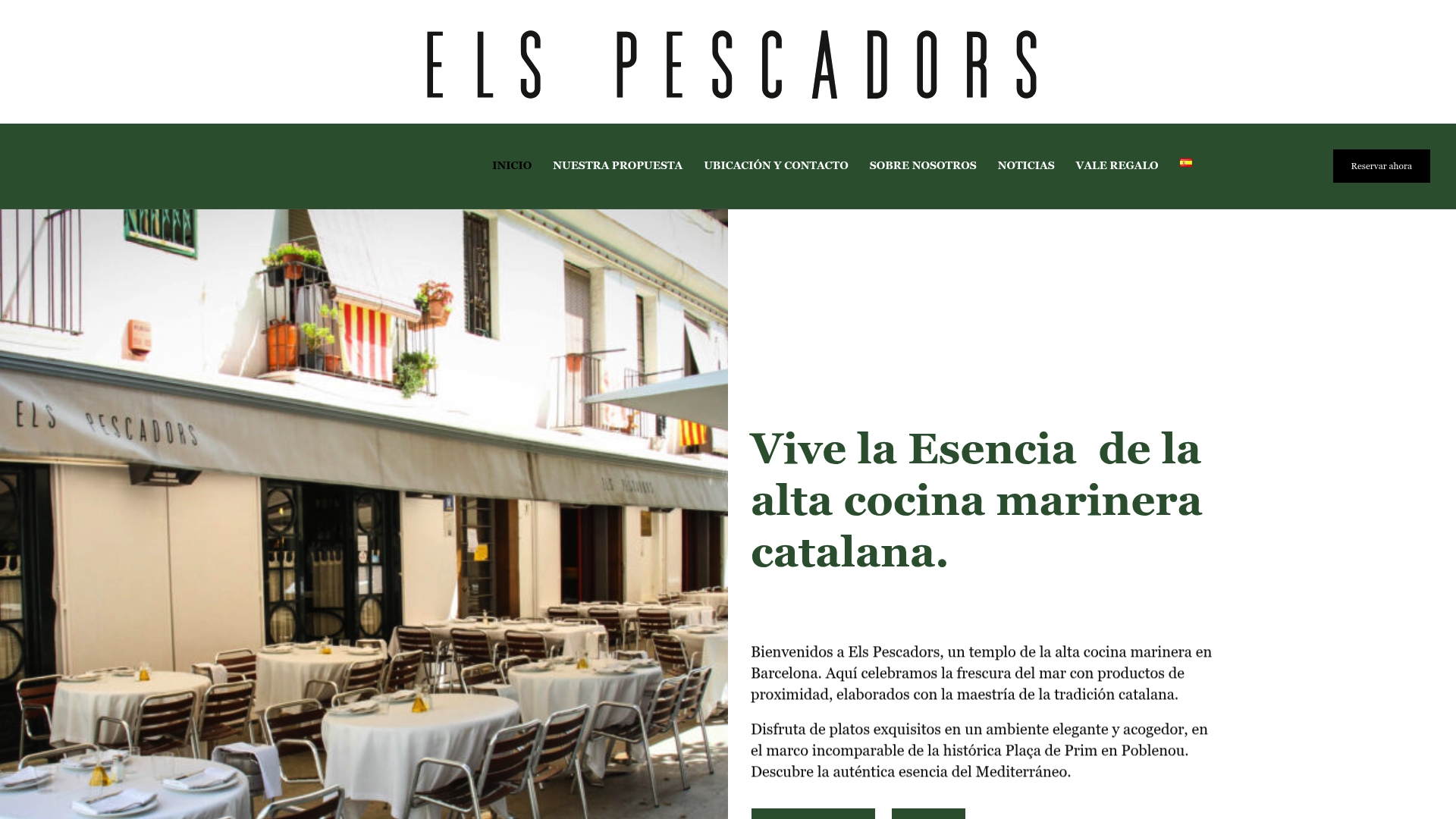
If the history you’ve just read made you want to taste it rather than just read about it, that’s the idea. The tasting menus walk through daily fresh catch and seafood specialties in a sequence built for a proper multi-course evening, and the kitchen also handles private and group dining for celebrations or corporate events around Catalan seafood tradition. Check availability and reserve a table through the booking page to plan a meal around Barcelona’s maritime heritage rather than just reading about it.
Sources
- Can Culleretes | Meet Barcelona
- Los bares y restaurantes más antiguos de Barcelona – Time Out
- El restaurante Los Caracoles (Barcelona) cumple 190 años
FAQ
What is the oldest restaurant in Barcelona?
Can Culleretes, founded in 1786 in the Barri Gòtic, is widely recognized as Barcelona’s oldest restaurant and one of the oldest in Spain still serving meals today.
Where do locals in Barcelona actually eat?
Locals tend to favor neighborhood fondas in the Gothic Quarter, family-run seafood spots in Barceloneta, and old-city vermut bars over restaurants clustered around the most tourist-heavy plazas, though several historic restaurants successfully serve both crowds at once.
What are some good non-tourist restaurants in Barcelona?
Look for restaurants outside the main tourist corridors around Las Ramblas, particularly in Poblenou, Gràcia, and the quieter stretches of Barceloneta, where kitchens like Elspescadors focus on seasonal Catalan seafood for a mostly local clientele.
What should I look for in a restaurant for dinner in Barcelona?
Prioritize places with a clear specialty, whether that’s a signature rice dish, fresh daily catch, or a slow-cooked stew, since restaurants built around one thing they do exceptionally well tend to outperform generic multi-cuisine menus.
How far in advance should I book a historic restaurant in Barcelona?
Book two to three days ahead for a standard dinner and up to a week ahead for weekend nights or multi-course tasting menus, since many historic dining rooms have limited seating built into centuries-old buildings.