For a main course, plan about 150 to 200 grams of boneless fish per person, or 300 to 400 grams if the fish is whole. For a starter, 60 to 100 grams is enough. Shellfish varies much more: from around 150 grams of shrimp to 500 grams or more of crab, depending on how much of it is shell. The numbers below show where each figure comes from and how to adjust it for your table.
TL;DR
- Boneless fish, main course: 150 to 200 g per person. Starter: 60 to 100 g. Fish as one course among several: 120 to 150 g.
- Whole fish loses a large share of its weight to head, bones and viscera, so buy roughly double what you want to eat: 300 to 400 g per person.
- Shellfish depends on shell weight: shrimp 150 to 250 g, mussels 300 to 500 g, clams 300 to 400 g, lobster or crab 400 to 500 g per person.
- Rice dishes, tasting menus and big appetites change the math. Go lower when there are hearty sides or many courses, higher when seafood is the whole meal.
- Spanish health guidance points to a cooked fish serving of 125 to 150 g, at least three times a week.
Table of Contents
- Raw weight versus the weight on your plate
- Fish portions by type and course
- Shellfish: plan by the shell
- Rice dishes, stews and zarzuela
- What changes the number
- Fish and your weekly diet
- Scaling for two, four or a group
- A worked example: dinner for six
- Our perspective
- Let us do the portioning for you
- FAQ
- Sources
Raw weight versus the weight on your plate
Most confusion about seafood portions comes from mixing two numbers: the weight you buy and the weight you eat. A 200 g fillet and a 200 g whole fish are very different dinners.
Spanish consumer guidance, based on expert advice, talks about a serving of 125 to 150 g net weight, at least three times a week. “Net” is the edible part, with no head, bones, skin or shell. That is the figure to keep in mind when you stand at the fish counter: work backward from the net amount you want on the plate to the gross amount you need to buy.
Three things reduce the weight between market and plate:
- Cleaning. Removing head, scales, bones and viscera from a whole fish typically costs you somewhere between a quarter and 40% of the weight, depending on the species. Flat fish and fish with big heads sit at the high end.
- Cooking. Water leaves the flesh as it cooks. As a working estimate, boiling costs around 15%, grilling around 20% and frying around 25%. A fillet that weighs 200 g raw lands closer to 150 to 160 g on the plate when grilled.
- Shell. For crustaceans and mollusks, the shell is most of the weight. A kilo of mussels gives far less meat than a kilo of shrimp, and far less again than a kilo of peeled prawns.
So a rule that works in a kitchen: decide the cooked, edible amount per person, then add a third for fillets and double it for whole fish.
Fish portions by type and course
The table below puts the common cases side by side. Weights are raw, as bought, unless noted.
| Situation | Boneless fillet or steak | Whole fish (head and bones) |
|---|---|---|
| Main course, one-course meal | 180 to 200 g | 300 to 400 g |
| Main course, with a starter before it | 150 to 180 g | 250 to 350 g |
| Second course in a multi-course menu | 120 to 150 g | 200 to 250 g |
| Starter or shared appetizer | 60 to 100 g | 120 to 200 g |
| Cold dish where fish is the star (ceviche, tartare, carpaccio) | 180 to 200 g | not applicable |
A few notes on reading it.
Fillets and steaks. Tuna, swordfish, salmon, cod loin and similar cuts are dense and rich. A 180 g piece is a generous main for most adults. Fatty fish fills you up faster than lean fish, so you can go to the low end with salmon or tuna and to the high end with hake or sea bass.
Whole fish. Sea bream, sea bass, red mullet, John Dory and similar fish are served whole in Mediterranean kitchens, usually baked, grilled or in salt. Allow 300 to 400 g each when whole fish is the main event, because around half of what you carry home is not edible. Smaller fish, like a single 350 g sea bream, are a natural one-per-person portion. For a big fish, such as a 1.2 kg sea bass, count on two to three people.
Fish as one course among several. In a longer meal, the fish course shrinks. The dishes before and after it carry the meal, and 120 to 150 g of fish is plenty. This is also why a tasting menu can include several seafood plates without leaving anyone overwhelmed.

Shellfish: plan by the shell
Shellfish portions look inflated next to fish because so much of the weight is shell. These are practical purchase weights per person:
| Shellfish | Per person, as bought | Notes |
|---|---|---|
| Shrimp or prawns, in shell | 150 to 250 g | Go higher if heads are on and they are the main dish |
| Mussels | 300 to 500 g | Up to 1 kg for a big appetite at a casual meal |
| Clams | 300 to 400 g | Fewer if served with pasta or rice |
| Langoustines (cigalas) | 250 to 500 g | 500 g for devoted fans |
| Lobster | One of 500 to 700 g | Main course; a smaller one works in rice |
| Spider crab or brown crab | 400 g to 1 kg | Depends on size and whether it is the main |
| Oysters | 3 to 6 pieces | Starter portion |
Two patterns are worth knowing. First, shellfish served alone as a mariscada, a platter-style meal, needs the higher end. Second, shellfish used as an ingredient, in a rice, a stew or a pasta, needs far less, because it shares the plate with something filling.
If you cook at home, the quality of the shellfish matters more than the quantity. The Spanish food manual on fresh fish and shellfish describes fresh fish as smelling of the sea and of algae, not strongly “fishy”. Smell it before you buy, and buy a little less if you are unsure.
Rice dishes, stews and zarzuela
This is where Mediterranean meals differ most from a simple grilled fillet. When seafood sits in a rice, you do not need the main-course amounts.
- Seafood rice (arroz del señorito, arroz caldoso, paella de marisco): 100 to 150 g of seafood in total per person, plus the rice, the stock and a sofrito. Rice is the bulk of the plate, so one or two prawns and a few mussels per head already read as a generous dish.
- Lobster rice: a 500 to 600 g lobster covers two people. For four or more, a piece around 1.5 kg, or two smaller ones, works better than four tiny ones.
- Zarzuela or fish stew: roughly 150 to 160 g of fish plus 100 to 120 g of mixed shellfish per person. It is a one-pot main, so it needs both.
The reason is simple: rice, potatoes, bread and pasta take up room. If your table has substantial sides, take 20 to 30 grams off the fish portion. If the sides are a green salad and bread, keep it at 180 g.
What changes the number
A portion chart is a starting point. Five factors move it up or down.

Appetite and who is at the table. Teenagers and big eaters want the top of the range. Small children usually need around half an adult portion. A table of guests who have not eaten since breakfast eats more than one that just arrived from a long lunch.
Number of courses. With a starter and a dessert, drop the main to 150 g. Without, go to 200 g. In a tasting menu with seven or eight small plates, the seafood is split across many dishes, and each one may be only 40 to 70 g.
Fat content of the fish. Oily fish like sardines, mackerel, salmon and bonito is richer. A smaller portion satisfies. Lean white fish like hake, sole or cod needs a larger one.
The side dishes. Potatoes, rice, pasta and bread reduce what people eat of the main. Light sides (salad, vegetables) do not.
Whether it is shared. When dishes go to the middle of the table, people sample more and finish less of each. Plan about 10 to 15% less per person than for individual plates, but add a dish.
Fish and your weekly diet
If the question is how much you should eat across a week, not at a single dinner, the Spanish guidance is consistent: at least three servings of fish a week, alternated with meat, eggs, dairy, legumes, cereals or nuts. Regional habits differ too, with fish consumption noticeably higher in the north and northwest of the peninsula than in the interior.
One safety point belongs at the table where you choose the species. The Spanish food safety agency AESAN advises that, among the three to four weekly servings, you favor fish with low or medium mercury. The same source notes that pregnant and breastfeeding women and children up to 10 years old should avoid high-mercury species such as swordfish, and that children between 10 and 14 are limited to 120 g a month of those species. If you are pregnant or planning a pregnancy, ask your doctor or midwife about species and raw preparations.
For a sense of how portions are measured in Spanish nutrition research, AESAN’s photographic food atlas for the ENALIA-2 survey links images of plated food to established raw weights, which is the same raw-to-plate logic used above.
Scaling for two, four or a group
The arithmetic is simple, but a few rules prevent the usual mistakes.
Two people. Two 180 g fillets, or one whole fish of 700 to 800 g, or a lobster of 500 to 600 g for a rice. Buy one good piece rather than two mediocre ones.
Four people. Around 800 g of fillets, or one large whole fish of 1.2 to 1.5 kg, or two medium ones. Is 1 kg of salmon enough for four? Yes, as a main course with sides: that is 250 g raw each, well above the usual range. For a starter plus main, it will stretch further.
Six to ten people. Do not multiply a single recipe blindly. Variety lets people choose, and you waste less. Offer two fish dishes and one shellfish platter, and calculate 10% less per head than the single-dish figure.
Large events. At fifteen or more guests, tables rarely clear plates evenly. Plan for the course structure first (starter, main, dessert), then apply the per-course weights. If you plan catering for a crowd, thinking in courses is the same discipline as family meal planning on a yacht, where you cannot run to the shop for more.
When you are buying for a table of guests and want the best fish, our guide to the local seafood market and buying fresh fish covers what to look for at the counter.
A worked example: dinner for six
Let us plan a Saturday dinner for six adults with a starter, a rice main and dessert.
- Starter: shrimp in shell, 150 g each, so 900 g.
- Main: seafood rice, 120 g of mixed seafood per person, so 720 g total (for example 300 g of cleaned squid, 300 g of prawns and 120 g of mussels without shell), plus about 450 g of rice.
- Side: a green salad and bread.
- Dessert: fruit.
Because the starter is shellfish and the main is rice, the meal is full without a single fish fillet. If instead you grill a whole fish as the main, buy around 2 kg of fish for six, take away the shrimp to 100 g a head, and add potatoes.
Our perspective
We cook seafood every day, and the most common mistake we see is thinking about portions as a weight and not as a rhythm. A generous plate is not always a satisfying one. A meal is satisfying when each course gives you enough to enjoy it and leaves room for the next.
That is why we build our menus around the flow of the table. A fresh catch served whole needs its own space. A rice, with its stock, vegetables and shellfish, needs a different balance. A tasting menu works the other way: small, precise amounts of many things, so that each flavor of the sea has its moment.
At the restaurant we start from what the market gives us that day, and the portion follows the product. A larger fish is cut and shared. A delicate shellfish is served simply, in a modest amount that lets the taste speak. If you want to see how this feels on a plate, a seasonal menu or a tasting menu is the easiest way to taste several preparations without having to guess quantities.
When you cook at home, use the figures in this guide as a base, then trust what you see and smell at the counter. Fresh product forgives a lot, and a good fish needs very little.
YellowRock
Let us do the portioning for you
Planning quantities is useful at home. At the table, you can leave it to the kitchen. At Els Pescadors, in Plaça de Prim in Poblenou, we cook Catalan maritime cuisine with fresh fish, seafood and traditional rice dishes. Our Menú de Temporada is priced at €39 per person, so you know the amount before you sit down.
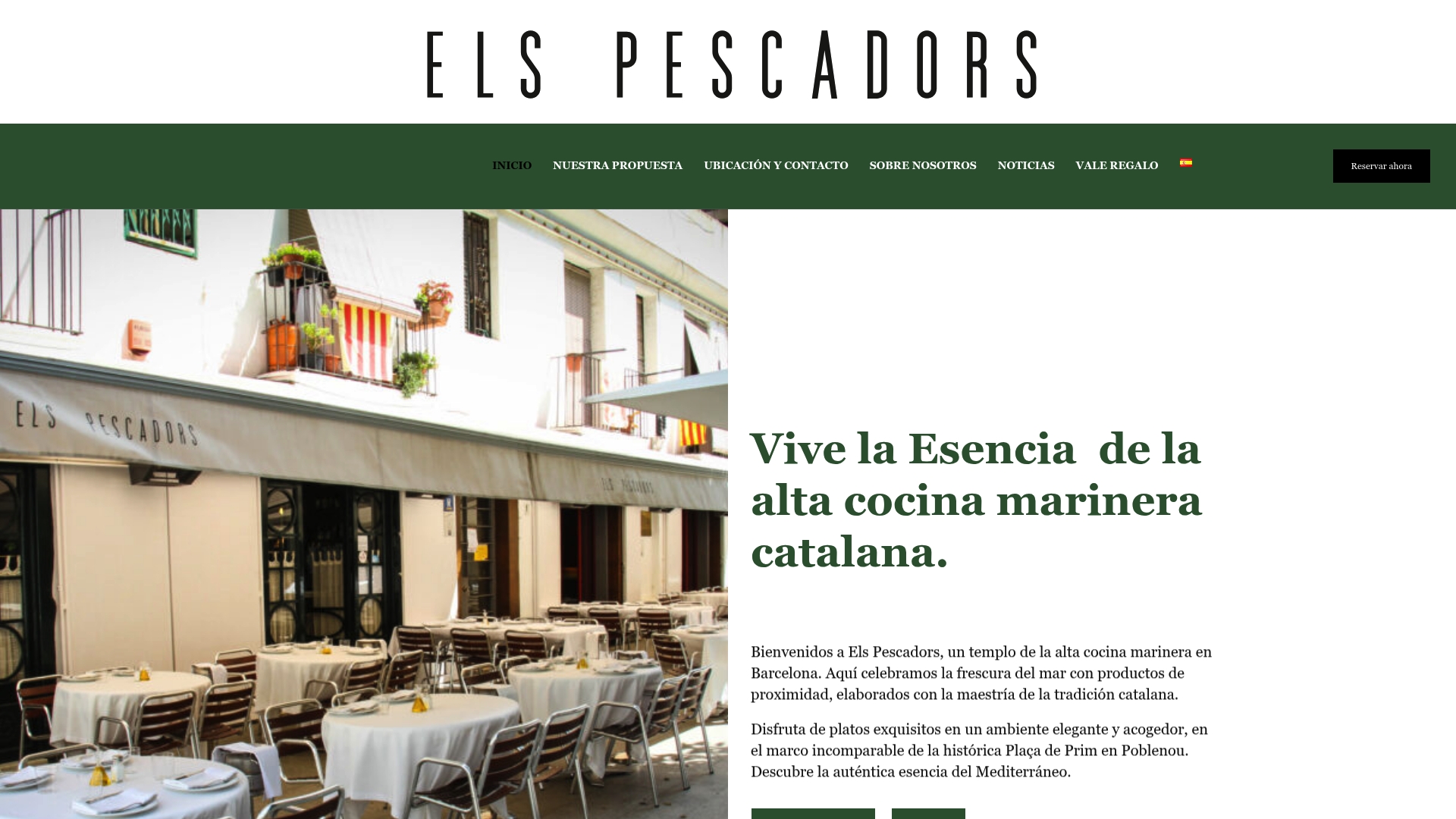
If you prefer to choose, our à la carte menu lets you set the pace, and our tasting menu is made of smaller plates. For celebrations and company dinners, see our group menus, and book your table through the website.
FAQ
How much seafood per person is enough for a main course?
For boneless fish, 150 to 200 g raw is enough for most adults. For whole fish, plan 300 to 400 g because roughly half is not edible. For shellfish, it ranges from 150 to 250 g of shrimp to around 500 g of lobster or crab.
Is 1 kg of salmon enough for four people?
Yes. One kilo of salmon gives 250 g raw per person, which is above the usual 150 to 200 g for a main course. It also works for a starter and main sequence, or for a table with hearty sides, with some left over.
How much fish should I buy for two people?
Buy two fillets of 180 to 200 g each, or a whole fish of 700 to 800 g. If you want a lobster rice, a lobster of 500 to 600 g is enough for two.
How much seafood should I allow for a starter?
Allow 60 to 100 g of fish, or about 100 to 150 g of shrimp in shell. Oysters are usually served as three to six per person. If the starter is shared, count a little less per head and add one more dish.
How often should I eat fish?
Spanish guidance recommends at least three servings a week, each about 125 to 150 g of edible weight, and favoring species low or medium in mercury. Pregnant women and young children should follow the specific advice on high-mercury species.
Sources
- Conozcamos algo más sobre pescados y mariscos (Consumer)
- Pescado: resolvemos las principales dudas (Consumer)
- Manual práctico sobre pescados y mariscos frescos