Most visitors to Barcelona head straight to the Gothic Quarter or La Barceloneta and assume they’ve found the city’s best food. They’re wrong. If you want to understand why dine in Poblenou Barcelona is a question worth asking, the answer starts with one fact: this neighborhood feeds locals, not tourists. Poblenou sits just east of the city center, and it has quietly built one of the most honest and creative dining scenes in all of Spain. From century-old tapas bars to refined seafood restaurants facing quiet plazas, what you find here doesn’t exist anywhere else in the city.
Table of Contents
- Key Takeaways
- Why Dine in Poblenou Barcelona: the History Behind the Food
- The dining variety you won’t find elsewhere
- Practical tips for getting the most out of your visit
- Authentic Catalan gastronomy at its most genuine
- My honest take on dining here
- Taste Poblenou at its finest with Els Pescadors
- FAQ
Key Takeaways
| Point | Details |
|---|---|
| Skip the tourist corridors | Poblenou offers authentic local dining that the crowded city center simply cannot match. |
| History shapes the menu | The neighborhood’s industrial past and creative rebirth directly influence what chefs cook and how they present it. |
| Timing your visit matters | Starting between 9:30 and 10:30 AM gives you access to café culture and local rhythm before midday. |
| Tradition meets experimentation | Poblenou functions as a culinary laboratory where classic Catalan recipes evolve alongside bold fusion concepts. |
| Seafood is the heart of it | Seasonal, locally sourced fish and rice dishes define the neighborhood’s gastronomic identity. |
Why Dine in Poblenou Barcelona: the History Behind the Food
To understand the food here, you need to understand what Poblenou used to be. For most of the 19th and 20th centuries, this was Barcelona’s industrial core. Textile mills, warehouses, and factory floors defined the streets. Workers ate in modest taverns. The sea was close, and so was the catch.
Then the city began to reinvent the district. The 22@ urban renewal plan converted derelict industrial blocks into a creative and technology hub, attracting designers, architects, and entrepreneurs. That shift did something unexpected to the food scene. It brought in a new generation of chefs who saw the neighborhood’s gritty character as an asset, not a problem.
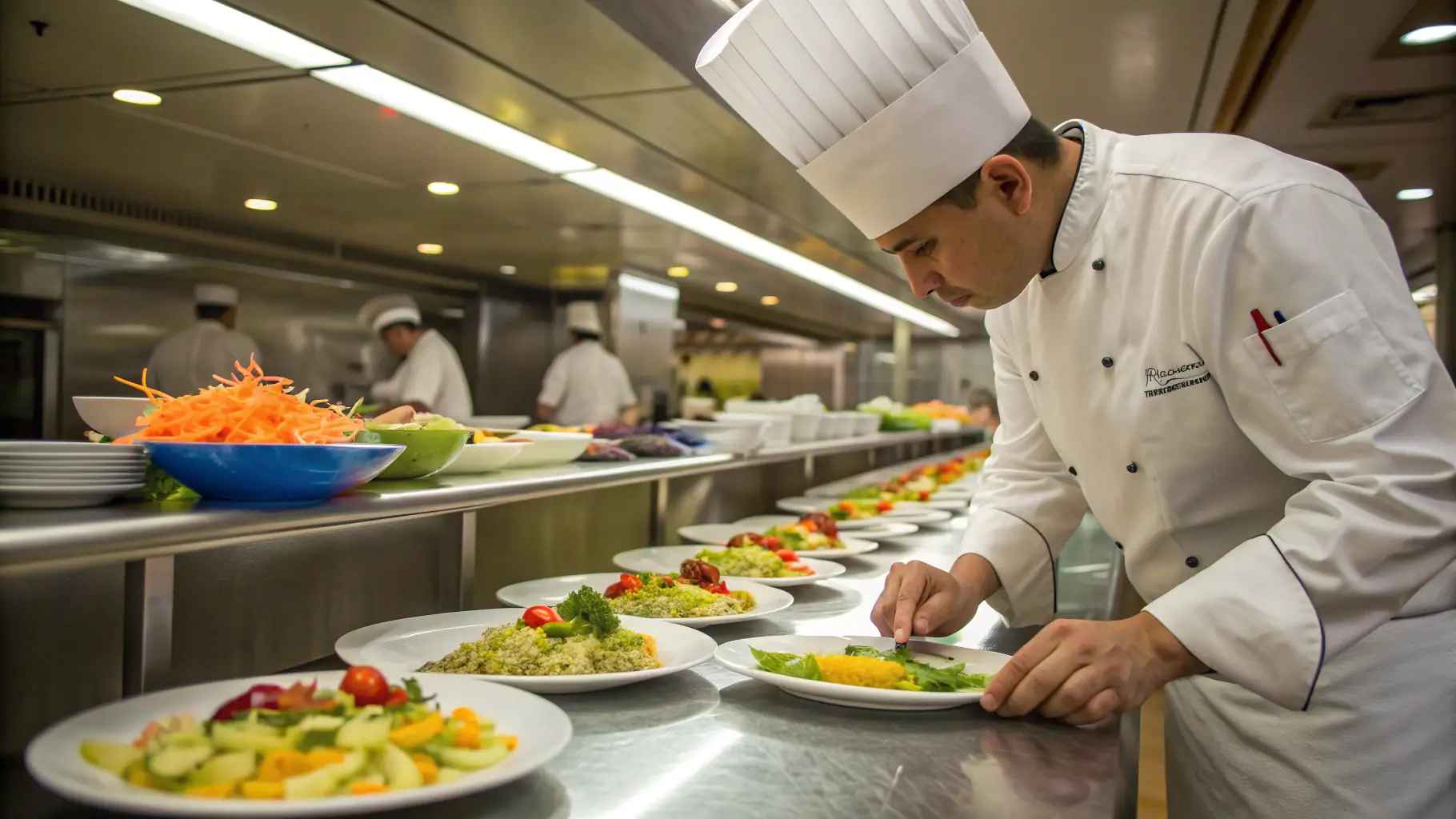
Today, Poblenou is Barcelona’s creative culinary district, and you feel that history on every block. Old tile-fronted bars with hand-painted signs sit beside minimalist kitchens run by chefs who trained in Michelin-starred restaurants and then chose to cook for a neighborhood crowd instead.
What this creates is something rare. The restaurants here carry real memory. You’re not eating in a concept space designed for Instagram. You’re eating in places that have fed generations of the same families, now updated with seasonal ingredients and a modern sensibility.
A few things make this context worth knowing before you visit:
- Poblenou’s low-rise streets and industrial architecture give it a relaxed, distinct local identity that heavier tourist zones have lost entirely.
- The creative industries drawn by 22@ have supported a café and restaurant economy that prizes quality and originality over volume.
- The neighborhood’s proximity to the sea has always shaped what ends up on the plate, with maritime tradition running through even the most modern menus.
Pro Tip: Before you book a restaurant, walk Rambla del Poblenou for fifteen minutes. You’ll get an immediate sense of which places are genuinely local and which have started catering to outside crowds.
The dining variety you won’t find elsewhere
The range of Poblenou dining experiences available in a single afternoon is genuinely surprising. This is not a neighborhood with one specialty. It has layers.
At one end, you have establishments that have been operating for decades. Places like Els Pollos de Llull are not trend-driven. They serve what they’ve always served, cooked with the same care, and the locals keep coming back. These spots give you a direct line to how Barcelonans actually eat, not how they perform eating for an audience.
At the other end, Poblenou has become home to test kitchen-style venues and hyper-local experimental menus that change week to week depending on what producers have available. These kitchens take influence from Japan, the Levant, and North Africa, but they ground everything in Catalan ingredients and technique. The result is fusion that actually makes sense, not fusion as a gimmick.
Then there is the terrace culture. Poblenou’s terrace dining is not the hurried pavement seating you find near the Sagrada Família. These are wide, shaded spaces where the expectation is that you stay for two hours, share three or four dishes, and refill the wine. The social rhythm is built into the design of the spaces themselves.
Here is a quick comparison of what you get in Poblenou versus central Barcelona:
| Experience | Poblenou | Central Barcelona |
|---|---|---|
| Crowd level | Relaxed, mostly local | Often packed with tourists |
| Menu focus | Seasonal, Catalan-rooted | Tourist-friendly, generic |
| Price point | Honest and fair | Often inflated |
| Terrace atmosphere | Lingering and social | Rushed turnover |
| Culinary creativity | High, chef-driven | Inconsistent |
For travelers who also want dietary variety, the neighborhood delivers. Vegetarian and vegan concepts have found a natural home here, driven partly by the younger creative community and partly by chefs who want to work with vegetables the way their seafood counterparts work with fresh catch.
- Vegan menus using locally grown produce from Catalan farms
- International influences including Japanese, Middle Eastern, and North African cooking
- Family-friendly restaurants in Poblenou with outdoor space and relaxed service
- Late-night bars with small plates that stay interesting well past midnight
Practical tips for getting the most out of your visit
Knowing what exists in Poblenou is one thing. Knowing how to experience it well is another. The neighborhood has its own pace, and if you try to move through it on a standard tourist schedule, you’ll miss the best parts.
Follow these steps on your next visit:
- Start between 9:30 and 10:30 AM. Beginning mid-morning gives you access to the café culture at its most authentic. Locals are having their second coffee, bakeries are still fresh, and the streets haven’t filled yet. Grab a cortado and a slice of pa amb tomàquet at a corner bar before anything else.
- Walk the Rambla del Poblenou toward the beach. This is the neighborhood’s main artery, and it tells you everything. You pass old residents on benches, young designers on laptops, and market stalls selling seasonal produce. Let it orient you before you sit down anywhere.
- Eat lunch, not dinner, as your main experience. The midday meal is still central to Catalan culture. The best prix-fixe menus come out at lunch, portions are generous, and you’re dining alongside workers and families rather than other tourists.
- Follow restaurants on social media before you go. Pop-up dinners and themed weekly menus are common in Poblenou and often announced only a few days in advance. These events are some of the best dining moments the neighborhood offers, and they never appear on standard booking platforms.
- Combine food with the broader neighborhood. The Poblenou Urban District hosts regular open studio events where you can visit artists’ spaces before or after a meal. It turns lunch into a full afternoon. If you prefer to cover more ground, a Barcelona bike tour that includes Poblenou is one of the most efficient ways to orient yourself before you settle in to eat.
Pro Tip: Book tables for dinner a day ahead, especially on Thursdays through Saturdays. The best spots in Poblenou have loyal local regulars who plan ahead, and walk-in availability shrinks fast.
Authentic Catalan gastronomy at its most genuine
If you have come to Barcelona specifically to understand Catalan cooking, Poblenou is where that understanding happens. Not in a cooking class. Not in a market tour. In actual restaurants, eating actual food made by people who grew up with these recipes.
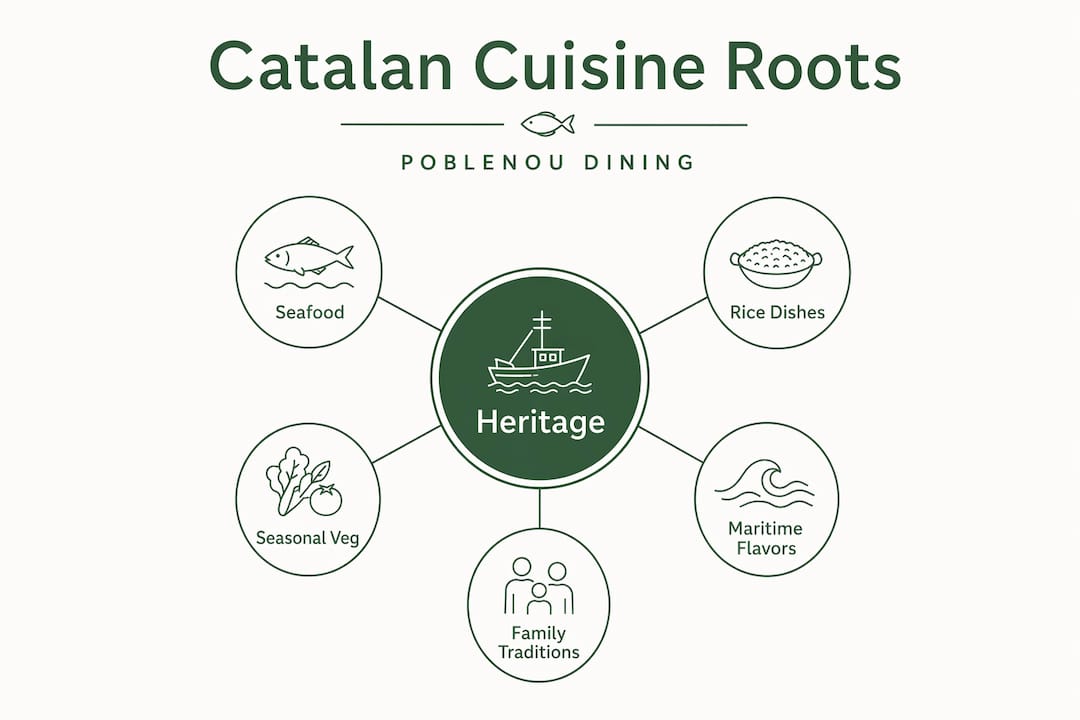
Catalan maritime cuisine is defined by the relationship between the land and the sea. You see it in dishes like arròs a banda, rice cooked slowly in fish stock until it absorbs every bit of flavor from the sea. You see it in the simplicity of grilled fish with romesco, a Tarragona-born sauce that does not try to hide the quality of what it accompanies.
Here are the elements that make Poblenou’s gastronomic identity distinctive:
- Restaurants build direct relationships with seasonal fishing and artisan producers, which means what you eat in May is genuinely different from what you eat in October.
- The portion of the menu devoted to rice dishes reflects the neighborhood’s historic connection to the sea and to Valencian culinary influence just down the coast.
- The atmosphere in most venues is intimate without being precious. You are close to other tables, you can hear conversations, and the service is direct. That informality is deliberate.
The comparison between a Catalan seafood meal in Poblenou and a similar menu near Las Ramblas is not subtle. In the tourist zone, rice dishes are often cooked in advance and finished to order. In Poblenou, top places to eat treat the rice as the centerpiece of a meal that takes forty minutes to prepare correctly, and they’ll tell you that upfront.
Understanding what authenticity means in a seafood restaurant will help you make better choices anywhere in Barcelona, but it matters most here, where the real thing is actually available.
My honest take on dining here
I’ve eaten across Barcelona more times than I can count, and I still find myself returning to Poblenou. Not because it’s hidden or because it gives me something to feel clever about discovering. Because it’s genuinely better.
What frustrates me about the standard Barcelona food itinerary is how much it prioritizes convenience over quality. People eat near where they’re sleeping. They default to restaurants with English menus and photos on the wall. Then they leave thinking they understood the food of this city.
Poblenou offers something the city center structurally cannot, which is a neighborhood that still has a real rhythm. People live here. They eat here because they like the food, not because the restaurant is between their hotel and a museum. That difference in motive shapes everything about how the food is made and served.
What I find seasoned travelers often miss is the lunch hour on a weekday. That’s when Poblenou is at its most honest. Tables of construction workers next to architects next to grandmothers. A fixed-price menu that changes with what arrived at the market that morning. That is not a curated experience. That is just lunch.
My recommendation: give the neighborhood a full day. Come for mid-morning coffee, explore the culinary heritage of the district, sit down for a proper lunch, walk the beach in the afternoon, and come back for dinner at a place you spotted earlier. You will eat better and spend less than anywhere near the city center.
— Elspescadors
Taste Poblenou at its finest with Els Pescadors
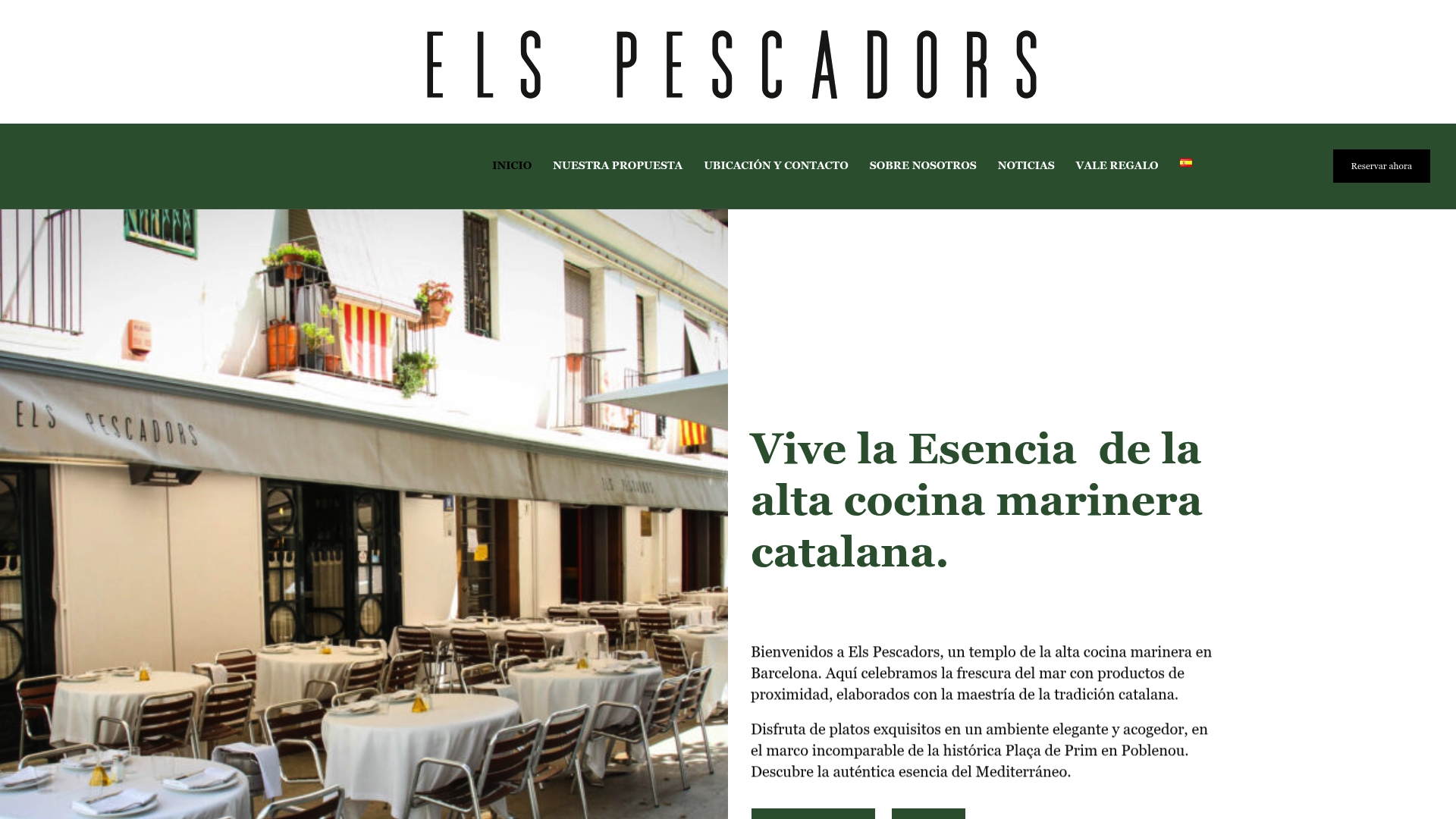
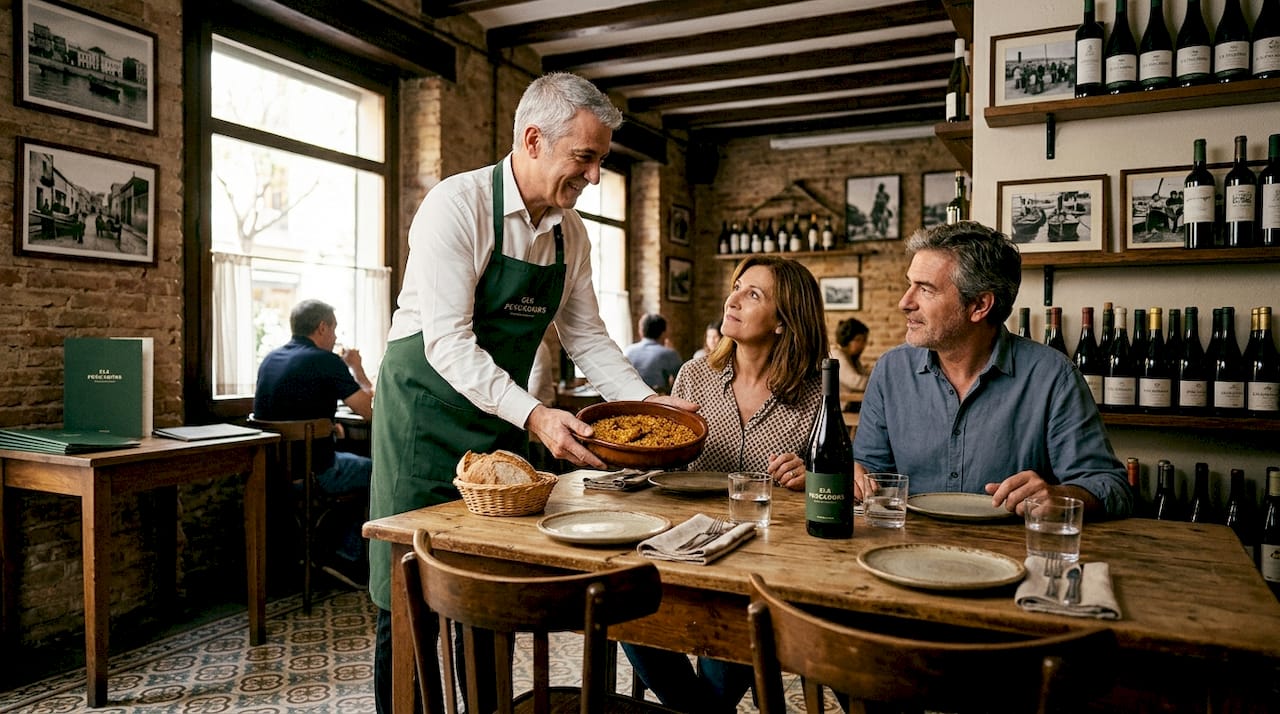
Els Pescadors sits in Plaça de Prim, one of Poblenou’s quietest and most atmospheric corners. It has been serving authentic Catalan seafood since the neighborhood’s fishing identity was still its primary one, and the kitchen has never stopped honoring that connection. The ingredients come from trusted local suppliers, the fish changes with the season, and the rice dishes are prepared the way they are supposed to be: slowly, attentively, and without shortcuts.
The restaurant offers tasting menus built around the daily catch, giving you a structured way to move through Catalan maritime flavors without having to guess at what to order. The setting is genuine Poblenou: a tree-lined square, outdoor tables, and a pace that matches the neighborhood itself.
If you want to understand Poblenou’s food culture from the best possible seat, explore the seasonal tasting menus and book your table before you arrive. Good tables here fill up with people who know what they’ve found.
FAQ
Why is Poblenou better for authentic dining than central Barcelona?
Poblenou’s restaurants serve a local residential community rather than a transient tourist crowd, which means menus reflect genuine Catalan cooking rather than adjusted versions designed for international tastes.
What are the best times to eat in Poblenou?
Midday lunch between 1:30 and 3:30 PM is the peak of local dining culture. Starting your visit between 9:30 and 10:30 AM gives you access to the neighborhood’s café culture before the lunch crowd arrives.
What food is Poblenou known for?
Poblenou is known for fresh seafood, traditional rice dishes like arròs a banda, and a Catalan maritime cuisine that emphasizes seasonal, locally sourced ingredients with direct ties to the Mediterranean.
Are there family-friendly restaurants in Poblenou?
Yes. The neighborhood has numerous family-friendly restaurants in Poblenou with outdoor terrace seating, relaxed service, and menus that cater to multiple generations dining together.
How do I find pop-up dining events in Poblenou?
Follow Poblenou restaurants and the Poblenou Urban District on social media. Many of the best temporary dining events are announced a few days in advance and do not appear on standard reservation platforms.