Poblenou is one of Barcelona’s most underrated culinary destinations, and understanding why is Poblenou known for seafood starts with a history most visitors never hear. This former fishing and industrial neighborhood sits right against the Mediterranean, and that geography has shaped everything about how people eat here. The seafood culture runs deeper than beach restaurants and fresh prawns. It connects to a working-class identity, a centuries-old fishing past, and a modern dining scene that quietly rivals anything in central Barcelona.
Table of Contents
- Key takeaways
- Why is Poblenou known for seafood: the historical roots
- The modern seafood dining landscape
- What sets Poblenou apart from other Barcelona neighborhoods
- Iconic seafood specialties you’ll find here
- How to explore Poblenou seafood on your visit
- My honest take on Poblenou’s seafood scene
- Experience Poblenou’s seafood for yourself
- FAQ
Key takeaways
| Point | Details |
|---|---|
| Deep historical roots | Poblenou’s seafood tradition dates to its origins as a fishing village, with restaurants like Els Pescadors operating since 1848. |
| Two distinct dining zones | The neighborhood offers both historic inland restaurants and upscale beachfront dining near Bogatell and Nova Icària. |
| Less tourist congestion | Poblenou delivers an authentic seafood experience far from the crowds that dominate central Barcelona’s dining scene. |
| Iconic Catalan dishes | Specialties like suquet de peix and arroz marinero define the local flavor and appear on menus throughout the neighborhood. |
| Freshness as a foundation | Direct proximity to the Mediterranean Sea guarantees a consistent supply of seasonal, locally sourced catch. |
Why is Poblenou known for seafood: the historical roots
Long before Poblenou became known for its tech startups and converted factory lofts, it was a fishing and working-class neighborhood shaped entirely by its relationship to the sea. The community that grew up here in the 18th and 19th centuries depended on daily catches for food and income. Fishing wasn’t a romantic activity. It was survival, and that necessity created a culinary culture built on cooking seafood simply and well.
Plaça de Prim sits at the geographic and cultural center of this tradition. The square has served as a gathering point for the neighborhood’s fishing community for generations, and it remains the symbolic heart of Poblenou’s seafood identity today.
“Poblenou’s seafood tradition is inseparable from Plaça de Prim, where restaurants have preserved the district’s fishing heritage for well over a century.”
A few things made this tradition stick through the waves of urban change that followed:
- A working-class food culture that prized honest, ingredient-forward cooking over elaborate presentation
- Proximity to daily fresh catch, which meant menus were dictated by what came out of the water that morning
- Community continuity, with the same families returning to the same restaurants across generations
- Industrial identity that resisted the gentrification pressure to swap tradition for trend
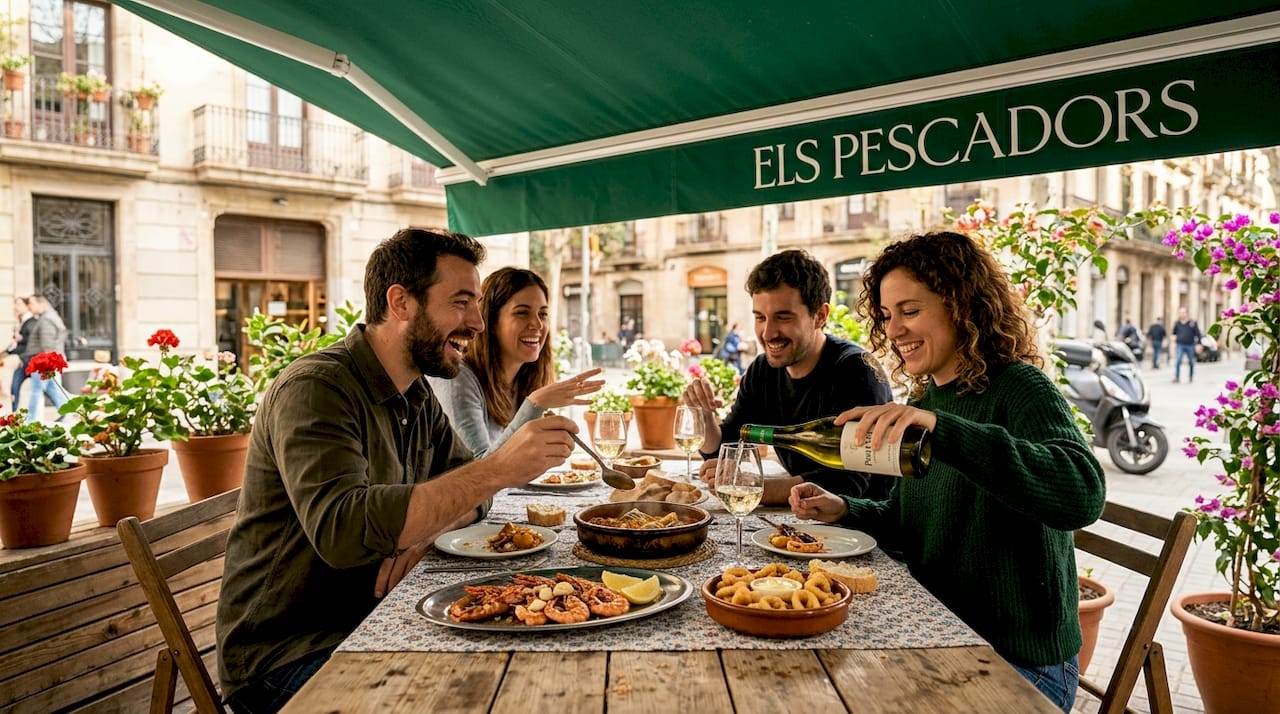
Els Pescadors has been operating since 1848, making it one of the oldest continuously operating seafood restaurants in Barcelona. That’s not a marketing claim. It’s a record of a neighborhood that refused to abandon what it knew. The restaurant’s location in Plaça de Prim is not coincidental. It occupies the exact spot where the fishing community once gathered, and it still draws locals who want food that connects to something real.
Even as Poblenou transformed into Barcelona’s answer to Silicon Valley, its working-class identity and neighborhood spirit survived. The factories became studios and coworking spaces, but the restaurants on Plaça de Prim kept serving the same rice dishes and grilled fish they always had.
The modern seafood dining landscape
Today, Poblenou offers two distinct seafood experiences, and knowing the difference makes your visit much better. You have the historic neighborhood core centered around Plaça de Prim, and you have the beach corridor stretching along Bogatell, Nova Mar Bella, and Nova Icària. Each zone has its own personality.
The beach strip brings Michelin-starred and upscale options within walking distance of the water. Chef Paco Pérez operates one of the most talked-about seafood experiences in this zone, blending local tradition with modern technique in a way that feels genuinely rooted rather than trend-chasing. The beachfront setting adds a layer of atmosphere that’s hard to replicate elsewhere in the city.
Back in the historic core, the offerings skew more traditional and neighborhood-focused:
- Grilled whole fish seasoned with olive oil and sea salt, cooked over open flame
- Catalan-style rice dishes loaded with shellfish and simmered in fish broth
- Tapas built on daily catch, shifting with the season and the morning’s delivery
- Slow-cooked seafood stews that take two or three hours and reward patience
Pro Tip: Book inland restaurants at Plaça de Prim for lunch rather than dinner. Locals eat lunch as the main meal of the day, and the kitchen is at its best between 1:30 and 3:30 pm. You’ll also pay significantly less for the same quality.
The best seafood in Poblenou reflects this dual identity well. You can eat at a place that hasn’t changed its menu in 40 years, or you can sit in front of the water at a restaurant with a wine program and a tasting menu. Both are legitimate. Both are good. The choice depends on what you’re after.
What sets Poblenou apart from other Barcelona neighborhoods
If you’ve eaten seafood near La Barceloneta, you know the experience. Crowded terraces, tourist menus laminated in four languages, mediocre paella served to people who don’t know better. Poblenou operates at a different level.
Poblenou’s beaches are less crowded than central Barcelona’s waterfront, and that quiet extends to the restaurants. You’re more likely to be seated next to a local family than a tour group. That shift in customer base changes the kitchen’s priorities entirely.
| Factor | Central Barcelona | Poblenou |
|---|---|---|
| Tourist congestion | High | Low to moderate |
| Menu authenticity | Varies widely | Consistently traditional |
| Price for quality | Inflated near tourist zones | Fair and competitive |
| Atmosphere | Crowded, commercial | Neighborhood, relaxed |
| Seafood freshness | Variable | Strong, sea-adjacent |
Proximity to the Mediterranean gives every Poblenou kitchen a logistical advantage. The catch arrives fresher and more varied than what reaches restaurants further inland or in more commercial areas of the city. This isn’t a small detail. Freshness is the difference between a memorable meal and a forgettable one.
The combination of industrial history and seaside location also gives Poblenou a culinary atmosphere you won’t find anywhere else in Barcelona. There’s a creative tension between the neighborhood’s gritty past and its current identity as a design and food destination. That tension makes it interesting.
Iconic seafood specialties you’ll find here
Understanding Poblenou’s culinary highlights means knowing what to order. The neighborhood’s menus reflect both the Catalan tradition and the daily reality of Mediterranean fishing. These are not generic seafood dishes. They carry specific techniques and histories.
| Dish | Description | Best Context |
|---|---|---|
| Suquet de peix | Slow-cooked fish stew with potatoes and a saffron-almond picada base | Winter months, lunch service |
| Arroz marinero | Soupy rice with mixed shellfish and fresh fish, cooked in fumet | Year-round, the signature order |
| Grilled gambas | Whole prawns grilled with sea salt and served with romesco or aioli | Summer, beachside dining |
| Rap a la brasa | Monkfish grilled over open flame with seasonal vegetables | Any season, traditional venues |
| Fideuà | Catalan noodle dish cooked like paella, loaded with seafood | Group dining, weekend lunches |
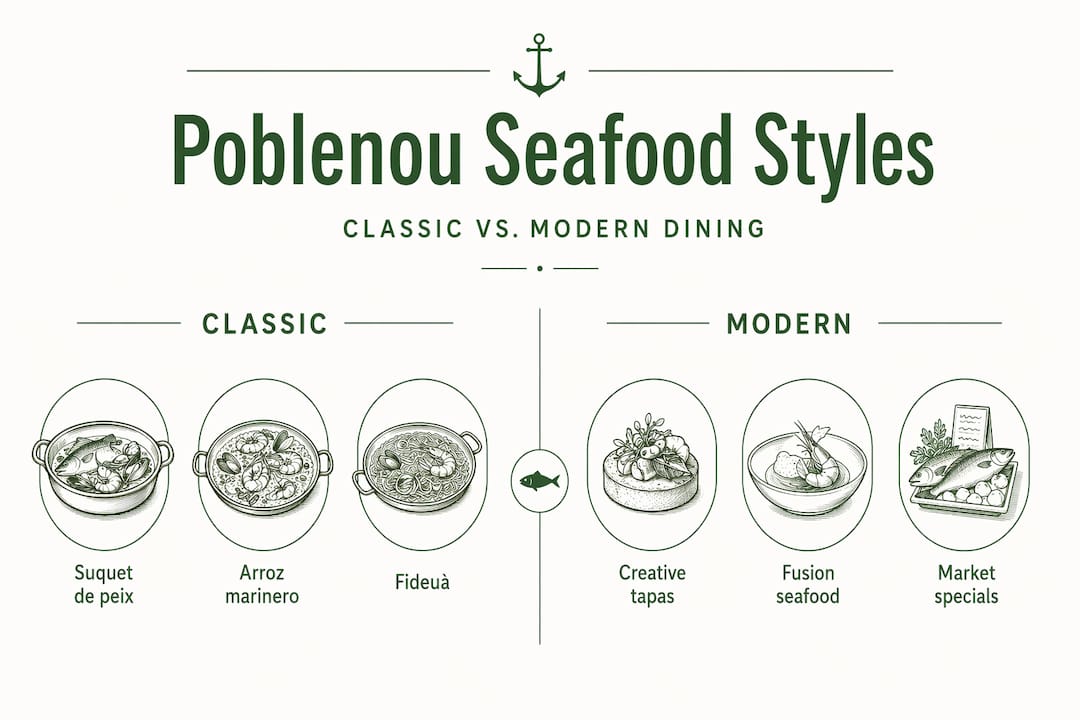
The Poblenou seafood specialties that define the neighborhood lean heavily on shellfish, prawns, octopus, and whichever whole fish came in that morning. Seasonal ingredients matter here in a way that menus in tourist zones don’t respect.
A few principles worth knowing:
- The picada is a Catalan thickening paste made from toasted bread, almonds, garlic, and sometimes chocolate. It’s the backbone of suquet and distinguishes authentic versions from shortcuts.
- Fumet is the fish stock that good rice dishes depend on entirely. A weak fumet means a weak rice dish, no matter how much seafood goes on top.
- Local prawns from the Ebro Delta region are considerably better than farmed alternatives. Ask whether the prawns are de llotja (from the fish market) and you’ll get a read on the kitchen immediately.
The traditional seafood dishes of Poblenou were built for exactly the kind of eating the neighborhood has always practiced: generous, direct, and centered on what’s fresh today.
How to explore Poblenou seafood on your visit
Planning matters when you’re trying to access the real Poblenou seafood experience rather than the tourist approximation of it. Here’s how to approach it.
- Arrive on a weekday. Weekend lunch at the best spots fills up fast, and you won’t get a table without a reservation. Tuesday through Thursday, you’ll have more flexibility and a calmer atmosphere.
- Book Plaça de Prim first. The historic core restaurants should be your anchor. Build your day around lunch there and explore the beach corridor for an evening drink and lighter seafood tapas.
- Ask what came in today. Any good seafood restaurant in Poblenou should be able to tell you what arrived that morning. If the server can’t answer, adjust your expectations for the meal.
- Pair with local wine, not sangria. Catalan white wines from the Penedès region and cava both complement seafood in ways that sangria simply doesn’t. A glass of white Garnacha or Xarel-lo will serve the food better.
- Visit the Mercat dels Encants area for a sense of the neighborhood’s broader food culture. While not exclusively a fish market, the area around Poblenou’s commercial zones gives you a window into how locals shop and eat.
Pro Tip: If you want to explore Poblenou seafood beyond restaurants, check whether Els Pescadors or similar venues offer cooking classes or market tours. Experiencing how the fish is selected before it reaches the kitchen changes how you taste the meal.
Mediterranean seafood dining at this level rewards preparation. The more you know before you sit down, the more you’ll appreciate what’s in front of you.
My honest take on Poblenou’s seafood scene
I’ve eaten at a lot of seafood restaurants in Barcelona. The ones near La Barceloneta that rely on location rather than quality. The experimental places in Eixample that treat fish as a canvas for technique. And then the places in Poblenou that do neither.
What I’ve found in Poblenou is something most food destinations lose the moment they get discovered: a community that still eats there. The restaurants around Plaça de Prim aren’t performing tradition for visitors. They’re practicing it for their regulars. That’s a different thing entirely, and you can taste it.
What visitors often miss is the rice. Everyone focuses on the grilled fish and the shellfish platters, but the arroz marinero at a place like Els Pescadors is where you really understand what Catalan maritime cooking is doing. The fumet carries the whole dish. The seafood is secondary to the rice itself, which sounds wrong until you eat it and understand that the point was never the protein.
I also think the beachfront modern dining in Poblenou gets underrated because it’s sandwiched between the extremes of tourist-trap beach restaurants and historic neighborhood spots. Chef Paco Pérez’s work near Nova Icària deserves more attention than it gets in most Barcelona food coverage. It’s ambitious without being self-important.
My advice: go to the old spots first. Let them calibrate your palate to what Catalan seafood actually tastes like. Then the modern places will make more sense. Skipping the history to get to the innovation is like watching the final episode of a series first.
— YellowRock
Experience Poblenou’s seafood for yourself
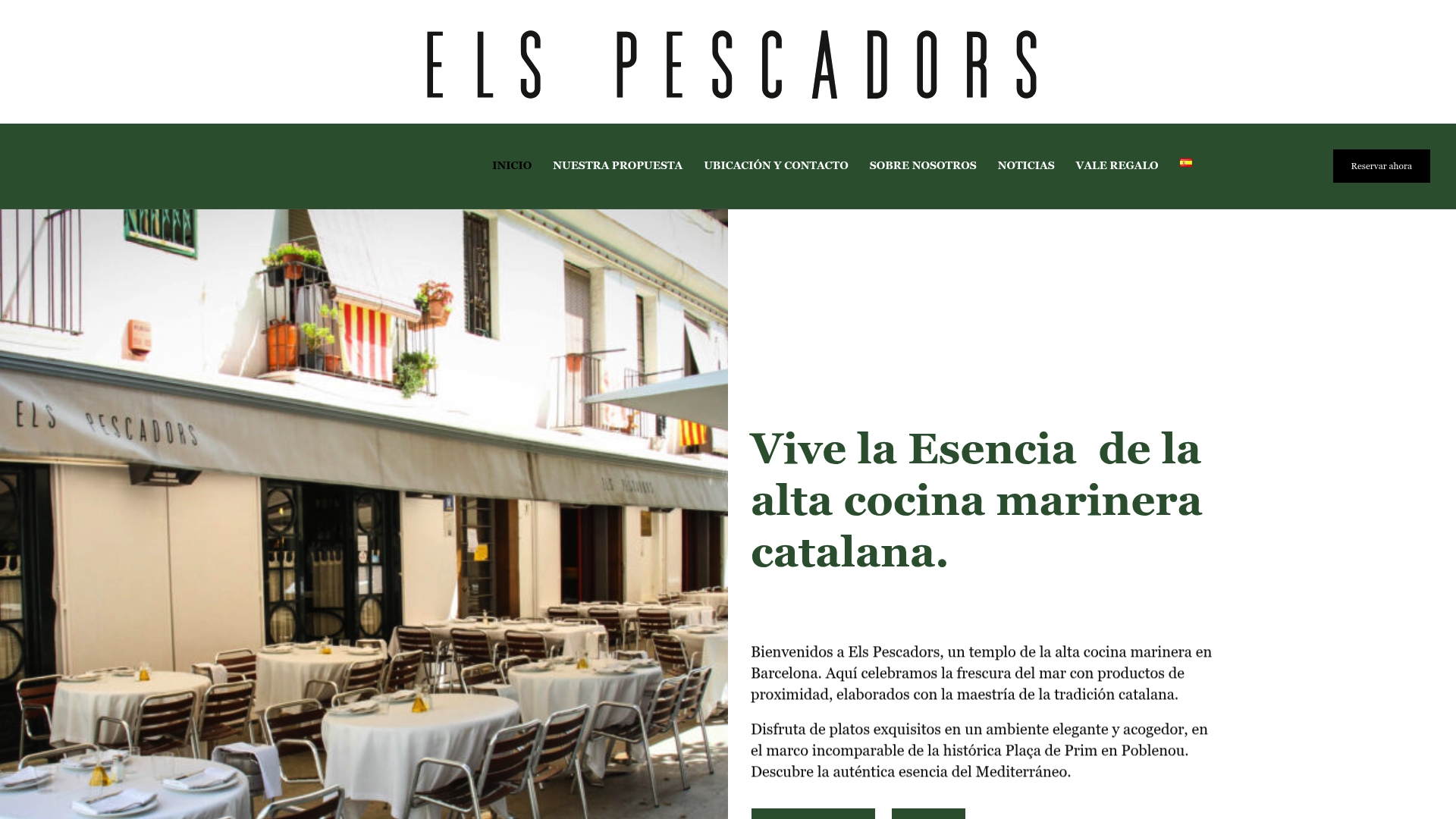
Els Pescadors has been the anchor of Poblenou’s seafood identity since 1848, and its position in Plaça de Prim puts you at the center of everything described in this article. The menu covers the full range of traditional Catalan maritime cooking, from suquet de peix to fresh daily catch and the kind of rice dishes that make the neighborhood famous. Whether you’re planning a solo lunch, a dinner for two, or a group dining experience, the Els Pescadors proposal is built around seasonal ingredients and culinary heritage done with precision. For a deeper look at what makes this restaurant worth the visit, explore the Els Pescadors experience and consider booking ahead.
FAQ
Why is Poblenou known for seafood in Barcelona?
Poblenou’s seafood reputation comes from its origins as a fishing village, its direct access to the Mediterranean, and restaurants like Els Pescadors that have maintained Catalan maritime traditions since 1848.
What are the most popular seafood dishes in Poblenou?
The standout dishes include suquet de peix (Catalan fish stew), arroz marinero (seafood rice), grilled gambas, and fideuà. These reflect the neighborhood’s Catalan culinary identity and seasonal ingredient focus.
Is Poblenou better than La Barceloneta for seafood?
Poblenou offers a more authentic, less tourist-heavy experience than La Barceloneta, with restaurants where locals actually eat and menus that prioritize quality and tradition over high turnover.
When is the best time to eat seafood in Poblenou?
Lunch between 1:30 and 3:30 pm on weekdays gives you the best combination of kitchen quality, availability, and local atmosphere. Reservations are recommended at historic spots around Plaça de Prim.
What makes Catalan seafood different from other Spanish seafood traditions?
Catalan seafood cooking relies on techniques like the picada (a paste of almonds, bread, and garlic), slow-cooked fumet stock, and the use of local seasonal catch in ways that distinguish it from the simpler grilling traditions found in other Spanish coastal regions.