
Supporting local restaurants means directing your spending toward businesses that reinvest in your neighborhood, employ your neighbors, and build the food culture that defines your community. Every dollar you spend at an independent eatery does far more economic work than the same dollar spent at a chain. The case for choosing local eateries is grounded in hard economics, environmental responsibility, and a dining experience that no franchise menu can replicate. This guide breaks down exactly why local restaurant support matters and what it produces for communities, farmers, and diners alike.
Why support local restaurants: the economic case
The single most compelling reason to support local restaurants is the economic multiplier effect. Every $1 spent in the restaurant industry generates approximately $1.80 of output throughout the broader local economy. That means your dinner reservation is not just a meal. It is a small investment that ripples outward to suppliers, farmers, delivery workers, and local vendors.
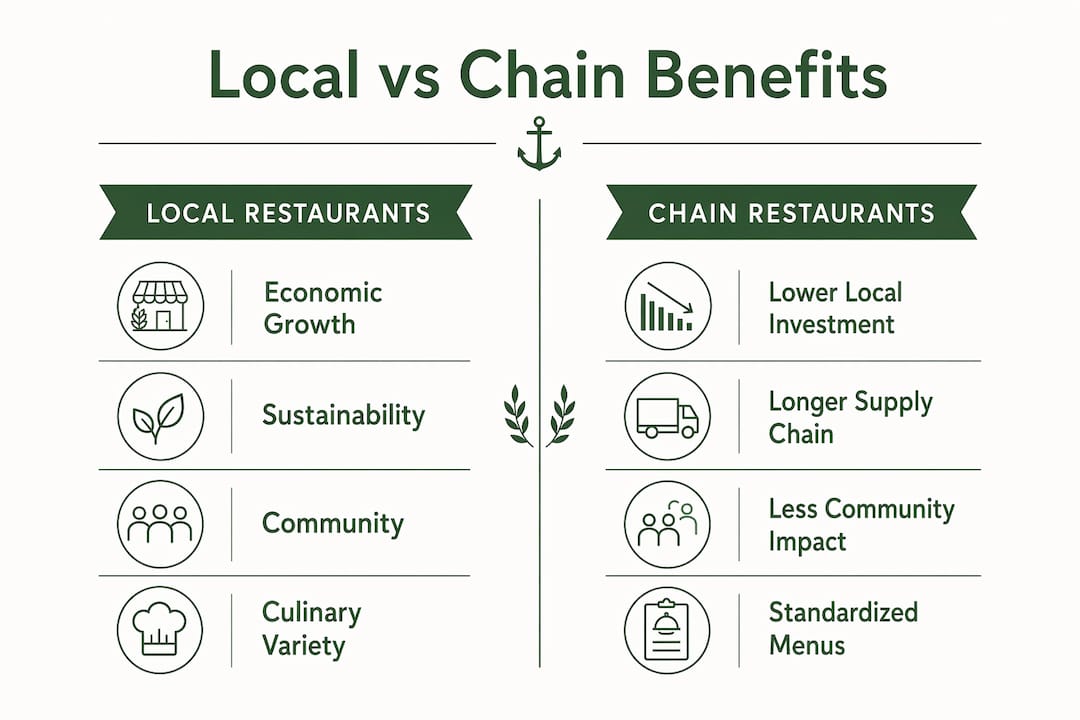
The contrast with chain restaurants is stark. Independent local businesses recirculate about 48 cents of every dollar spent back into the local economy, while chain stores return less than 14 cents locally. Chains funnel the majority of revenue back to corporate headquarters, often in another city or country entirely. Local restaurants keep wages, purchases, and profits circulating within the community where you live.
This economic recirculation is not just about restaurants surviving. It is about building a resilient local ecosystem. The Brookings Institution identifies coordinated community support as the backbone of small business survival, noting that county governments and local collaborators act as essential “quarterbacks” in sustaining independent businesses. Consumer spending is the foundation, but it works best when paired with a community that actively values its local businesses.
| Metric | Local restaurants | Chain restaurants |
|---|---|---|
| Revenue recirculated locally | ~48 cents per dollar | Less than 14 cents per dollar |
| Economic multiplier | ~$1.80 per dollar spent | Primarily benefits corporate HQ |
| Local employment impact | High: wages stay in community | Moderate: management profits leave |
| Supplier relationships | Local farms and producers | Centralized national supply chains |
The table above makes the choice clear. Choosing a neighborhood restaurant over a chain is one of the most direct ways an individual can support local economic health without any additional effort beyond where you eat.
How local sourcing makes restaurants more sustainable
Sustainability in restaurants is not achieved by printing “locally sourced” on a menu. It is built through consistent, volume-driven relationships with nearby farms. Michelin-recognized chef Charlie Foster of Woods Hill puts it plainly: "the closer you can get to the source, the better" for both nutritional value and environmental impact. That principle shapes every purchasing decision at restaurants serious about sustainability.
When a restaurant commits to buying from a local farm week after week, that farm can plan its growing season with confidence. Consistent demand supports farm viability, reduces food waste from overproduction, and shortens the supply chain. Shorter supply chains mean less refrigeration, less transportation fuel, and fresher food on the plate. The environmental benefits compound quickly when dozens of local restaurants make the same commitment.
The hyperlocal model taken by restaurants like Little Saint in Healdsburg, California, shows what this looks like at its most ambitious. Little Saint sources produce from less than a mile away, integrating regenerative farming and local employment into a single food system. The result is not just a sustainable restaurant. It is a community food hub that strengthens the entire local agricultural network.
The key distinction most diners miss is that true sustainability depends on the volume sourced locally and the depth of producer relationships, not the presence of a “local” label. A restaurant that buys 5% of its ingredients locally and calls itself farm-to-table is not delivering the same impact as one that builds its entire menu around what nearby farms produce each season.
- Shorter supply chains reduce carbon emissions from transportation and refrigeration
- Direct farm relationships allow chefs to use whole animals and imperfect produce, cutting food waste
- Seasonal purchasing supports biodiversity by creating demand for heritage and heirloom varieties
- Local sourcing keeps agricultural land viable, preventing it from being sold for development
- Consistent restaurant demand gives small farms the revenue stability to invest in better practices
Pro Tip: When evaluating a restaurant’s sustainability claims, ask your server which specific farms supply the kitchen. A restaurant with genuine local sourcing relationships will name them without hesitation. Vague answers like “regional suppliers” usually signal a marketing claim rather than a real commitment.
Do local restaurants actually build community?
Local restaurants function as social infrastructure, serving as gathering spaces that maintain neighborhood ties and mark life milestones. Birthday dinners, business meetings, first dates, and neighborhood fundraisers all happen in local restaurants. Chains can host these moments too, but they rarely become part of a neighborhood’s identity the way an independent restaurant does.

The social function of a local restaurant goes beyond the physical space. Owners know their regulars by name. Staff members are neighbors. The restaurant sponsors the local little league team or hosts a benefit dinner after a community crisis. These acts of social investment do not appear on a balance sheet, but they contribute to the mental health and cohesion of the people who live nearby. Research confirms that local restaurants contribute directly to social cohesion and mental health support within communities.
Consider what happens when a beloved local restaurant closes. The neighborhood loses more than a place to eat. It loses a meeting point, a source of local employment, a buyer for nearby farms, and often a landmark that shaped the character of the street. The economic and social losses are intertwined in ways that a chain restaurant closure rarely replicates, because chains are interchangeable by design.
Pro Tip: Make a habit of visiting a local restaurant for at least one meal per week rather than defaulting to delivery apps dominated by chain options. The cumulative effect of that single weekly choice, multiplied across a neighborhood, is enough to keep an independent restaurant financially viable through slow seasons.
Local vs chain restaurants: the culinary experience gap
Local restaurant menus are living documents, not laminated fixtures. Chefs who source seasonally through direct supplier relationships build menus around what farms are producing right now, not what a corporate purchasing department ordered six months ago. That difference produces food that is fresher, more varied, and more interesting than anything a standardized supply chain can deliver.
The culinary creativity this enables is real and measurable. A chef who speaks directly with a farmer learns about an unusual variety of squash, a surplus of fresh herbs, or a small catch of a rare fish. That conversation becomes a dish. It is a creative process that local ingredients make possible and that chain kitchens structurally cannot replicate. The menu at a serious local restaurant reflects the season, the region, and the specific relationships the chef has built over years.
| Experience factor | Local restaurant | Chain restaurant |
|---|---|---|
| Menu variation | Seasonal, changes with availability | Fixed, updated quarterly or annually |
| Ingredient origin | Named local farms and producers | Centralized national distributors |
| Chef creativity | Direct input from farm relationships | Constrained by corporate recipes |
| Flavor freshness | Harvested days or hours before service | Optimized for shelf life and transport |
| Cultural authenticity | Reflects regional culinary tradition | Standardized for broad market appeal |
Diners who explore local culinary culture through independent restaurants consistently encounter dishes they cannot find anywhere else. That exclusivity is not a marketing gimmick. It is the natural result of a chef working with what the land and sea produce in a specific place at a specific time. The advantages of eating local extend well beyond economics. They reach into the plate itself.
Key takeaways
Supporting local restaurants produces economic, environmental, social, and culinary benefits that chain dining cannot match, making every local meal a meaningful community investment.
| Point | Details |
|---|---|
| Economic multiplier effect | Every $1 spent locally generates ~$1.80 in broader economic output for the community. |
| Local recirculation advantage | Independent restaurants return ~48 cents per dollar locally versus less than 14 cents for chains. |
| Sustainability through relationships | Real environmental impact comes from consistent, volume-driven sourcing from nearby farms. |
| Social infrastructure value | Local restaurants serve as community gathering spaces that support social cohesion and mental health. |
| Culinary distinctiveness | Seasonal, farm-direct menus produce dishes and flavors that standardized supply chains cannot replicate. |
What I’ve learned from watching local restaurants thrive and disappear
I have watched neighborhoods lose their character one restaurant closure at a time, and I have seen the opposite: a single well-supported local restaurant anchor an entire block’s revival. The economic data confirms what is visible on the street. When a community consistently chooses local eateries, the money stays, the farms stay viable, and the food gets better.
What surprises most people is how fragile the system is. A local restaurant operating on thin margins can be tipped into closure by a few slow months. The diners who show up in February, not just in July, are the ones who actually keep these places alive. Seasonal loyalty matters more than occasional enthusiasm.
The sustainability argument also runs deeper than most diners realize. I have seen restaurants claim local sourcing while buying from distributors who aggregate from dozens of states. The restaurants worth supporting are the ones that can name their farmers, describe the farm, and explain why the menu changed this week. That specificity is the real signal of commitment. When you find a restaurant that operates that way, the right response is to go back regularly and bring people with you.
— YellowRock
Experience local dining at Elspescadors in Barcelona
Elspescadors embodies every principle this article describes. Located in Barcelona’s historic Poblenou district at Plaça de Prim, Elspescadors builds its menu around fresh daily catch and seasonal Catalan maritime ingredients sourced through direct relationships with local suppliers. The restaurant’s commitment to sustainable seafood and authentic regional cuisine is not a marketing position. It is the foundation of every dish served.
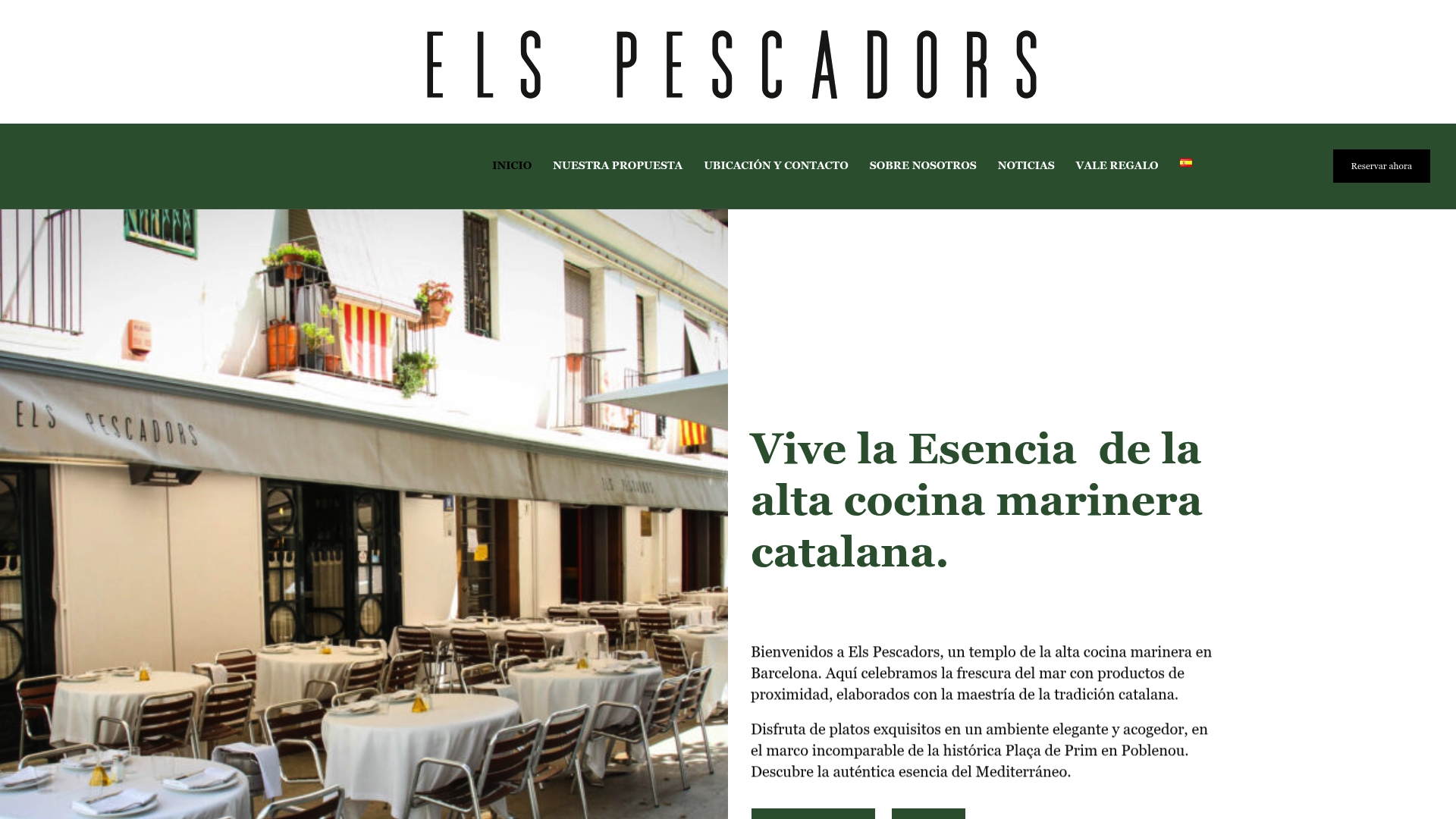
If you are in Barcelona and want to experience what genuine local dining produces on the plate, explore Elspescadors’ proposal and see how Catalan culinary tradition translates into a refined, seasonal menu. Reservations are available through the website, and the seafood tasting menu offers the clearest expression of what local sourcing and culinary craft can achieve together.
FAQ
Why does spending at local restaurants help the economy more?
Independent restaurants recirculate roughly 48 cents of every dollar back into the local economy, compared to less than 14 cents for chains. This gap exists because local owners pay local wages, buy from local suppliers, and keep profits in the community rather than sending them to a distant corporate headquarters.
What is the economic multiplier effect in dining?
The economic multiplier means that $1 spent at a restaurant generates approximately $1.80 of total economic output as that money flows through suppliers, employees, and local vendors. It is the clearest evidence that dining locally is an economic act, not just a personal preference.
How do local restaurants support sustainability?
Local restaurants reduce carbon emissions by shortening supply chains, support farm viability through consistent purchasing, and cut food waste by using seasonal and imperfect produce. The depth of a restaurant’s relationships with nearby farms, not just a “local” label, determines its real environmental impact.
Are local restaurants better for community well-being?
Local restaurants act as social gathering spaces that strengthen neighborhood ties, support mental health, and host community milestones. Their closure removes more than a dining option. It removes a social anchor that chains, which are interchangeable by design, do not replace.
How can I identify a restaurant with genuine local sourcing?
Ask your server to name the specific farms supplying the kitchen. Restaurants with real local sourcing relationships will answer immediately and specifically. Vague references to “regional” or “seasonal” ingredients without named producers usually indicate a marketing claim rather than a genuine farm-to-table commitment.