Choose the pairing when you are ordering a tasting menu and want one person’s plan for the whole meal. Choose wine by the glass when you want control over how much you drink, which wines you try and how many courses they cover. A sommelier quoted by Eater frames it the same way: the pairing is the fully curated experience, and glasses let you pair over only a few courses.
Below you will find how pours work, what each option typically costs in Barcelona, and which wines suit fish, shellfish and rice.
TL;DR
- A pairing is a set sequence of small pours, one per course, chosen to follow the arc of the menu. By the glass, you pick the wines and the number of glasses.
- Paired pours are small. One Spanish tasting-menu guide suggests 75 ml, about ten pours per bottle, against 100 to 150 ml for a standard glass.
- Pairing suits long menus and diners who want to be guided. Glasses suit people who want a lighter evening, a single favorite style or a shared bottle-free meal.
- For seafood and rice, think fresh, acidic whites, Cava and dry rosé. A red should not overpower the fish.
- Not sure? Order one or two glasses for the first courses, then decide whether to continue.
Table of Contents
- What a wine pairing is, and what by the glass means
- How a pairing works across a tasting menu
- How wine by the glass works
- What each option costs in Barcelona
- What to drink with fish, shellfish and rice
- Our view on pairing a seafood menu
- How to choose: a short decision guide
- Planning your table at Els Pescadors
- FAQ
- Sources
What a wine pairing is, and what by the glass means
A wine pairing is a package. The kitchen sets the dishes, the sommelier or front-of-house team sets the wines, and each course arrives with its own pour. You do not choose the wines, which is both the appeal and the trade-off. The guide’s “story” is the point: the wines follow the food from light to full-bodied, and each one is selected for the dish it accompanies.
By the glass is a la carte for wine. You read the list, ask for a recommendation and order what you want, when you want it. Nothing stops you from pairing course by course, but nothing forces you either. Eater’s sommelier notes that you can ask for two or three glasses that cover several courses if a full pairing is too much alcohol, and that a half pairing can be shared with your companion.
So the real difference is not quality. It is who decides, how much you pour and how closely the wine tracks each plate.

How a pairing works across a tasting menu
The wine follows the food
Tasting menus build in intensity, and the wines are meant to build with them. A Kavasoft guide to tasting menus describes the classic progression: sparkling wine for the aperitif, a light white for a cold starter, a fuller white for a hot starter, a dry rosé or mineral white for the sea dish, a medium red for the land dish, a fuller red for the main and a sweet wine for dessert. It also says the wine should reach the table a minute or two before the dish.
Spain’s consumer organization gives the same logic in plain terms: OCU advises drinking light wines before full-bodied ones, fresh wines (whites, rosés, sparkling) before those served at room temperature, and dry wines early with sweet ones at the end. It also warns against serving too many different wines in one meal, which is a good reason a pairing keeps each pour small.
A seafood-led example
A six-course example from Spanish Terroir shows how this looks on a Spanish table: Cava for the amuse-bouche, Albariño for raw or cured seafood, a barrel-fermented white for rich fish or rice, an unfortified Palomino as a savory reset, red for the main and a sweet wine for dessert. That is one wine role per course, and none of the wines repeats the job of the one before.
How much wine you actually drink
This is the question that worries most people, and the answer is reassuring. Pairing pours are not full glasses.
| Source | Course count | Pour size | Pours per 750 ml bottle |
|---|---|---|---|
| Spanish Terroir | 6 | 75 ml | about 10 |
| Kavasoft | 5 dishes | 90 to 100 ml | 7 to 8 |
| Kavasoft | 7 dishes | 70 to 80 ml | 9 to 10 |
| Kavasoft | 10 or more dishes | 50 to 60 ml | 12 to 15 |
Compare that with a standard serving. Tamaral’s wine service guide puts a glass of dry wine at 100 to 150 ml (five to eight glasses per bottle), a flute of Cava at 150 ml (five per bottle) and dessert wine at 60 to 90 ml.
A quick calculation shows the effect. Six pairing pours at 75 ml come to 450 ml, a little over half of a bottle in total. Six full 125 ml glasses would be 750 ml, a whole bottle. The pairing sounds like more wine than it is, and the longer the menu, the smaller each pour gets.
The exact pour at any restaurant is set by that restaurant, so ask when you book or when you sit down.
How wine by the glass works
The strength of ordering by the glass is flexibility. You can open with a sparkling wine, switch to a white for the fish and stop there. You can also stay with one wine you love all evening. Couples with different tastes often find this the easiest route: one white, one red, no compromise.
What you can order depends on the venue. Reporting by Ara on Barcelona wine service says glass lists commonly include whites, orange wines and light reds, some places add sparkling wines, and rosés and specialty wines such as sherry or sweet wines can cost more. The same piece points to preservation as central to quality: systems that limit oxidation, such as vacuum or inert gas, help keep an opened bottle in good shape.
In practice, the best way to use a glass list is to ask. Tell the person at your table what you are eating and what styles you like, and let them point to the glass that fits. Ara notes that some Barcelona restaurants recommend wines by the glass and let guests taste before a full pour.
What each option costs in Barcelona
Prices vary widely by venue, so treat these as ranges, not promises. Ara reported in March 2025 that glass prices at Barcelona restaurants ranged from about €4 to €8. A tasting-menu pairing is priced as a supplement to the menu, and it is normally listed on the restaurant’s own menu page, so check it there when you book.
A simple way to compare is per course. If a pairing has six pours, divide its price by six and compare that figure with the glass price of the wines you would have picked. If the pairing includes wines you would not normally find by the glass, that is where it earns its price. If you would choose two glasses anyway, glasses win on cost.
Our own seasonal menu is listed at €39 per person, and you can see how we think about seafood sourcing and menu pricing in our guide to what shapes Barcelona tasting menu prices.
What to drink with fish, shellfish and rice
Whether you pair or pour, the same principles apply to Mediterranean food.
Balance, not dominance. DO Catalunya says neither the dish nor the wine should excessively dominate the other, and that a red should not eclipse fish. That one rule rules out most bad matches.
Lean on acidity. Consum advises balancing intensity, texture, acidity and aroma, and notes that wines with good acidity suit seafood because they add freshness and cleanse the palate without masking the fish.
Shellfish by type. Consum suggests brut sparkling wine or very dry, acidic whites for oysters; Albariño or other fresh, well-acidified whites for cockles, clams and mussels; and more structured whites for prawns, shrimp and langoustines, depending on how they are cooked.
Rice depends on what is in it. OCU explains that rice is neutral, so the wine follows the accompaniment: white or black rice with a dry white, rice with chicken or seafood with a dry rosé, and rice with meat or game with a young red.
Go local. A Catalan wine guide for visitors suggests a Penedès white, an Alella or a Brut Cava with seafood or grilled fish, Xarel·lo for raw shellfish thanks to its saline, mineral quality, and a dry Brut Nature or Reserva Cava for rice dishes such as arròs a la cassola.

If you are choosing by the glass for a seafood meal, that gives you a short, dependable order: a Cava or Xarel·lo to start, a fresh white with the fish, a dry rosé if the rice is on the table.
Our view on pairing a seafood menu
We cook Catalan maritime cuisine around the daily catch and the season, so the menu changes and the wine conversation changes with it. A turbot one week and a rice with prawns the next do not ask the same questions of a glass.
Our view is simple. A tasting menu is a sequence, and the best way to enjoy a sequence is to let the drink follow it. Fresh and saline at the start, richer in the middle, quiet at the end. Whether that comes from a set pairing or from two or three well-chosen glasses matters less than the idea behind it: nothing should shout over the fish.
We also think the table should feel relaxed. If you want one glass of white that carries you through the meal, ask us what suits the day’s dishes when you sit down. Tell the team what you like, how much you want to drink and whether you are sharing, and we will help you build the evening around that.
YellowRock
How to choose: a short decision guide
Use these situations as a checklist.
- You are ordering a long tasting menu and want to be guided. Pairing gives you one idea from start to finish, and small pours keep the total manageable. The longer the menu, the smaller the pour.
- You want less alcohol, or one of you is not drinking. Go by the glass, or ask for one or two glasses to cover several courses, as Eater’s sommelier suggests. Sharing a half pairing is another route.
- You already know the style you love. Order that glass. Pairing rules are guides, not exams. A dry, acidic white works across most of a seafood meal.
- You are curious and want to try unfamiliar wines. The pairing opens up regional wines you might not have chosen. By the glass you can still do this by asking for a taste before you commit.
- You are in a group with different tastes. Glasses let everyone order independently, while a pairing works best when the table agrees.
- You are ordering a la carte. There is no fixed sequence to follow, so glasses fit naturally. Our comparison of a la carte and tasting menus can help you decide which format suits the evening.
If you are unsure, start with one glass and a conversation. You can add another course’s wine later, but you cannot take a pour back.
Is a pairing worth it?
It is worth it when you value having the whole meal curated and you are eating enough courses for the progression to show. It is less necessary when you are eating a short menu, when you are not drinking much or when you already know what you want. Both are legitimate ways to enjoy a seafood dinner.
Planning your table at Els Pescadors
We are in Plaça de Prim, in Poblenou, and we cook fresh fish, seafood and rice dishes with seasonal, locally sourced ingredients. If you would like a set journey through the catch, take a look at our seafood tasting menu or the Menú Degustación page. If you prefer something lighter, our Menú de Temporada is €39 per person.
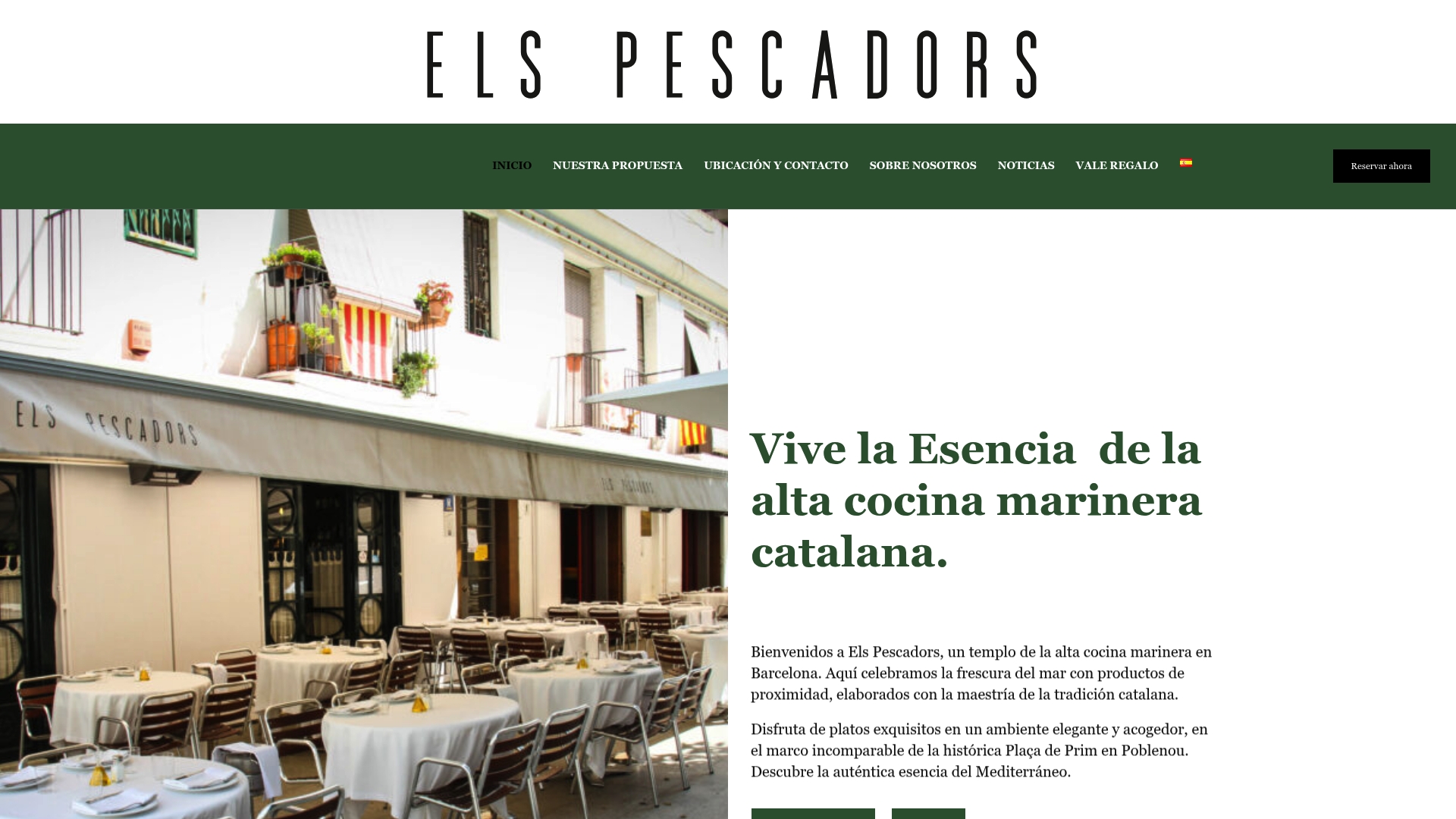
Book through our website, and tell us when you reserve whether you plan to drink with the meal, how much and whether anyone prefers to skip alcohol. We will help you plan the evening around that. For a larger party, see our group menus.
FAQ
Is a wine pairing worth it?
It is worth it if you want a curated progression across a tasting menu and are happy to let the restaurant choose. Pours are small, so the total volume is modest. If you prefer to control the wine, order by the glass instead.
How much wine comes with a pairing?
It depends on the restaurant and the number of courses. One Spanish guide suggests 75 ml per pour in a six-course menu, about ten pours per bottle, while another sets 90 to 100 ml for five dishes and 50 to 60 ml for ten or more. Ask your server for the exact pour.
Can I order just a couple of glasses instead of the full pairing?
Yes, in most restaurants. A sommelier quoted by Eater recommends asking for two or three glasses that cover several courses, or sharing a half pairing with your companion. Tell your server what you are eating and they can suggest glasses to match.
What wine goes best with seafood and rice?
Choose fresh, acidic wines. Consum recommends brut sparkling wine or dry whites for oysters and Albariño for clams and mussels, while OCU pairs seafood rice with a dry rosé and white or black rice with a dry white. A red should not overpower the fish.
Is wine by the glass more expensive than a pairing?
Not necessarily. Ara reported glass prices of about €4 to €8 in Barcelona restaurants, and a pairing is priced as a supplement to the menu. Divide the pairing price by its number of pours and compare it with the glasses you would order.
Sources
- Ask a Somm: What’s the Best Way to Navigate Restaurant Wine Pairings (Eater)
- Spanish wine for tasting menus (Spanish Terroir)
- Crear un menú degustación con maridaje de vinos (Kavasoft)
- Maridaje entre vino y comida (OCU)
- ¿Cuántas copas de vino salen de una botella? (Tamaral)
- Good wines by the glass: why are they hard to find (Ara)
- 10 tips para acertar el vino (DO Catalunya)
- Wines for fish: which are the best? (Consum)
- Catalan wine for visitors (Barcelonageek)