Yes, you can eat raw seafood safely, but only if three controls hold: the product comes from a regulated source with an intact cold chain, it’s been frozen to the correct temperature and time before you eat it raw, and you keep it away from cross-contamination in your kitchen. Skip any one of those and you’re gambling with bacteria, parasites, or toxins that don’t announce themselves with a bad smell. The European Food Safety Authority (EFSA), Spain’s food safety agency AESAN, and EU Regulation (CE) No 853/2004 all set the baseline rules that make raw seafood consumption manageable rather than reckless.
Here’s what actually moves the needle:
- Buy from a regulated, traceable supplier. Ask about catch area, freezing documentation, and depuration certificates for bivalves.
- Protect the cold chain from market to plate. Fresh seafood needs 0–4°C; frozen product needs -18°C or colder, with no gaps in between.
- Freeze to the legal spec before eating anything raw. AESAN requires -20°C for 24 hours (or -35°C for 15 hours) for fish destined to be eaten raw, specifically to kill Anisakis larvae.
EFSA has flagged rising concern about Vibrio bacteria in seafood as coastal waters warm, particularly Vibrio parahaemolyticus and Vibrio vulnificus, both of which concentrate in filter-feeding bivalves like oysters and mussels. That single fact is why the “it smells fine, so it’s fine” instinct fails with raw shellfish. Bacteria don’t always change the smell or texture before they change your health.
Key Takeaways
Raw seafood becomes safe when regulated sourcing, correct freezing temperatures, and strict hygiene are all applied together, not in isolation.
| Point | Details |
|---|---|
| Source matters most | Buy only from suppliers who document catch area, freezing, and depuration certification. |
| Freezing beats freshness for Anisakis | Use -20°C for 24 hours commercially, or -15°C for 4 days at home, before eating fish raw. |
| Cold chain protects against Vibrio | Keep fresh seafood at 0–4°C and frozen product at -18°C or colder without interruption. |
| High-risk groups should skip raw | Pregnant people, immunocompromised individuals, and those with liver disease or hemochromatosis face severe outcomes. |
| Cooking to 60°C is the reliable alternative | Hold seafood at 60°C for at least one minute when in doubt about raw safety. |
Table of Contents
- Understanding Seafood Safety Risks in Raw Marisco
- How to Buy and Receive Raw Seafood Safely
- What Temperatures Keep Raw Seafood Safe in Transit and Storage
- What Freezing Rules Actually Prevent Anisakis Infection
- How to Prepare Raw Seafood Safely at Home
- When Should You Cook Seafood Instead of Eating It Raw
- Who Should Avoid Raw Seafood Entirely
- How Restaurants Control Raw Seafood Risk
- Your Quick Checklist for Raw Seafood Safety
- Why Seafood Safety Shapes How Els Pescadors Serves Raw Dishes
- Where to Verify These Rules Yourself
- Sources
- FAQ
Understanding Seafood Safety Risks in Raw Marisco
The real hazards behind seguridad alimentaria marisco crudo fall into four categories, and each one calls for a different defense. Knowing which threat you’re actually managing changes what you do at the fish counter and in your kitchen.
Vibrio bacteria live naturally in seawater and multiply fast in warm conditions. V. parahaemolyticus and V. vulnificus are the two species EFSA and FAO both name as the highest public-health concern in raw or undercooked shellfish. Infections usually cause vomiting and diarrhea, but V. vulnificus can trigger bloodstream infections in people with weakened immune systems or chronic liver disease, sometimes with fatal outcomes.
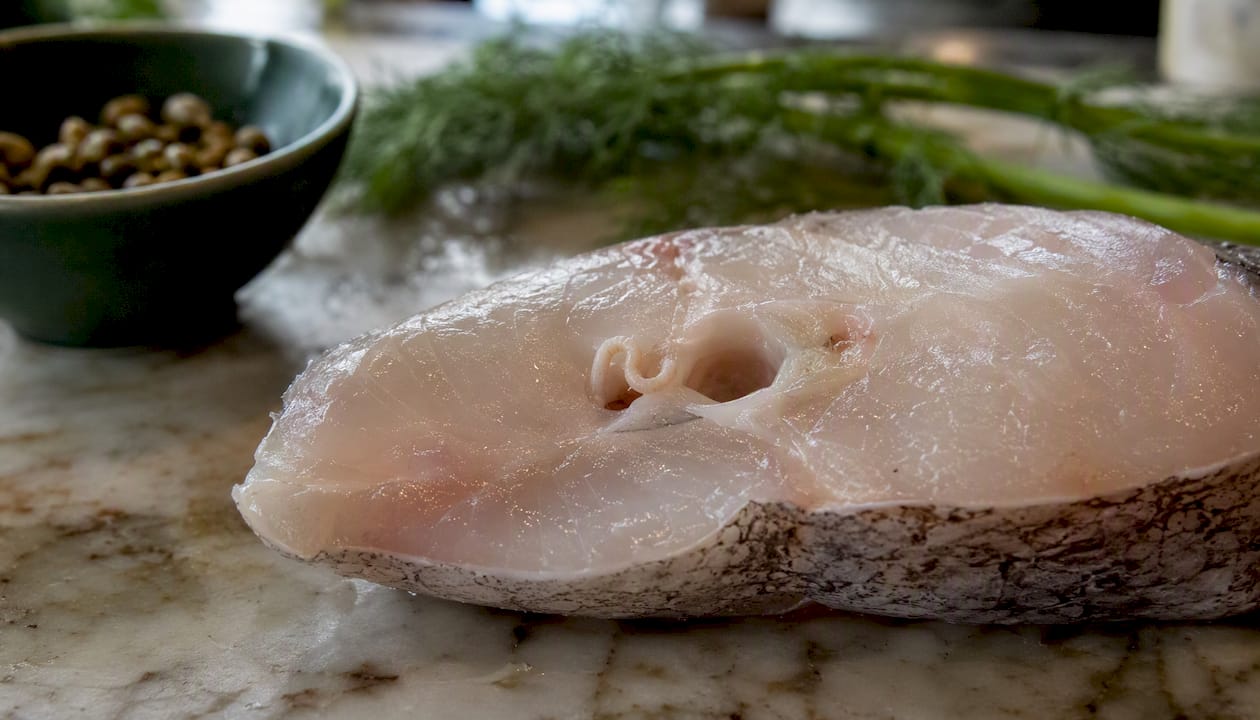
Anisakis is a parasite, not a bacterium, and it behaves completely differently. The larvae live in the flesh and gut cavity of many wild fish species, including anchovies, hake, and mackerel. Eating a live larva can cause abdominal pain and vomiting within hours, or in some people, a genuine allergic reaction. Freezing is the control here, not cooking temperature alone, since the whole point of eating something raw is that you never heat it.
Histamine is a different animal again. It builds up in scombroid fish (tuna, mackerel, bonito) when temperature abuse lets bacteria convert an amino acid in the flesh into histamine. No amount of freezing after the fact reverses this. Once it’s formed, it stays, and cooking doesn’t destroy it either. Symptoms mimic an allergic reaction: flushing, headache, and a peppery taste in the fish itself.
Cross-contamination rounds out the list, and it’s the one entirely under your control. Raw fish juice touching a salad, a cutting board used for shrimp and then lettuce without washing, hands that go from shellfish to eyes or other food. This is the quiet cause behind a lot of cases that get blamed on “bad fish” when the fish itself was fine.
Vibrio risk is not constant year round. Warmer water temperatures in summer months correlate with higher bacterial loads in bivalves, according to consumer safety reporting that tracks seasonal prevalence patterns. That’s the practical reason raw oysters carry more risk in August than in January.
Pro Tip: If you’re set on raw bivalves during warm months, ask specifically whether they came from a certified depuration facility. Depuration purges much of the surface bacteria and sediment, and a supplier who can’t answer the question probably isn’t running one.
How to Buy and Receive Raw Seafood Safely
Safety starts before the seafood ever reaches your kitchen. What you check at the counter or on a delivery box determines most of your risk exposure.
Look for these on labels and invoices:
- Catch date and catch area (a vague “Atlantic” is a red flag; a specific FAO zone or port is not).
- “Previously frozen” or aquaculture traceability documentation, especially if you intend to eat it raw.
- Depuration certification for live bivalves like oysters, mussels, and clams.
- A sell-by or use-by date that leaves you enough time to prepare it before it expires.
At the point of sale or delivery, run through this sequence:
- Smell it. Fresh seafood should smell like clean seawater, never ammonia or sourness.
- Check the packaging temperature. Ice packs should still be cold or partially frozen on arrival, never soft and warm.
- Inspect bivalve shells. They should be closed or close when tapped; open ones that don’t react are dead and unsafe.
- Confirm evisceration on whole fish if you’re not preparing it same day, since gut bacteria migrate into the flesh over time.
- Ask directly if the product has been frozen to raw-consumption standards. A supplier who documents this proactively is one worth returning to.
If you’re building relationships with markets, a local seafood market guide can help you learn which questions separate a careful vendor from one just moving volume.
What Temperatures Keep Raw Seafood Safe in Transit and Storage
Temperature control is the single biggest lever you have against bacterial growth, and the targets are specific, not approximate.
Fresh seafood needs to stay between 0°C and 4°C at every stage, from the display case to your refrigerator. Frozen seafood needs to hold at -18°C or colder. Vibrio bacteria double in number roughly every 8 to 10 minutes at room temperature in favorable conditions, which is why the 20 minute drive home from the market matters more than people assume.
| Product state | Target temperature | Max time outside cold chain | Storage notes |
|---|---|---|---|
| Fresh fish/shellfish | 0–4°C | Under 30 minutes in transit | Store on ice or lowest fridge shelf, use within 1–2 days |
| Live bivalves | 4–10°C, kept moist | Under 1 hour | Store in original mesh bag, never sealed in airtight plastic or submerged in fresh water |
| Frozen for raw consumption | ≤ -18°C | No thawing until ready to prepare | Keep in original packaging, back of freezer where temperature is most stable |
| Thawed, ready to eat raw | 0–4°C | Consume within hours of thawing | Never refreeze after thawing |
The moment seafood arrives home, get it into the fridge or freezer immediately. Don’t let bags sit in a warm car or entryway “for a minute” while you unpack groceries. That minute is exactly when bacterial counts climb fastest.
Pro Tip: A $10 fridge thermometer tells you more than any sniff test. Most home refrigerators run warmer than their dial suggests, often 2 to 3 degrees off, which is enough to push borderline seafood into risky territory.
What Freezing Rules Actually Prevent Anisakis Infection
Freezing is the legal and practical answer to Anisakis, and the temperature and time requirements are non-negotiable if you’re serving or eating fish raw. This is where a lot of home cooks get it wrong, assuming a standard freezer setting is enough.
EU Regulation (CE) No 853/2004 obligates commercial operators to freeze fish intended for raw consumption and to run visual parasite checks. In Spain, Real Decree 1420/2006 and Real Decree 1021/2022 build on that EU baseline with Spain-specific hygiene and consumer-information requirements for restaurants and retailers. AESAN’s own guidance spells out the numbers precisely.
| Setting | Required regime | Who it applies to |
|---|---|---|
| Commercial/industrial freezer | -20°C for at least 24 hours, or -35°C for at least 15 hours | Restaurants, fishmongers, sushi suppliers |
| Household freezer (AESAN alternative) | -15°C for 4 days minimum (5 days recommended to confirm full freezing) | Home cooks preparing raw fish |
| Fully cooked to 60°C for 1 minute | No freezing required | Anyone cooking fish thoroughly |
| Farmed fish with documented parasite-free status | May be exempt per AESAN guidance | Certain aquaculture products |
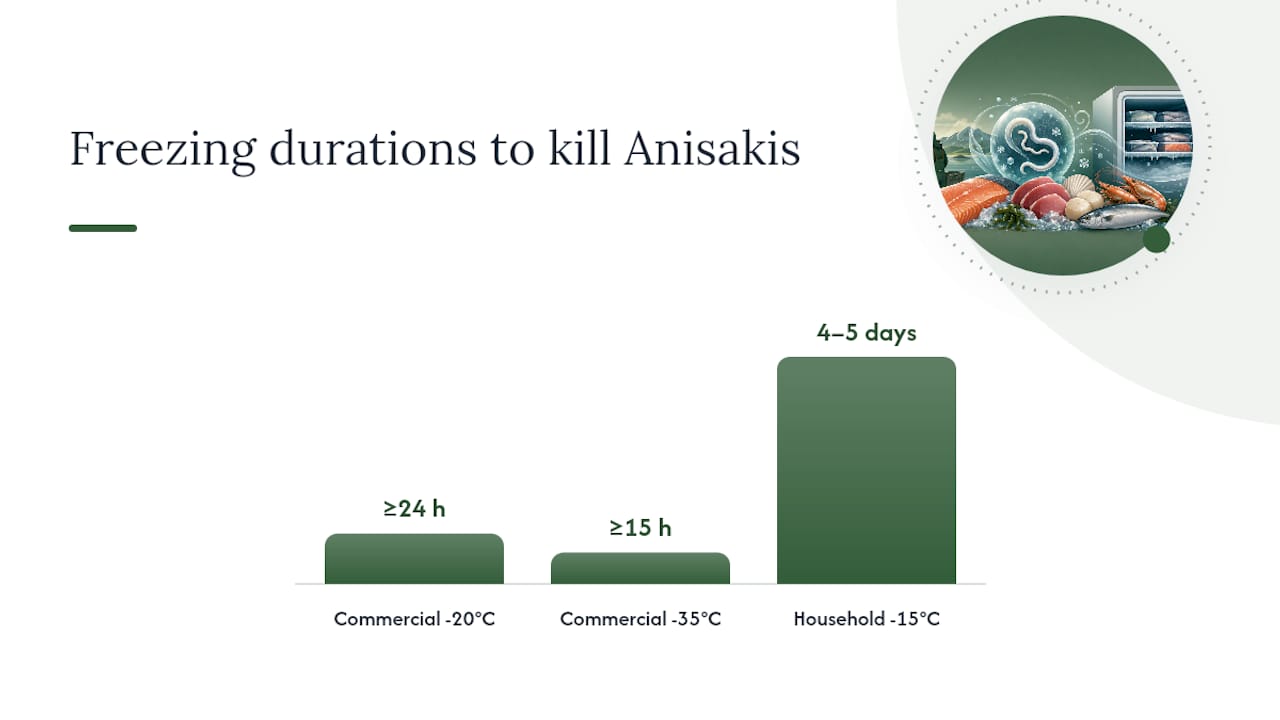
The gap between commercial and household freezing exists because most home freezers can’t reliably hit -20°C, let alone hold it for a full day without door openings disrupting the cycle. That’s the exact reasoning AESAN gives for recommending you buy fish already frozen for raw use rather than trusting a standard kitchen freezer to do the job.
Sushi, sashimi, ceviche, and escabeche marinated in acid without cooking all fall under the mandatory freezing rule. Fully cooked preparations, tempura, grilled fish, paella with well-cooked seafood, don’t need it, because heat handles the parasite problem instead.
How to Prepare Raw Seafood Safely at Home
Good hygiene habits do the work that freezing and temperature control can’t finish on their own, particularly against cross-contamination and bacterial growth during prep.
Start with the basics: wash your hands before and after handling raw seafood, use a cutting board dedicated to raw fish, and sanitize every surface it touches before anything else goes near it. Thaw frozen seafood in the refrigerator, sealed, never on the counter at room temperature, where the outer layer can sit in the bacterial danger zone for hours while the center is still frozen.
Sushi and ceviche both deserve extra care because people assume acid or vinegar “cooks” the fish. It doesn’t, not in the way heat does. Acid changes texture and denatures some surface proteins, but it doesn’t reliably kill Vibrio or eliminate Anisakis. That’s why AESAN’s sushi safety guidance pairs rice acidification, targeting a pH low enough to inhibit bacterial growth in the rice itself, with the mandatory freezing step for the fish. The rice’s acidity protects the rice; it does nothing for the fish sitting on top of it.
A simple sequence for home prep:
- Thaw frozen fish in the fridge overnight, sealed in its packaging.
- Wash hands and sanitize your board and knife before starting.
- Prepare vegetables and other ready-to-eat components first.
- Prepare raw seafood last, on its own dedicated board.
- Serve immediately or refrigerate at 0–4°C, and eat within a few hours.
Pro Tip: Work in small batches. Fish sitting out at room temperature while you slice a full portion for four people gives bacteria a longer window to multiply than prepping and serving two portions at a time.
When Should You Cook Seafood Instead of Eating It Raw
Cooking is the more forgiving safety control, but only when it actually reaches the right internal temperature. AESAN’s benchmark is 60°C held for at least one minute to inactivate Anisakis larvae reliably.
Pan-frying, baking, grilling, and boiling all get there easily when the piece is cooked through, not just browned on the surface. Light searing, where the center stays translucent, and cold-smoking, which never applies real heat, both fail this standard even though the fish looks “cooked enough” to the eye.
Mixed dishes complicate things. A paella with shrimp and mussels heats unevenly depending on piece size and position in the pan, so smaller pieces near the edge cook faster than a thick chunk of monkfish in the center. When in doubt, check the thickest piece.
Visual cues help, but they’re not proof:
- Flesh should turn from translucent to opaque.
- Texture should flake easily with a fork.
- Shellfish shells should open fully during cooking (discard any that stay shut).
None of those cues replace a thermometer. A $15 instant-read thermometer removes the guesswork entirely, and it’s the only way to know for certain that the coldest point in the dish crossed 60°C.
Who Should Avoid Raw Seafood Entirely
Some people face outsized risk from the same raw oyster or piece of sashimi that’s a minor inconvenience for everyone else. This isn’t caution for its own sake. It’s about how specific health conditions change the body’s ability to fight off Vibrio and other pathogens.
- Pregnant people face elevated risk of severe illness and potential harm to the fetus from foodborne pathogens generally.
- Immunocompromised individuals, including those on chemotherapy or immunosuppressive medication, lack the normal defenses that would otherwise contain a Vibrio or Anisakis exposure.
- People with chronic liver disease face a sharply elevated risk of V. vulnificus bloodstream infection, which can progress to sepsis. This is one of the best-documented high-risk pairings in seafood safety literature.
- People with hemochromatosis (excess iron storage) are particularly vulnerable because V. vulnificus thrives in iron-rich blood, making infections more severe and faster-moving.
- Very young children and older adults generally have less robust immune responses to foodborne pathogens.
Pro Tip: If you fall into one of these groups but don’t want to skip seafood altogether, ask for it fully cooked to 60°C or confirmed frozen and handled according to legal standards. You don’t have to give up the cuisine, just the raw preparation of it.
How Restaurants Control Raw Seafood Risk
A restaurant serving raw seafood responsibly is running a chain-of-custody system, not just plating what arrived that morning. Supplier screening comes first: who caught it, where, and under what documentation. Validated freezing equipment that can actually hit and hold -20°C for 24 hours comes next, since a standard reach-in freezer in a busy kitchen often can’t. Add cold-chain monitoring with logged temperatures, depuration sourcing for bivalves, visual parasite inspection on fillets before they’re portioned, and strict segregation of raw-seafood prep from everything else on the line.
A kitchen that takes this seriously logs freezer temperatures every service, not just once a week, because a single door left ajar overnight can undo 24 hours of proper freezing without anyone noticing until the log gets checked.
At Els Pescadors, sourcing decisions for anything served raw start with the same question AESAN asks operators to answer: has this product met the legal freezing parameters for raw consumption, and can that be documented? Fish destined for raw preparations goes through a controlled freezing step before it ever reaches a plate, and bivalves come from suppliers who can show depuration records. It’s a slower way to run a raw seafood program than simply buying whatever looks freshest that morning, but it’s the only way to serve raw fish and stand behind it.
Pro Tip: Next time you order something raw, ask two questions: “Has this been frozen for raw consumption?” and, for bivalves, “Can I see the harvest tag?” A kitchen that answers without hesitation is one that takes this seriously. For a broader look at what separates a serious seafood kitchen from one just checking boxes, see why fish freshness defines a good restaurant.
Your Quick Checklist for Raw Seafood Safety
Reducing risk doesn’t require memorizing regulations. It requires a short list of habits applied consistently, whether you’re shopping, cooking, or ordering out.
Before buying:
- Confirm catch area, freezing documentation, and depuration certification.
- Choose a supplier who volunteers this information without being pressed.
- Check that packaging arrives cold, not room temperature.
At home:
- Get seafood into the fridge or freezer within 30 minutes of purchase.
- Freeze anything meant to be eaten raw at -15°C for at least 4 days if you lack commercial equipment, or buy it pre-frozen.
- Separate raw seafood prep completely from ready-to-eat food.
In a restaurant:
- Ask whether raw items have been frozen to legal standards.
- Ask for the harvest tag on any raw bivalves.
- Skip raw seafood entirely if you’re pregnant, immunocompromised, or managing liver disease or hemochromatosis.
If you develop severe vomiting, high fever, bloody diarrhea, or signs of a skin infection near a wound after handling shellfish, seek medical care rather than waiting it out. V. vulnificus in particular can move fast in vulnerable people, and early treatment matters.
Why Seafood Safety Shapes How Els Pescadors Serves Raw Dishes
Sourcing raw seafood responsibly isn’t a marketing line at Els Pescadors, it’s a daily operational decision. Every supplier relationship starts with documentation: where the catch came from, whether it’s been frozen to the parameters AESAN and EU Regulation 853/2004 require, and whether bivalves carry proper depuration records. When that paperwork isn’t there, the item doesn’t go on the raw menu that day, full stop.
The kitchen would rather serve a shorter raw selection with complete confidence in it than a longer one built on assumptions about freshness. That’s not overcaution. It’s the same logic AESAN gives consumers: freshness alone never guaranteed protection against Anisakis, only correct freezing or fully validated sourcing does. Diners who ask questions about sourcing get real answers, because the kitchen genuinely tracks the chain from dock to plate. For a closer look at how sourcing decisions shape what ends up on the table, the restaurant’s approach to fresh ingredients and seafood flavor reflects the same standards applied to safety.
If you’re planning a group event or want to experience raw and cooked seafood dishes prepared under these standards, explore Els Pescadors’s dining proposal to see how the menu balances tradition with the safety controls that make raw seafood something you can actually trust.
Where to Verify These Rules Yourself
- EFSA, the EU’s food safety authority, publishes ongoing risk assessments on Vibrio bacteria in seafood and climate-linked trends.
- AESAN, Spain’s national food safety agency, publishes consumer-facing sushi and raw fish safety guidance along with detailed Anisakis prevention rules.
- EU Regulation (CE) No 853/2004 sets the hygiene and freezing baseline for all EU food businesses handling fishery products; see the European Commission’s food hygiene guidance.
- FAO offers global risk assessments on Vibrio species in seafood, useful for understanding how temperature and handling drive outbreak risk worldwide.
- Foodservice operators looking at broader kitchen standards can also review general food-service quality guidance and pest-control practices for restaurants, both of which intersect with seafood safety at the operational level.
This article is general information, not a substitute for advice from a qualified doctor. Consult a qualified healthcare professional about your own circumstances before acting on anything here.
Sources
- Las bacterias Vibrio en los mariscos: mayor riesgo debido al cambio climático y a la resistencia a los antimicrobianos | EFSA
- Risk assessment and Vibrio spp. in seafood | FAO
FAQ
What seafood can you safely eat raw?
Fish and cephalopods frozen to AESAN’s legal standard (-20°C for 24 hours or -35°C for 15 hours) can typically be eaten raw safely, along with bivalves from certified, depurated sources. Species and sourcing both matter more than “how fresh it looks.”
How should you store raw seafood at home?
Keep fresh seafood at 0–4°C and use it within a day or two, and keep anything meant to be eaten raw frozen at -18°C or colder until you’re ready to thaw it in the refrigerator, never at room temperature.
What bacteria are found in raw seafood?
Vibrio parahaemolyticus and Vibrio vulnificus are the species of highest concern, according to both EFSA and FAO, and they concentrate especially in raw bivalves like oysters and mussels harvested from warm waters.
What is seafood poisoning and how does it show up?
Seafood poisoning from Vibrio typically causes vomiting, diarrhea, and abdominal cramps within a day of exposure, while severe cases in people with liver disease or weakened immunity can progress to bloodstream infection. Anisakis exposure instead causes abdominal pain or allergic symptoms, since it’s a parasite rather than a bacterial illness.
How long can raw seafood sit out before it becomes unsafe?
Fresh seafood shouldn’t sit outside refrigeration for more than about 30 minutes during transport or prep, since bacteria multiply quickly once the temperature climbs above 4°C.