Barcelona is one of Europe’s most visited food cities, yet finding a truly authentic, sustainable seafood meal can feel surprisingly difficult. Tourist-facing menus often substitute frozen imports for local catch, and trendy fusion concepts can overshadow the centuries-old recipes that define this coastline. Traditional maritime cuisine cuts through all of that noise. Rooted in Catalan identity, driven by seasonal rhythms, and backed by solid science, it offers diners something no trend can replicate: a meal that is genuinely good for you, for the ocean, and for the community that has fished these waters for generations.
Table of Contents
- Defining traditional maritime cuisine: More than just seafood
- Health benefits: Evidence from the Atlantic and Mediterranean diets
- Sustainability and environmental advantages: Local sourcing in action
- Simple culinary techniques: Maximizing flavor and nutrition
- Cultural authenticity and community connection
- Why traditional maritime cuisine still matters: A modern perspective
- Experience authentic maritime cuisine at its finest
- Frequently asked questions
Key Takeaways
| Point | Details |
|---|---|
| Healthier dining | Traditional maritime cuisine delivers documented benefits for heart health and healthy weight. |
| Eco-friendly choices | Choosing local, seasonal seafood lowers your environmental impact. |
| Cultural authenticity | This cuisine helps preserve Catalan culinary traditions and supports community heritage. |
| Superior flavor and nutrition | Simple, time-tested techniques highlight the best of fresh seafood in every bite. |
| Direct community impact | Eating traditional dishes supports local fishermen and sustainable practices in Barcelona. |
Defining traditional maritime cuisine: More than just seafood
Now that we’ve set the context, let’s define what makes this cuisine truly traditional and noteworthy.
Traditional maritime cuisine is not simply “fish on a plate.” In Catalonia, it represents a complete culinary philosophy built around the relationship between coastal communities and the sea. Catalan seafood essentials prioritize fresh, local seafood and seasonal produce, rooted in Catalan culinary identity, meaning the menu changes as the sea changes. What you eat in February differs from what you eat in August, and that variation is intentional.
The Catalan culinary tradition stretches back centuries, shaped by fishermen who cooked whatever they pulled from the net that morning. This gave rise to dishes that are honest, direct, and deeply flavorful. Some of the most iconic examples include:
- Suquet de peix: A slow-simmered fish stew built on a base of tomato, garlic, and potato, finished with a picada of almonds and herbs.
- Arròs mariner: A rice dish cooked in rich seafood broth, packed with clams, prawns, and cuttlefish.
- Esqueixada: A salt cod salad dressed with olive oil, tomato, and olives, a dish that showcases simplicity at its finest.
- Fideuà: Similar to paella but made with short noodles instead of rice, typically served with aioli.
- Cloïsses a la marinera: Clams cooked in white wine, garlic, and parsley, a staple of Barcelona’s port-side taverns.
Each of these dishes reflects a core principle: let the ingredient speak. There are no heavy cream sauces or complicated techniques designed to disguise the product. The seafood is the star, and the preparation exists only to elevate it. That philosophy is what separates traditional maritime cuisine from the imitations you find in many tourist-facing restaurants along La Rambla.
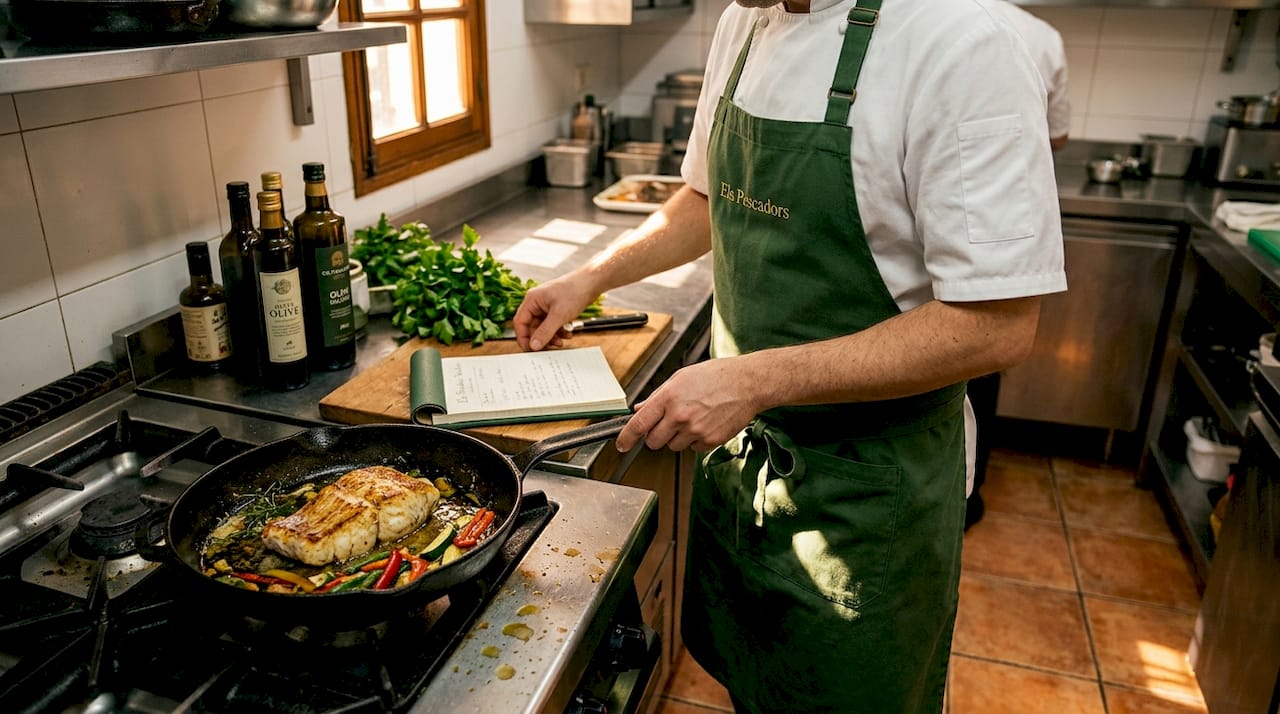
Health benefits: Evidence from the Atlantic and Mediterranean diets
With the foundation set, let’s look at the clear health benefits traditional maritime cuisine brings to your table.
The science here is compelling. Research consistently shows that populations eating seafood-rich, traditional diets live longer and suffer fewer chronic diseases. People consuming traditional seafood-rich diets show a 68% lower risk of metabolic syndrome, along with significantly reduced rates of heart disease and overall mortality. These are not marginal gains. They represent a substantial shift in long-term health outcomes.
Much of this benefit comes from the nutritional profile of fresh, locally caught seafood. Omega-3 fatty acids, found in high concentrations in oily fish like sardines, anchovies, and mackerel, actively reduce inflammation and lower LDL (bad) cholesterol. A diet built around these fish, eaten two to four times per week, can meaningfully reduce cardiovascular risk over time.
| Nutrient | Benefit | Best sources in Catalan cuisine |
|---|---|---|
| Omega-3 fatty acids | Reduces heart disease risk | Sardines, anchovies, mackerel |
| Lean protein | Supports muscle mass and satiety | Monkfish, sea bass, clams |
| Iodine | Thyroid regulation | Mussels, prawns, squid |
| Zinc | Immune function | Oysters, clams, cuttlefish |
| Vitamin D | Bone health and mood regulation | Salmon, sardines, sea bream |
The cooking methods used in traditional maritime cuisine also matter enormously. Boiling, grilling, and slow stewing preserve the nutritional integrity of the fish far better than deep frying or heavy sautéing. A grilled sea bass retains its omega-3 content and protein structure in a way that a battered, fried fillet simply cannot. You can explore the full range of types of seafood cuisine available in Barcelona to understand how these preparations vary across the city.
Beyond heart health, emerging research links traditional seafood diets to lower rates of depression, better cognitive function in older adults, and healthier weight management. The combination of high protein, healthy fats, and minimal processed ingredients creates a dietary pattern that satisfies without excess calories. Eating well, in this tradition, is not about restriction. It is about choosing foods that your body was designed to use efficiently.
Sustainability and environmental advantages: Local sourcing in action
Beyond health, let’s turn to why traditional choices are a win for both the environment and the local community in Barcelona.
One of the most powerful arguments for traditional maritime cuisine is its environmental footprint. Traditional food systems emit 15% less greenhouse gases than modern industrialized diets and actively support local fishermen rather than large-scale commercial operations. That figure matters because food production accounts for roughly one-third of all global greenhouse gas emissions. Choosing local and seasonal seafood is one of the most direct actions a diner can take to reduce their personal environmental impact.
Local sourcing also means shorter supply chains. Fish caught off the Costa Daurada or in the waters around the Ebro Delta arrives at Barcelona’s Llotja (the fish market) within hours of being landed. Compare that to imported frozen product that may have traveled thousands of kilometers by air or sea freight. The difference in freshness is obvious on the plate. The difference in carbon footprint is equally significant.
| Sourcing type | Carbon footprint | Freshness | Economic benefit |
|---|---|---|---|
| Local Llotja catch | Low | Very high | Supports local fishermen |
| Regional Mediterranean | Moderate | High | Partial local benefit |
| Imported frozen | High | Low | Minimal local benefit |
| Air-freighted exotic | Very high | Moderate | No local benefit |
Traditional maritime practices also support biodiversity through what Catalan fishing communities call co-gestió (co-management). This is a collaborative system where fishermen, scientists, and regulators work together to set catch limits, protect spawning grounds, and rotate fishing areas. The result is a more resilient marine ecosystem that can sustain fishing for future generations.
Pro Tip: When dining out, ask your server where the fish was caught and how it was sourced. A restaurant committed to sustainable seafood choices will always know the answer. If they cannot tell you, that itself is useful information.
You can also make smarter choices by understanding what seasonal seafood means and why it matters. Bivalves like mussels and clams are particularly sustainable choices because they filter water rather than consuming other fish, and they require no feed inputs to farm. Understanding the importance of seasonal fishing in Catalan cuisine helps you make choices that align with both your values and the rhythms of the local ecosystem.
Simple culinary techniques: Maximizing flavor and nutrition
Understanding sustainability and health sets the stage. Now, let’s appreciate the elegant simplicity behind the cooking itself.
One of the most counterintuitive aspects of traditional maritime cuisine is how little intervention it requires. Modern restaurant culture often equates complexity with quality. More techniques, more components, more drama on the plate. Traditional Catalan maritime cooking rejects that logic entirely. The best fish dish is often the simplest one.
Simple techniques like boiling, grilling, and stewing preserve the nutritional integrity of seafood, and picada is used to add depth without masking flavors. The picada deserves special attention because it is one of Catalonia’s most distinctive culinary contributions. It is a paste made from toasted almonds, fried bread, garlic, parsley, and sometimes saffron or dried peppers. Added at the end of cooking, it thickens sauces, adds a nutty richness, and introduces layers of flavor without overwhelming the fish itself.
Here is how a traditional suquet de peix comes together, illustrating exactly why simplicity works:
- Build the sofregit: Slowly cook onion and tomato in olive oil until deeply caramelized. This base provides sweetness and body.
- Add the potato: Chunks of potato go in next, absorbing the flavors of the sofregit and creating texture.
- Pour in the fish stock: A good fumet made from fish bones and heads adds depth that no store-bought broth can replicate.
- Add the fish: Firm-fleshed fish like monkfish or sea bass goes in last, cooked gently so it stays moist and flavorful.
- Finish with picada: Stirred in at the end, the picada binds the sauce and adds that characteristic Catalan complexity.
“The genius of Catalan maritime cooking is that it trusts the ingredient. A perfectly fresh piece of monkfish needs almost nothing. The cook’s job is not to transform it but to honor it.”
If you want to try your hand at home, the authentic seafood paella recipe from Els Pescadors walks you through a similar process with the same philosophy: quality ingredients, honest technique, and patience.
Pro Tip: Never rush a sofregit. The slow caramelization of onion and tomato is where the flavor foundation of most traditional Catalan seafood dishes is built. Give it at least 30 minutes on low heat.
Cultural authenticity and community connection
The art of simple, flavorful cooking is inseparable from the community and heritage. It is about more than just food.
Food is memory. In Barcelona’s fishing neighborhoods like Barceloneta and Poblenou, traditional maritime cuisine carries the stories of generations of families who depended on the sea for their livelihood. When you eat a bowl of arròs mariner in a restaurant that sources from the local Llotja, you are participating in a living cultural tradition, not just consuming a meal.
Traditional cuisine preserves culture and actively resists the trend toward processed, high-emission foods that have homogenized eating habits across much of Europe. In Catalonia, this resistance is not nostalgic. It is practical. Local markets, fishing cooperatives, and family-run restaurants form an ecosystem that keeps culinary knowledge alive and economically viable.
The culinary identity in Barcelona is shaped by several community-driven practices worth understanding:
- Mercat de la Barceloneta: The neighborhood fish market where locals buy the day’s catch directly from fishermen.
- La Llotja de Mar: Barcelona’s historic fish exchange, where restaurant buyers and market traders bid on the morning’s haul.
- Fishing cooperatives: Community organizations that manage sustainable quotas and share resources among small-scale fishermen.
- Seasonal festivals: Events like the Festa de la Sardina celebrate specific fish at their peak season, reinforcing the connection between community and sea.
“Eating traditionally is an act of solidarity with the people who catch, prepare, and serve the food. It keeps money in the local economy and knowledge in the community.”
When you choose a restaurant that honors these connections, you are not just making a dining decision. You are casting a vote for the kind of food system you want to support.
Why traditional maritime cuisine still matters: A modern perspective
Food trends move fast. Plant-based proteins, fermentation, molecular gastronomy, and hyper-local foraging have all had their moment in the spotlight. Each wave brings something genuinely interesting, but each also risks displacing the quiet, consistent wisdom of older traditions. Traditional maritime cuisine does not compete with these trends. It simply outlasts them.
What strikes us most, after years of working with Catalan seafood, is how modern the old ways actually are. Local sourcing, minimal processing, seasonal menus, and community-based supply chains are exactly what the most forward-thinking food advocates are calling for today. Catalan fishermen were practicing all of this long before it had a name or a hashtag.
The modern diner faces a genuine tension. You want exciting food. You also want to make choices that align with your values around health, environment, and fairness. Traditional maritime cuisine resolves that tension without asking you to compromise. A perfectly grilled sea bream from the Llotja, finished with olive oil and herbs, is as exciting as any complex tasting menu dish, and it comes with a clean conscience attached.
We also think there is something important about eating food that has a story. A dish like suquet de peix connects you to the fishermen who landed the catch, the cook who learned the recipe from their grandmother, and the centuries of coastal life that shaped both. That kind of depth is not something you can engineer in a test kitchen. It has to be inherited. Exploring a Catalan tasting menu experience is one of the best ways to feel that depth across a full evening, course by course.
The uncomfortable truth is that many Barcelona restaurants trade on the image of traditional cuisine without delivering the substance. Frozen fish, industrially farmed shellfish, and pre-made sofregit are more common than most diners realize. Knowing what to look for, and what questions to ask, is the only reliable way to find the real thing.
Experience authentic maritime cuisine at its finest
If reading about the health benefits, sustainability credentials, and cultural richness of traditional maritime cuisine has made you hungry, that is exactly the right response.
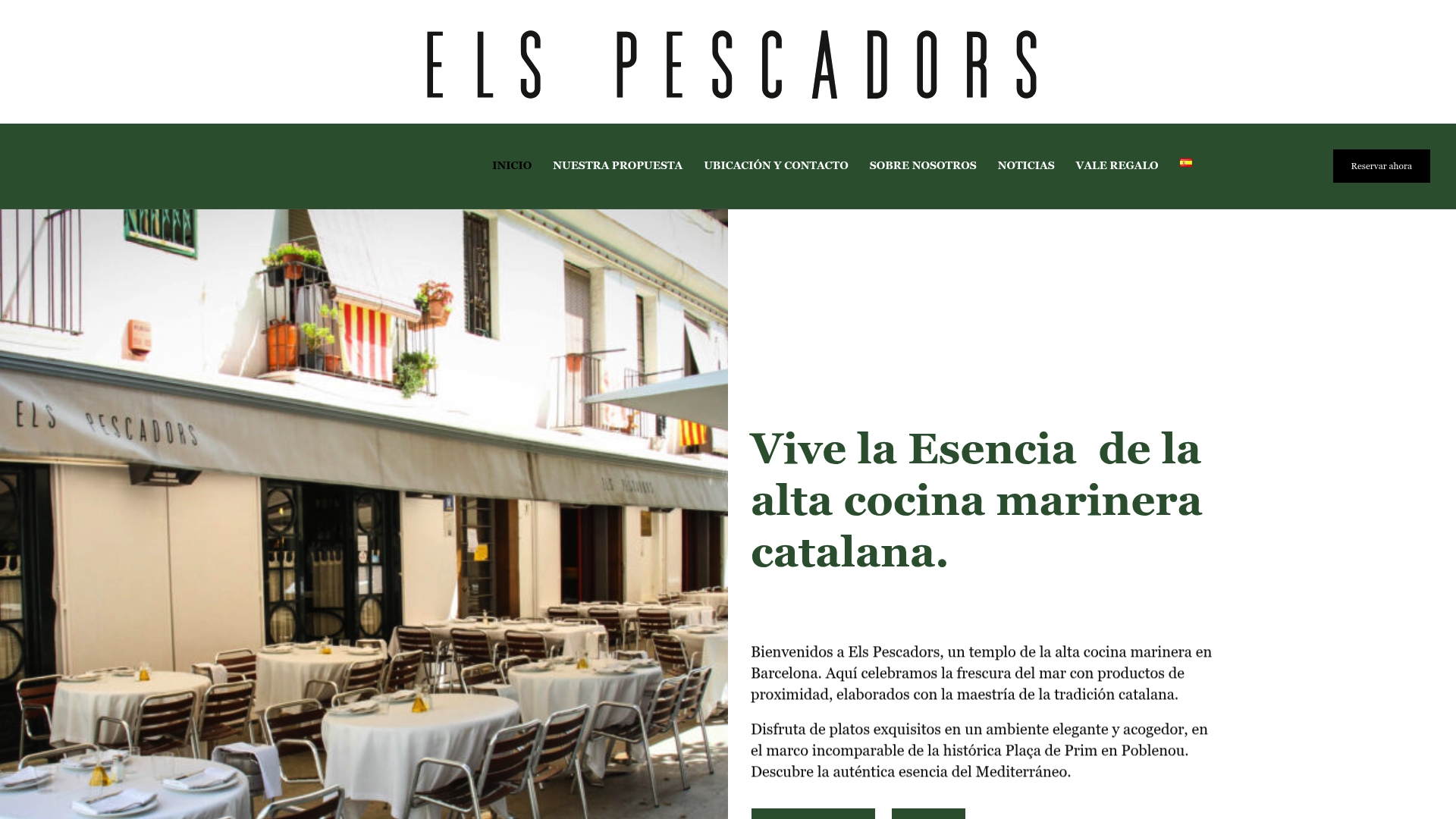
At Els Pescadors, every dish on the menu is built on the principles this article has explored. The daily catch comes directly from local sources, the recipes follow time-honored Catalan methods, and the tasting menus are designed to take you through the full range of maritime flavors in a single sitting. You can begin your Catalan cuisine journey right here in Poblenou, one of Barcelona’s most historically rich neighborhoods. Browse our seafood tasting menus to see how seasonal ingredients shape each course, and learn more about how dining with sustainable fish elevates the entire experience. Reserve your table and taste the difference that genuine tradition makes.
Frequently asked questions
What types of seafood are most common in traditional Catalan maritime cuisine?
Local seasonal fish like sardines, anchovies, and monkfish, along with bivalves such as clams and mussels, are the staples. Traditional maritime cuisine prioritizes fresh, local seafood and seasonal produce tied directly to Catalan culinary identity.
How does traditional maritime cuisine support sustainability?
It emphasizes local, seasonal seafood and sustainable fishing practices, which is why traditional food systems emit 15% less GHG than modern industrialized diets and actively support local fishermen and marine biodiversity.
Are there health benefits to choosing traditional maritime cuisine?
Yes. Research links these diets to significantly better health outcomes, including a 68% lower risk of metabolic syndrome, reduced heart disease rates, and healthier long-term weight management.
What cooking methods are used in authentic maritime dishes?
Most dishes rely on boiling, grilling, and stewing to preserve both flavor and nutritional integrity, with picada used to add complexity without masking the natural quality of the seafood.