Most food travelers arrive in Catalonia expecting the magic to live inside the recipes. They search for the perfect paella, the most refined fideuà, or the boldest romesco. But the real secret sits one step earlier, long before any pot hits the flame. Catalan cuisine is fundamentally rooted in local, seasonal ingredients sourced from the region’s diverse landscapes, from the Mediterranean coast to the mountains and fertile plains. Understanding this changes how you eat, where you eat, and what you look for on every menu.
Table of Contents
- Why local ingredients are the soul of Catalan cooking
- From garden to table: Seasonality and signature Catalan ingredients
- Traditional methods: Celebrating the ingredient, not the technique
- Regional diversity and authenticity: Variations and debates
- Preserving tradition and inspiring innovation
- The uncomfortable truth: Local ingredients are the real measure of authenticity
- Experience true Catalan flavors with local ingredients
- Frequently asked questions
Key Takeaways
| Point | Details |
|---|---|
| Local sourcing defines flavor | The roots of Catalan culinary identity are its local, seasonal ingredients from land and sea. |
| Seasonality shapes the menu | Dishes change throughout the year to showcase the freshest regional produce. |
| Tradition and innovation coexist | Modern chefs honor tradition by using local ingredients while creating new interpretations. |
| Authenticity means local | True Catalan cuisine prioritizes the ingredient’s origin over complex technique. |
| Support for sustainability | Choosing local foods reduces environmental impact and sustains cultural heritage. |
Why local ingredients are the soul of Catalan cooking
Catalonia is not one landscape. It is many. Within a few hours’ drive, you move from the salt-sprayed fishing villages of the Costa Brava to the volcanic soil of the Garrotxa, from the sun-baked plains of Lleida to the high pastures of the Pyrenees. Each zone produces something distinct, and Catalan cooks have always known how to use exactly what grows or swims nearby.
This connection between place and plate is not romantic nostalgia. It is the practical foundation of a cuisine that developed over centuries without access to global supply chains. Resourcefulness became tradition. Using what was available, in its best season, at its freshest point, was simply how families ate. That habit became culture, and culture became identity.
The sustainability benefits of this approach are significant: reduced carbon footprint from short supply chains, direct support for local producers, alignment with Mediterranean diet principles, and far less food waste because cooks learn to use every part of every ingredient. These are not modern talking points. They are ancient habits that happen to align perfectly with what the world now urgently needs.
The practice of seasonal fishing in Catalan cuisine is a perfect example. Fishermen here have always respected closed seasons and natural cycles, not because regulators demanded it, but because the sea’s generosity depended on it. That same logic applies across every food-producing zone in the region.
Key food-producing regions that shape Catalan cuisine include:
- Costa Brava and Costa Daurada: Fresh fish, shellfish, and anchovies
- Empordà plains: Olive oil, wine, and vegetables
- Lleida and Terres de l’Ebre: Stone fruits, rice, and citrus
- Garrotxa and Osona: Volcanic-soil vegetables and quality pork
- Pyrenean foothills: Wild mushrooms, game, and dairy
“The flavor of Catalonia is not invented in the kitchen. It is harvested, fished, and gathered across a landscape that has fed its people for thousands of years.”
Understanding essential seafood in Catalan gastronomy means understanding which species are native to these waters, when they are at their best, and why substituting them with imported alternatives always produces a lesser result.
From garden to table: Seasonality and signature Catalan ingredients
With local ingredients as the building blocks, it’s the rhythm of the seasons that brings Catalan dishes to life. A cook who ignores the season is working against the ingredient. One who follows it finds that the produce almost cooks itself.
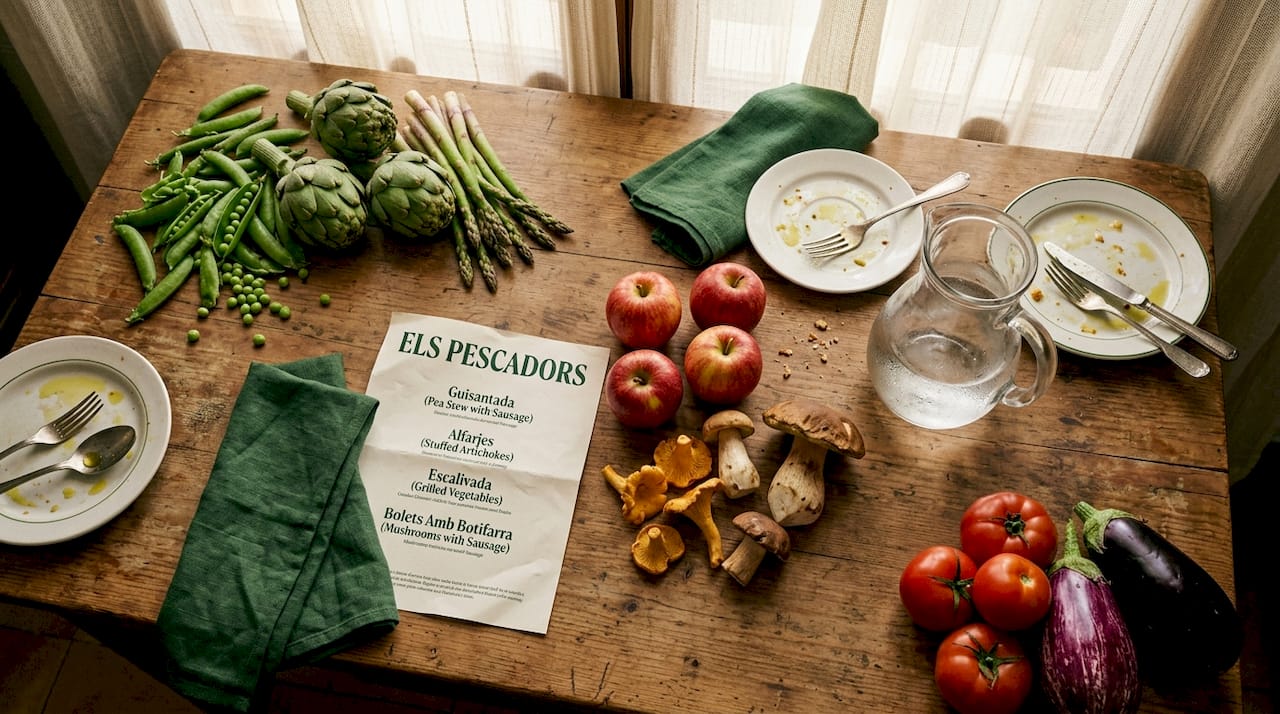
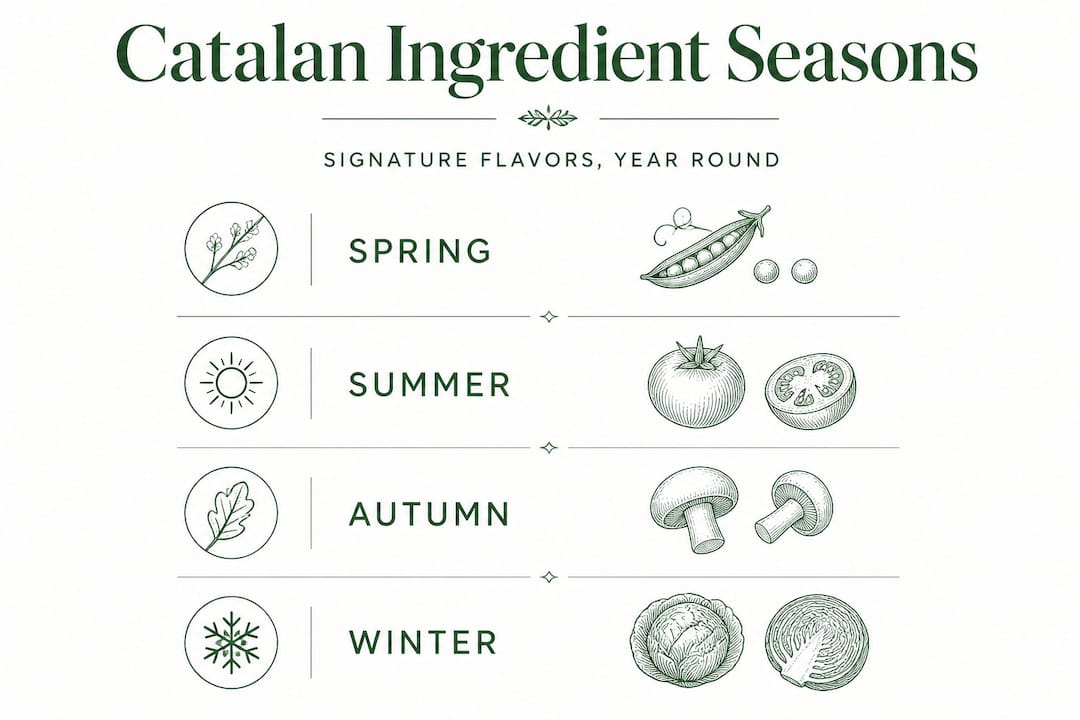
Seasonal variations in Catalonia are vivid and well-defined: spring brings peas, artichokes, and asparagus; summer delivers ripe tomatoes and fresh fish; autumn fills the markets with wild mushrooms, chestnuts, and calçots; winter calls for root vegetables, slow stews, and the beloved escudella. Each season has its own personality, and the best Catalan menus reflect that personality honestly.
| Season | Signature ingredients | Representative dishes |
|---|---|---|
| Spring | Artichokes, peas, asparagus, fresh anchovies | Artichoke with romesco, pea and mint soup |
| Summer | Tomatoes, zucchini, fresh fish, peppers | Pa amb tomàquet, grilled fish, cold soups |
| Autumn | Wild mushrooms, calçots, chestnuts, game | Mushroom rice, roasted calçots, game stews |
| Winter | Root vegetables, dried legumes, salt cod | Escudella i Carn d’Olla, bacallà dishes |
Restaurants that take seasonality seriously change their menus frequently, sometimes weekly. This is not a marketing strategy. It is a direct response to what the market offers that morning. The Catalan tasting menu process at its best is a guided journey through whatever the season is offering right now, not a fixed script performed regardless of the calendar.
Seasonality drives menu changes in practical ways:
- Chefs visit markets daily and adjust dishes based on availability
- Signature dishes appear and disappear with the seasons, creating genuine anticipation
- Portion sizes and preparation methods shift with ingredient texture and intensity
- Price points reflect real market conditions rather than artificial menu engineering
Pro Tip: If you want to taste Catalan ingredients at their absolute peak, visit in late autumn. October and November bring wild mushrooms from the Pyrenean forests, the first calçots of the season, and the richest, fattest fish of the year. Markets overflow with color and the air smells of roasting chestnuts.
Traditional methods: Celebrating the ingredient, not the technique
Seasonal bounty inspires the menu, but it’s the classic Catalan methods that honor each ingredient’s best qualities. The most important thing to understand about traditional Catalan technique is that it exists to serve the ingredient, not to overshadow it.
Two preparations define this philosophy more than any others. The sofregit is a slow-cooked base of onion, tomato, and olive oil, reduced patiently until it becomes sweet, dark, and deeply concentrated. The picada is a paste of toasted nuts, usually almonds or hazelnuts, combined with garlic, herbs, and sometimes bread or chocolate, used to finish and thicken a dish. Both are key methodologies that rely entirely on the quality of local produce to deliver their impact.
A traditional sofregit follows these steps:
- Slice local onions thinly and cook them in good olive oil over very low heat
- Stir regularly for at least 30 minutes until the onions soften and turn golden
- Add ripe, locally grown tomatoes, grated or crushed
- Continue cooking slowly until the mixture darkens and the liquid evaporates completely
- Season with salt and use as the flavor foundation for stews, rice, or fish dishes
Notice that nothing in that process is technically complex. The skill is patience and the quality of the raw ingredients. A sofregit made with flavorless supermarket tomatoes and generic oil will never reach the depth of one made with late-summer tomatoes from the Empordà and cold-pressed local olive oil. The technique is the same. The ingredient makes the difference.
What sets Catalan cuisine apart from other Mediterranean traditions is precisely this restraint. The goal is always to make the ingredient taste more like itself, not to transform it into something unrecognizable.
Pro Tip: At home, the easiest way to apply this philosophy is to buy one exceptional local ingredient and do very little to it. A perfect tomato with good oil and sea salt. A fresh fish fillet with lemon and herbs. Catalan cooking teaches you that restraint, when the ingredient is right, is the highest form of skill.
Regional diversity and authenticity: Variations and debates
Understanding the techniques sets a foundation, but the debate over what’s truly authentic in Catalan cooking is shaped by its many local interpretations. Catalonia is a region, not a single city, and the same dish can look and taste quite different depending on where you eat it.
Take escudella i Carn d’Olla, the great winter stew. Regional variations produce a lighter, more refined version in Barcelona, while the Pyrenees version is heartier, richer, and loaded with mountain meats and root vegetables. Neither is wrong. Both are authentic expressions of the same dish filtered through local ingredient availability and climate.
| Dish | Barcelona version | Pyrenees version |
|---|---|---|
| Escudella | Lighter broth, refined cuts | Rich, hearty, mountain meats |
| Mushroom rice | Coastal mushrooms, seafood broth | Forest mushrooms, game stock |
| Romesco | Lighter, more tomato-forward | Nuttier, with more dried peppers |
These differences spark genuine debates. Chef Jordi Cruz has publicly defended traditional pa amb tomàquet against pre-made versions, arguing that rubbing a real ripe tomato onto toasted bread is not just a technique but an act of cultural preservation. The pre-made spread sold in supermarkets may taste similar, but it disconnects the eater from the ingredient and the ritual.
Ferran Adrià advocates for daily local purchases, famously preferring affordable, sustainable sardines over imported luxury ingredients. His point is sharp: you do not need expensive or exotic produce to cook brilliantly. You need honest, local, seasonal ingredients treated with respect.
Iconic dishes that show strong regional identity include:
- Suquet de peix (fisherman’s stew): varies dramatically by which fish the local fleet caught that day
- Fideuà: the noodle version of paella, with strong coastal identity and fierce local pride
- Arròs negre (black rice): made with cuttlefish ink from local waters, not imported alternatives
- Trinxat: a Pyrenean dish of cabbage and potato that would be unrecognizable without mountain-grown produce
For those curious about how wine pairing with Catalan dishes works, the same local logic applies. Wines from Priorat, Penedès, or Empordà naturally complement regional dishes because they share the same soil, climate, and terroir.
The Catalan culinary tradition is rich enough to hold these variations without fracturing. Diversity within a shared philosophy is a sign of strength, not inconsistency. You can explore traditional flavors in Barcelona and then travel an hour inland to find the same tradition expressed in completely different ingredients.
Preserving tradition and inspiring innovation
The regional debates are dynamic, but at their heart is a balance of old and new, one that keeps Catalan cuisine vibrant and relevant. Local ingredients do more than flavor a dish. They carry memory.
Local ingredients preserve cultural memory and resist homogenization, connecting generations through resourcefulness born of historical scarcity. When a grandmother makes escudella with the same root vegetables her grandmother used, she is not just cooking. She is maintaining a living archive of place, season, and identity. Globalization threatens this. When restaurants substitute local fish with cheaper imported species, or replace seasonal vegetables with year-round hothouse alternatives, that thread breaks quietly.
Modern chefs in Catalonia are acutely aware of this tension. The best of them use innovation as a tool to make tradition more compelling, not to replace it. Restaurants like Les Cols in Olot build entire menus around the volcanic landscape surrounding them, using humble produce in ways that feel genuinely new without abandoning the local sourcing principle. Modern chefs reinterpret with innovation while staying true to local sourcing, balancing heritage and sustainability in a way that feels both honest and exciting.
The key insight is that local sourcing is a foundation, not a restriction. A chef who commits to using only what the region produces in a given season is not working with limitations. They are working with a living, changing palette that renews itself every few weeks. That is more creatively rich than any global supply chain could ever offer.
“Every ingredient that comes from this land carries a story. Our job as cooks is not to overwrite that story but to tell it more clearly.”
The freshness and tradition in Catalan gastronomy that makes Barcelona’s dining scene so compelling comes directly from this commitment. It is not about nostalgia. It is about integrity.
The uncomfortable truth: Local ingredients are the real measure of authenticity
Stepping back from the history and nuance, here is the perspective most food travelers overlook. When people debate whether a restaurant is “authentically Catalan,” they almost always focus on the recipe. Is the romesco made the traditional way? Is the rice cooked in the right pan? These are reasonable questions, but they miss the deeper issue entirely.
A technically perfect recipe made with imported tomatoes, farmed fish from another continent, and generic olive oil is not authentic Catalan food. It is a performance of Catalan food. The difference is real and you can taste it, even if you cannot name what is missing.
The most unforgettable meals we have experienced here at Els Pescadors have not come from complicated preparations. They have come from extraordinary ingredients treated simply. A fish pulled from the Mediterranean that morning, grilled with local oil and sea salt, served at the right temperature, is more powerful than any elaborate construction built on mediocre raw material.
Lesser-known local produce often delivers the biggest surprises. The tiny gamba de Palamós, a shrimp from the deep cold waters off the Costa Brava, has an intensity of flavor that makes imported tiger prawns taste like cardboard by comparison. The mongetes del ganxet, a local white bean from the Maresme coast, has a creaminess that no other bean variety replicates. These ingredients are not famous globally. They are famous locally, and that is exactly why they matter.
The practical takeaway for any culinary traveler is simple: start at the market, not the restaurant. Visit the Boqueria, the Mercat de Santa Caterina, or any neighborhood market in Barcelona. Look at what is abundant and beautiful that day. Then find a restaurant that is cooking exactly that. Choosing seasonal seafood is the single best decision you can make when eating in Catalonia.
Pro Tip: Ask your server what came in fresh that morning. Any restaurant serious about local sourcing will know the answer immediately and will be proud to tell you. If they hesitate, that tells you something important.
Experience true Catalan flavors with local ingredients
Everything described in this guide comes to life at the table. Reading about sofregit, calçots, and Mediterranean fish is one thing. Tasting them, prepared with genuine care for sourcing and season, is something else entirely.
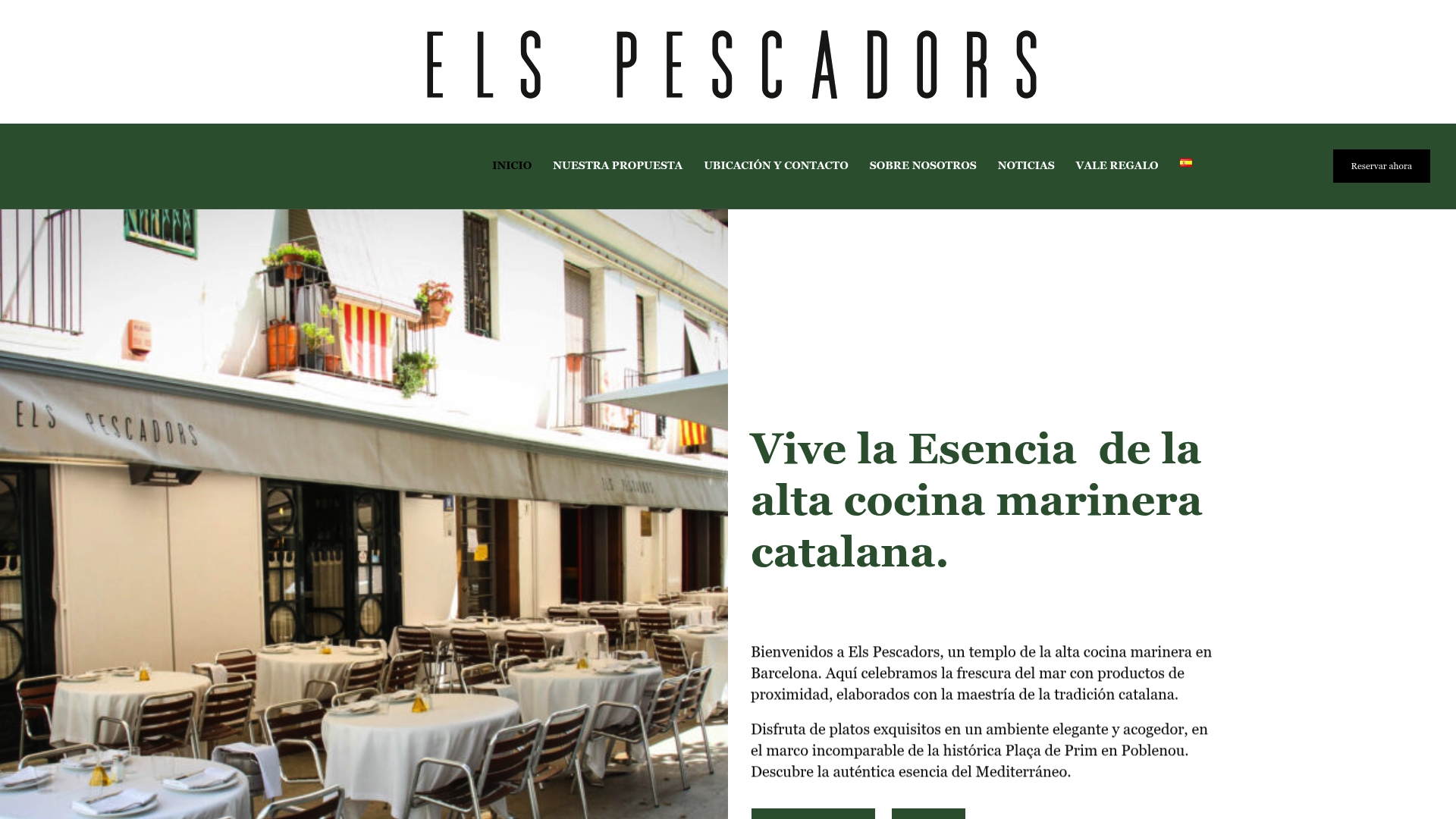
At Els Pescadors, located in the historic Plaça de Prim in Barcelona’s Poblenou district, every dish begins with the same question: what is best today? Our commitment to seasonal fishing and locally sourced ingredients is not a marketing claim. It shapes every menu decision we make. From our traditional Catalan seafood dishes to our carefully curated tasting menus, you will taste the difference that honest sourcing makes. Explore our proposal and discover how we translate the region’s seasonal rhythms into a dining experience that is both refined and deeply rooted in Catalan tradition.
Frequently asked questions
What are the most iconic local ingredients in Catalan cuisine?
Among the most celebrated are tomatoes, fresh Mediterranean fish, calçots (Catalan spring onions), wild mushrooms, and artichokes, each tied to a specific season in Catalonia and region.
How does using local ingredients make Catalan food more sustainable?
Sourcing locally reduces food miles, supports small producers, and encourages resourcefulness, all of which align with the Mediterranean diet principles that have sustained this region for generations.
Do modern chefs in Catalonia always use traditional ingredients?
Most honor tradition by prioritizing local sourcing, but they often apply innovative techniques and contemporary presentations that make classic ingredients feel fresh and surprising.
What is a traditional Catalan dish that highlights local ingredients?
Escudella i Carn d’Olla is a defining example, a hearty stew built from local meats, sausages, and seasonal root vegetables, with regional variations ranging from the lighter Barcelona style to the richer mountain versions of the Pyrenees.